

BLOG
Feed mixer for chicken farms system integrates material dosing accuracy, particle homogenization control, and mechanical blending stability.
Poultry production efficiency depends on feed consistency across batches and cycles.
Horizontal ribbon mixer, paddle mixer, and vertical screw configurations dominate industrial poultry feed systems.
Automation modules improve batching precision and reduce operator dependency in feed preparation lines.
System selection influences feed conversion ratio stability and operational energy efficiency.
Get professional poultry farm construction guidance, equipment selection solutions, and the latest price lists, whatsApp to +8618830120193, click to learn more:
Feed Mixer For Chicken Farms Introduction
Feed mixer for chicken farms system defines mechanical homogenization performance across poultry nutrition production lines.
Poultry feed mixer machine ensures uniform distribution of corn, soybean meal, and micronutrients in controlled batch cycles.
Industrial poultry feed mixer reduces nutrient segregation risk and improves flock weight consistency.
System configuration selection depends on capacity demand, motor output, and blending cycle optimization.
Feed system engineering in poultry farms focuses on consistency control and production stability.
Poultry Nutrition Science And Feed Homogenization
From a poultry engineering perspective, feed homogenization directly impacts metabolic intake stability across broiler populations.
Chickens ingest feed particles without selective nutrient regulation, requiring engineered uniformity in formulation distribution.
Variance above 0.25% lysine concentration deviation results in measurable body weight divergence across 21-day growth cycles.
Feed mixer systems maintain controlled nutrient dispersion within defined tolerance thresholds.
Feed Mixer System Classification And Specifications
Proper system selection requires understanding how batch capacity and mixing cycle time align with daily feed demand.
Excess capacity increases idle energy consumption, while undersized systems create production bottlenecks in poultry feeding schedules.
Data is for reference only. Swipe horizontally to view full table.
For poultry farms planning capacity expansion, feed mixer system selection must consider scalability and future production growth stability.
Feed Mixer Mechanical Engineering Structure
Feed mixer for chicken farms systems operate through shaft-driven mechanical agitation modules or screw auger displacement structures.
Horizontal ribbon assemblies utilize counter-rotation geometry for radial ingredient circulation.
Paddle-based systems apply axial impact force for accelerated particle blending.
Stainless steel 304 construction is widely implemented to ensure corrosion resistance under mineral premix exposure conditions.
Feed Ingredient Ratio Control Standards
Precise nutrient proportioning is essential in commercial poultry production because even small deviations in protein or mineral ratios accumulate into measurable flock performance differences over time.
Data is for reference only. Swipe horizontally to view full table.
Feed formulation stability is only achievable when feed mixer for chicken farms systems maintain repeatable blending accuracy across multiple production batches.
Energy Consumption Analysis In Feed Mixing Systems
Feed mixer for chicken farms energy performance determines operational cost structure across continuous production cycles.
Industrial poultry feed mixer systems operate within defined kWh per ton thresholds depending on mechanical resistance and batch size.
Motor load efficiency correlates with blending resistance and particle density composition.
Data is for reference only. Swipe horizontally to view full table.
Energy planning for feed mixer systems should consider peak production cycles and seasonal demand fluctuations in poultry farms.
Feed Mixing Homogeneity Measurement System
Feed mixer for chicken farms quality control relies on coefficient of variation (CV%) analysis across sampled batch points.
Industrial poultry feed systems maintain CV below 10% to ensure uniform nutrient distribution.
Sampling protocols include multi-zone extraction across mixing chamber geometries followed by laboratory nutrient verification testing.
Automation Control Levels In Feed Mixer Systems
Automation level selection should align with farm scale and labor structure to ensure production stability and operational efficiency.
Data is for reference only. Swipe horizontally to view full table.
For industrial poultry operations, automation reduces cumulative human error across large-scale feed production cycles.
Feed Mixer Cost Structure Engineering Analysis
Feed mixer for chicken farms investment structure integrates mechanical unit cost, automation module pricing, and installation engineering expenses.
Industrial feed mixer system pricing varies according to capacity scaling and stainless steel grading.
European union standard reference only currency value expressed in USD for international benchmarking consistency.
Data is for reference only. Swipe horizontally to view full table.
Investment decisions for feed mixer systems should prioritize long-term operational efficiency rather than initial acquisition cost alone.
Feed Mixer Maintenance Lifecycle Engineering
Feed mixer for chicken farms maintenance schedule determines system durability and operational continuity.
Mechanical lubrication cycles reduce bearing wear frequency.
Chamber residue cleaning prevents microbial contamination accumulation.
Blade calibration ensures consistent mixing torque distribution across production cycles.
Data is for reference only. Swipe horizontally to view full table.
Proper maintenance execution ensures feed mixer stability and prevents degradation of mixing uniformity over long operational cycles.
Feed Particle Distribution Engineering Control
Feed mixer for chicken farms particle engineering ensures uniform granulometry distribution across corn-soybean based formulations.
Particle size variance influences digestive enzyme activation rate and absorption efficiency in poultry gastrointestinal systems.
Controlled blending geometry stabilizes feed intake behavior across flock populations.
System Capacity Design For Poultry Farms
Capacity planning should align feed production cycles with flock population dynamics to avoid supply imbalance or energy waste.
Data is for reference only. Swipe horizontally to view full table.
Correct system sizing ensures feed mixer utilization efficiency and reduces production bottlenecks in poultry feeding operations.
Feed Conversion Efficiency Engineering Impact
Feed mixer for chicken farms system directly influences feed conversion ratio (FCR) stability across production cycles.
Industrial poultry feed mixer uniformity reduces nutrient loss dispersion and improves weight gain efficiency per kilogram feed input.
System calibration affects output consistency across repeated batching operations.
Frequently Asked Questions
Q1: What is the optimal capacity for a feed mixer for chicken farms system?
Optimal capacity ranges from 500 kg to 5000 kg per batch depending on flock size and production rhythm.
Large-scale poultry farms above 20000 birds typically require 2000–10000 kg batching systems for continuous feed supply stability.
Q2: How does feed mixer for chicken farms system affect poultry growth rate?
Uniform mixing reduces nutrient deviation below 10% CV threshold.
This improves feed conversion ratio by approximately 1.5%–4.2% across 35-day broiler growth cycles.
Q3: What is the typical service life of feed mixer for chicken farms equipment?
Industrial stainless steel feed mixer systems operate within 8–12 years service lifespan under structured maintenance cycles.
Lubrication every 50 hours and blade inspection every 200 hours are required to maintain mechanical stability.
Taiyu (HK) Group - One Of China Largest Feed Mill Manufacturer
Feed mixer for chicken farms industrial precision blending system for poultry nutrition production lines.
Global factory direct supply feed mixer systems supporting automated poultry feed processing integration networks.
Turn-key engineering solutions covering poultry feed plant design installation and commissioning services worldwide projects.
Poultry equipment manufacturing including feed mixer systems cages and automated feeding infrastructure modules export scale.
High capacity industrial feed mixer system engineering support with continuous production line optimization solutions.
Contact Us To Received Your Customized Poultry Farm Plan
Headquarters And Branchs

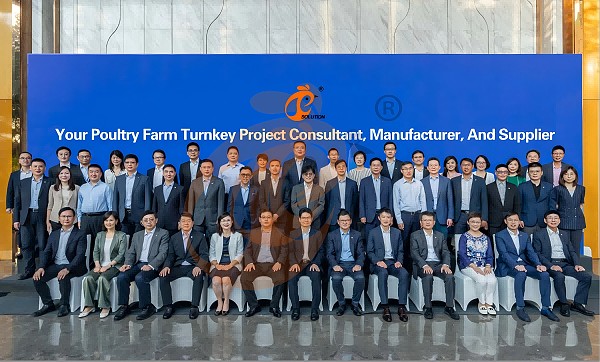
Hong Kong Headquarter Management Team
Hong Kong Headquarter Taiyu Industrial Group CO., LTD
China Hebei Best Machinery And Equipment CO., LTD
Nigeria Vanke Machinery And Equipment CO., LTD
Tanzania Best Machinery And Equipment CO., LTD
Ethiopia Best Hebei Machinery Manufacturing PLC




Reception /24 WhatsApp NO. : +8618830120193
PRODUCTS RECOMMENDED
 China Branch Manufacture Poultry Farm EquipmentRead More
 Ethiopia Branch Manufacture Poultry Farm EquipmentRead More
 Nigeria Branch Manufacture Poultry Farm EquipmentRead More
 Tanzania Branch Manufacture Poultry Farm EquipmentRead More
 IoT Smart Poultry FarmRead More
 >30,000 Layers Automatic H Type Battery CageRead More
 10,000 - 30,000 Layers Automatic A Type Battery CageRead More

MESSAGE