

NEWS
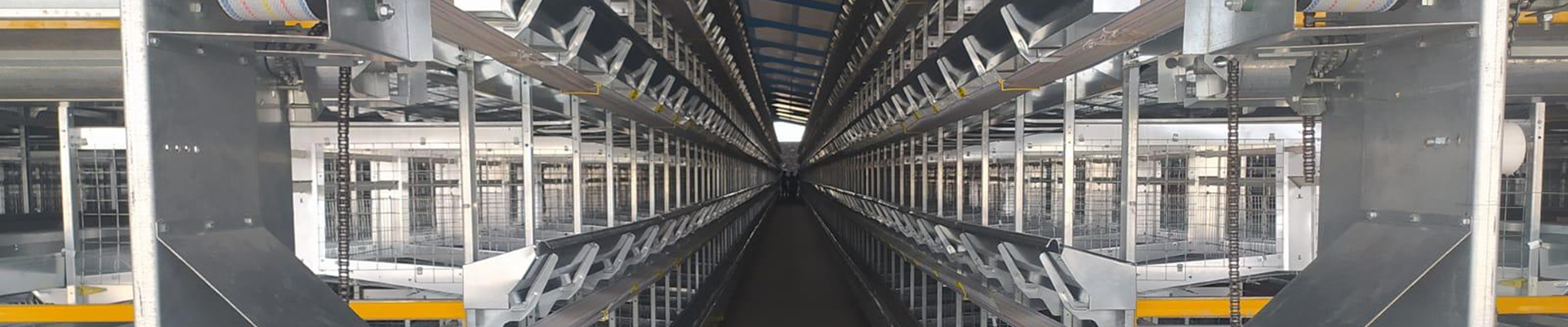
Advantage of battery cage systems is in their unparalleled ability to maximize poultry farm efficiency, biosecurity, and profitability.
By utilizing vertical multi-tier designs, these automated cage systems increase land utilization by up to 300% compared to traditional free-range housing.
Also Modern poultry farmers benefit from superior disease control through automatic chicken-to-manure separation.
Our battery cage systems offer distinct, region-specific benefits designed to navigate the unique environmental and market demands of Africa, Southeast Asia, and Latin America.
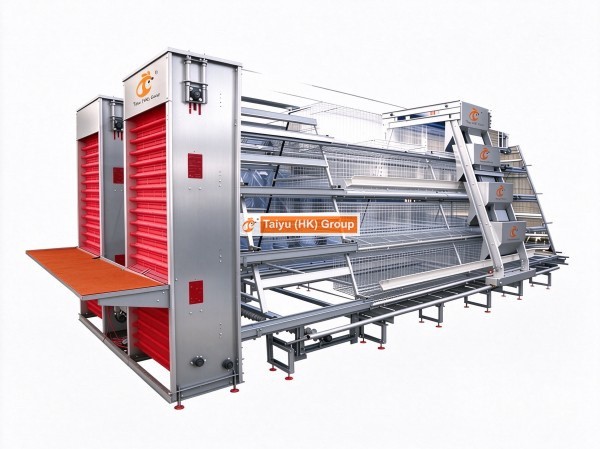
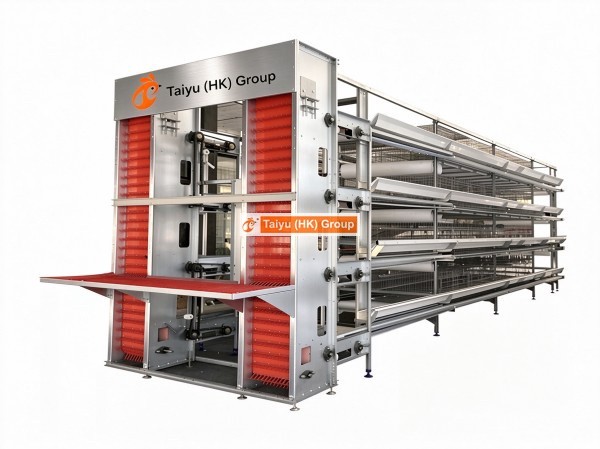
Check the popular types of chicken battery cages for sale
Want to learn types chicken battery cage for your poultry farm?
Section 1: Overview Of Core Advantages & Regional Adaptability
1. Africa highly corrosion-resistant, heavy-duty galvanized materials are well-suited for hot and humid environments, while low maintenance requirements significantly reduce the risks associated with initial investment.
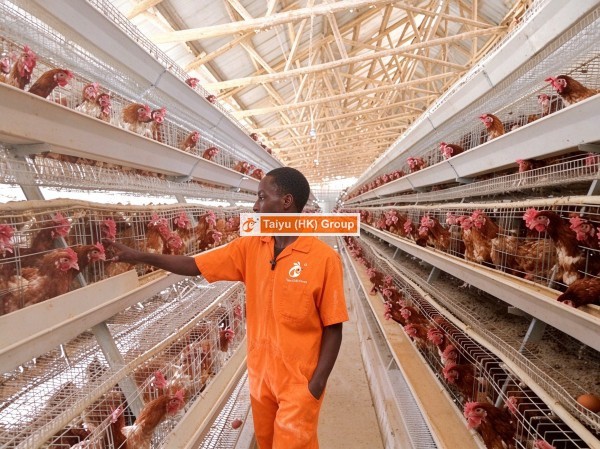
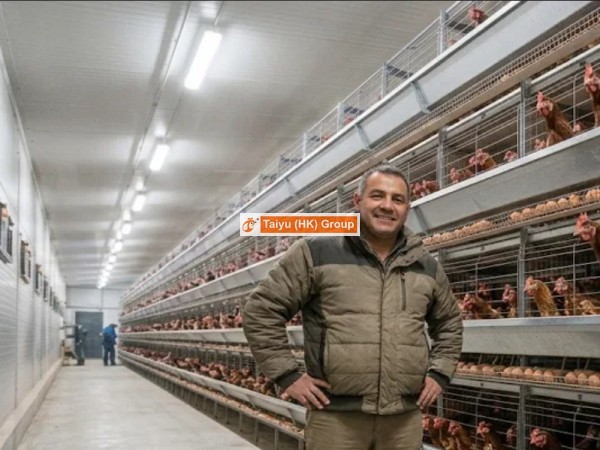
2. Southeast Asia the integration of automated manure removal and enclosed evaporative cooling (wet-pad) systems helps prevent heat stress and the spread of respiratory diseases exacerbated by high humidity.
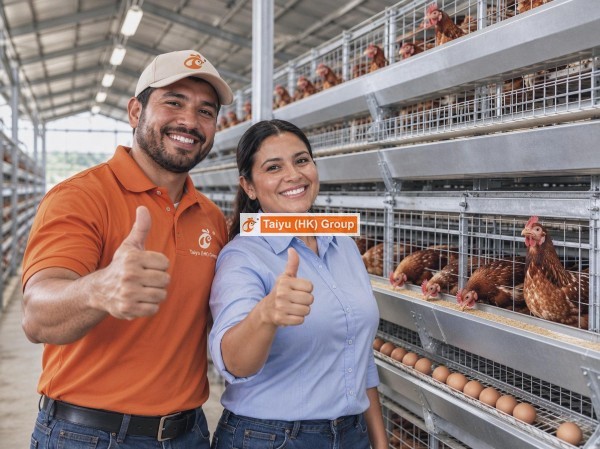
3. Latin America a highly intensive design substantially lowers the operating expenditure (OPEX) per bird for medium-to-large-scale farms, accelerating the capital recovery cycle.
Clients
Our farm in Southeast Asia suffers from tropical heat and disease outbreaks.
Can battery cages really fix this?
Taiyu Group (HK)
Absolutely.
By lifting birds off the ground, manure-borne bacterial infections fall drastically, and automated cooling tunnels can keep house temperatures 8–10°c lower than outside.
Learn More About Southeast Asia
Learn More About Latin America
1. Advantage Of Battery Cage Systems Powers Scalable Automation
The advantage of battery cage system is its ability to convert layer production into a scalable, automated operation from 1,000 to 100,000+ hens.
The advantage of chicken battery cage comes from coordinated feeding, drinking, egg collection, manure removal, ventilation, and monitoring systems that reduce labor, protect eggs, and stabilize output.
Scalable capacity modular cage sections can support 1,000, 10,000, 50,000, or 100,000+ layers through repeated rows, tiers, and drive sections.
Automation coverage automatic feed lines, nipple drinkers, egg belts, manure belts, and centralized control panels reduce daily manual handling.
Production control feed delivery accuracy, water availability, lighting duration, air velocity, and collection frequency can be managed by zone.
Engineering parameters a standard A-type cage section can house 120–200 birds, use a 2.2 m × 2.4 m unit footprint, and reach an installed height of 1.85–2.8 m.
Equipment capacity automated egg conveyors can handle 20,000–40,000 eggs per hour, while feed lines commonly operate across 30–50 m per drive section.
Scenario a 25,000-layer house with four cage rows, 4 tiers, 2 collection cycles per day, and 40,000 eggs per hour of conveyor capacity can move the daily egg output to the packing area within a short scheduled window.
The advantage of poultry battery cage is therefore not only higher bird density; it is repeatable control across larger flocks.
The advantage of layer battery cage is strongest when cage design, automation capacity, ventilation, and labor planning are matched to the farm’s target output.
2. Space Efficiency vs. Land Costs
2.1 Space Efficiency & High Stocking Density
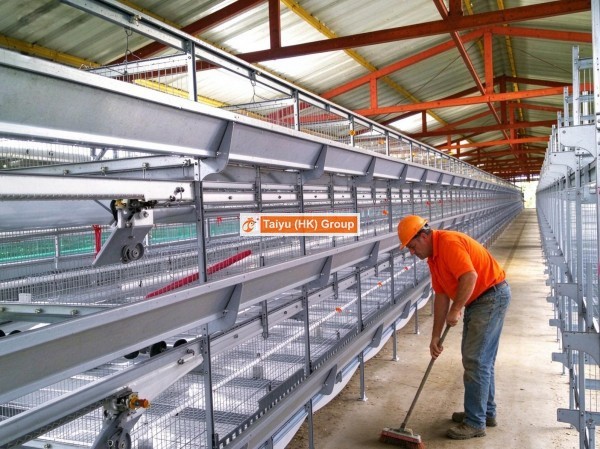
Battery cage systems reduce land requirements by stacking production levels vertically instead of relying on one floor-litter area.
A 3–16 tier configuration increases usable bird capacity per building footprint and makes high-density production possible where land is expensive.
From small-scale operations to large commercial projects, build a poultry business with a clear development strategy. WhatsApp to +8618830120193.
Vertical multiplier a 4-tier system can raise capacity from about 4,000 birds to 25,000 birds in the same 600 m² building footprint.
Density parameter layer battery cages commonly operate at 12–18 hens per m² of building area, with 418–488 cm² provided per hen depending on cage configuration.
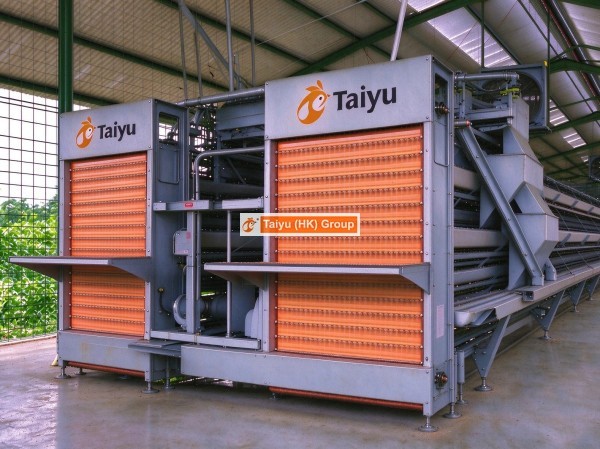
Cage dimensions a-type cage designs use a 2.2 m × 2.4 m unit footprint, with 43 × 38 × 38 cm individual cells; H-type cages use 60 × 62.5 × 48 cm individual cells.
Building utilization a 50 m × 12 m shed provides 600 m² of floor area; a 4-tier layout can therefore deliver roughly 6.25 times the bird capacity of the floor-rearing example.
Land-cost effect: If land cost is fixed, increasing capacity from 4,000 to 25,000 birds reduces the land cost allocated to each hen by about 84%.
Data is based on more than 20 years of after-sales follow-up records collected by taiyu group (HK).
Clients:
Land prices in our city are exploding. How many chickens can I squeeze into a 50m x 12m shed?
Taiyu Group (HK):
With traditional floor rearing, you get around 4,000 birds.
With a 4-tier H-type battery system, you can easily house up to 25,000 birds in that exact same footprint!
3. Superior Biosecurity & Disease Control
3.1 Improved Hygiene & Low Infection Risk
The advantage of chicken battery cage includes separating hens from droppings through sloped cage floors and mechanical manure belts.
This reduces exposure to wet litter, limits fecal contact, and helps interrupt conditions that favor coccidiosis and other disease cycles.
Manure-belt design polypropylene or pvc belts of 1.0–1.2 mm thickness, 500–600 mm width, and 0.5–1.0 m/min speed remove waste from beneath cage tiers.
Drive specification independent tier drives commonly use 1.1–1.5 kw motors, allowing controlled manure discharge without disturbing the flock.
Disease logic removing droppings reduces the wet-litter environment associated with coccidiosis; cage systems separate hens from fecal material through sloped floors and belts.
Medication effect lower infection pressure can reduce veterinary and medication spending by more than 30% in well-managed systems.
Operational target maintain dry manure on belts, remove waste daily or on a defined schedule, and disinfect belts and discharge channels between flocks.
Clients:
We keep losing layer hens to coccidiosis every rainy season.
Will cages stop this infection cycle?
Taiyu Group (HK):
Yes! In a battery cage, hens never touch their droppings.
The automatic manure belt clears waste daily, eliminating the breeding ground for parasites.
4. Automated Egg Collection & Broken Egg Reduction
4.1 Egg Protection & Higher Yield
The advantage of poultry battery cage is especially clear in egg protection.
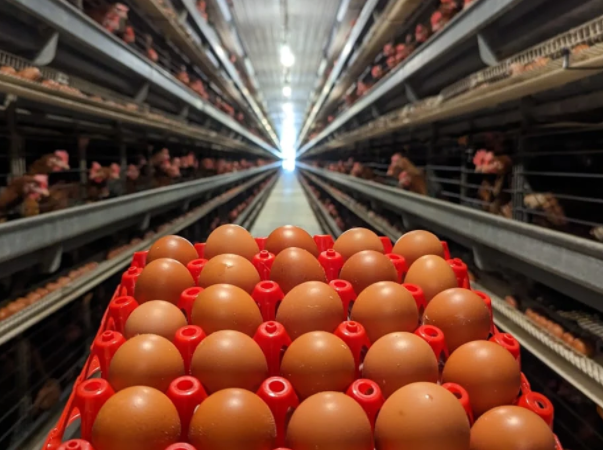
A 7°–8° cage-floor slope moves eggs away from hens and onto collection belts, reducing floor eggs, contamination, cracks, and manual handling losses.
Ready to take your poultry farming business to the next level? Connect with Taiyu Group (HK) and explore new possibilities. WhatsApp to +8618830120193.
Golden slope A 7°–8° floor angle allows eggs to roll away from hens before they are pecked, stepped on, or broken.
Egg-belt specification reinforced polypropylene belts of 100–150 mm width and 1.0–1.8 mm thickness transfer eggs from cage fronts toward central collection points.
Conveyor performance belt speeds of 6–12 m/min, 0.75–1.10 kw conveyor motors, and 2–4 collection cycles per day support stable collection without excessive egg impact.
Throughput capacity central egg conveyors can handle 20,000–40,000 eggs per hour, making them suitable for 25,000-layer houses and larger farms.
Profit example in a 25,000-hen flock producing 22,000 eggs daily, reducing breakage from 4% to 1.2% recovers about 616 eggs per day.
Quality benefit less manual contact reduces cracked eggs, dirty eggs, and losses during transfer to the packing room.
Data is based on more than 20 years of after-sales follow-up records collected by Taiyu Group (HK).
Clients:
Our workers steal eggs and break thousands every month during manual collection.
What's the fix?
Taiyu Group (HK):
Our central automatic egg collection system rolls eggs directly onto a soft belt straight to the packing room, completely bypassing human handling and cutting breakage under 1.5%.
5. Labor Savings & Optimal Feed Conversion (FCR)
5.1 Labor Reduction & FCR Efficiency
The advantage of layer battery cage becomes financially visible when automation reduces labor demand and feed waste.
Automatic feed trolleys, chain feeders, nipple drinking lines, and centralized controls allow one trained operator to manage a much larger flock than a manual system.
- Automated feeding chain feeders operate at 18–36 m/min, while complete feeding systems may use 500–1,200 kg hoppers to reduce refill frequency.
Drinking control nipple drinking lines are commonly specified at 8–12 birds per nipple, supporting consistent water access across cage rows.
Feed intake reference a laying hen consuming about 0.25 lb of feed per day also requires about 0.5 lb of water per day, showing why reliable nipple supply matters.
Maintenance parameter feed lines of 30–80 m per conveyor section and egg belts of 100–150 mm width should be inspected regularly to prevent uneven feed delivery or belt jams.
Data is based on more than 20 years of after-sales follow-up records collected by Taiyu Group (HK).
6. Taiyu (HK) Group - One Of China Largest Battery Cage System Manufacturer
1. Global Service Network
Headquartered in Hong Kong, with branches and factories in China, Vietnam, Thailand, Nigeria, Kenya, Ethiopia, and Tanzania, providing more localized project and after-sales support.
2. International Quality Standards
Strict quality control and double inspections.
Certifications and export documents include CE, SGS, ISO 9001, CCVO, PVOC, SONCAP, COC, ECTN, FORM F, and more.
3. One-To-One Vip Service
Dedicated account managers provide customized farm designs, equipment configurations, and quotations for projects ranging from 500 to 100,000+ birds per house.
4. Lifetime After-Sales Service
Installation guidance, equipment commissioning, operator training, remote technical support, spare parts supply, and ongoing maintenance.
7. Contact Us To Received Your Customized Poultry Farm Plan
Headquarters And Branchs

Hong Kong Headquarter Management Team
Hong Kong Headquarter Taiyu Industrial Group CO., LTD
China Hebei Best Machinery And Equipment CO., LTD
Nigeria Vanke Machinery And Equipment CO., LTD
Tanzania Best Machinery And Equipment CO., LTD
Ethiopia Best Hebei Machinery Manufacturing PLC




Reception /24 WhatsApp NO. : +8618830120193
PRODUCTS RECOMMENDED
 China Branch Manufacture Poultry Farm EquipmentRead More
 Ethiopia Branch Manufacture Poultry Farm EquipmentRead More
 Nigeria Branch Manufacture Poultry Farm EquipmentRead More
 Tanzania Branch Manufacture Poultry Farm EquipmentRead More
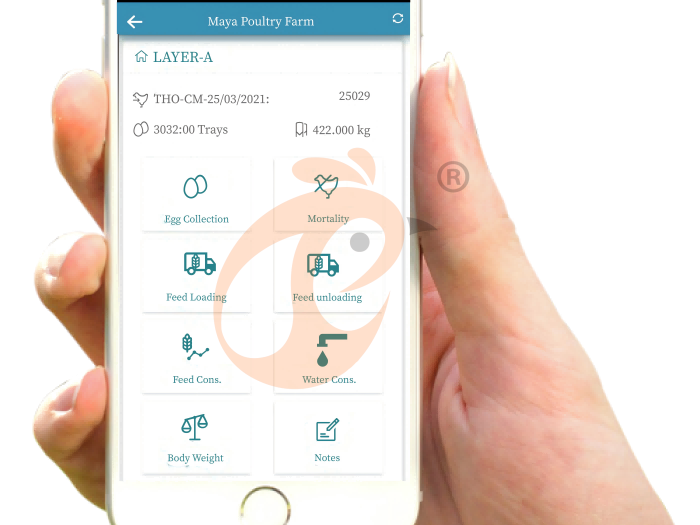
 IoT Smart Poultry FarmRead More
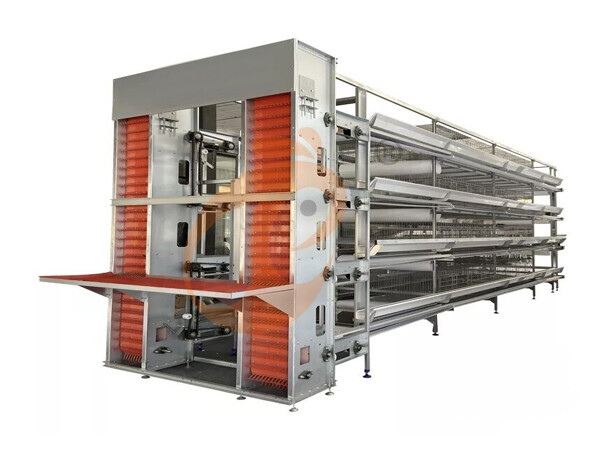
 >30,000 Layers Automatic H Type Battery CageRead More
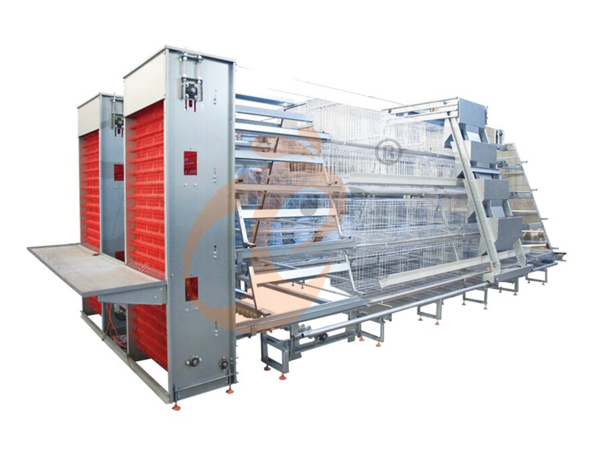
 10,000 - 30,000 Layers Automatic A Type Battery CageRead More
MESSAGE
NEWS
 50,000 - 100,000 chickens/house: poultry farm solution, chicken cage, poultry farm equipment, AI smart managementRead More
 30,000 - 50,000 chickens/house: poultry farm solution, chicken cage, poultry farm equipment, AI smart managementRead More
 10,000 - 30,000 chickens/house: poultry farm solution, chicken cage, poultry farm equipment, AI smart managementRead More
 100 - 10,000 chickens/house: poultry farm solution, chicken cage, poultry farm equipment, AI smart managementRead More