

BLOG
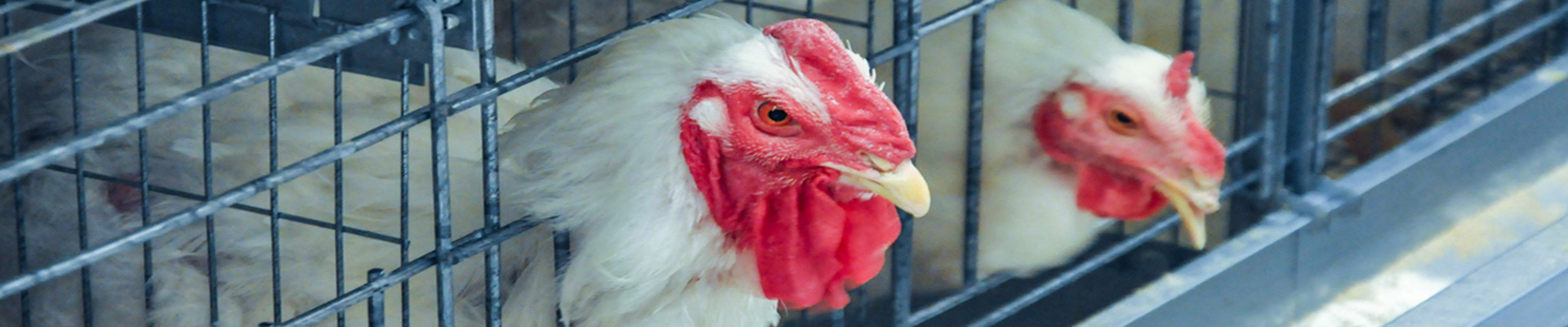
Choosing the right A-type chicken cage feeding system directly influences feed efficiency, labor management, and egg productivity in modern Ethiopian poultry farms.
Rapid urban population growth is increasing the demand for eggs and stable poultry production systems across the country.
Feed cost accounts for the majority of layer farm expenses, making waste reduction a top management priority.
Farmers must select feeding technologies compatible with Ethiopia's climate, labor conditions, and infrastructure realities.
Proper feeding distribution improves bird health, production stability, and long-term farm profitability.
Get professional poultry farm construction guidance, equipment selection solutions, and the latest price lists, whatsApp to +8618830120193, click to learn more:

Ethiopia Branch Office And Factory Of Poultry Farm Equipment
The Ethiopian Context: Why Feeding Precision Matters
The Ethiopian poultry sector is undergoing a transformation as farms shift from backyard production toward structured cage operations.
Modern farms increasingly rely on poultry feeding system for chicken cage farms to improve feed efficiency and manage large flocks consistently.
Precise feed delivery is essential to maintain Feed Conversion Ratio (FCR) and support productive commercial layer breeds such as Lohmann Brown and Bovans Brown.
Better feeding precision also reduces selective feeding behavior and improves shell quality consistency.
Data is for reference only.Swipe horizontally to view full table.
Deep-V Reinforced Manual Trough System
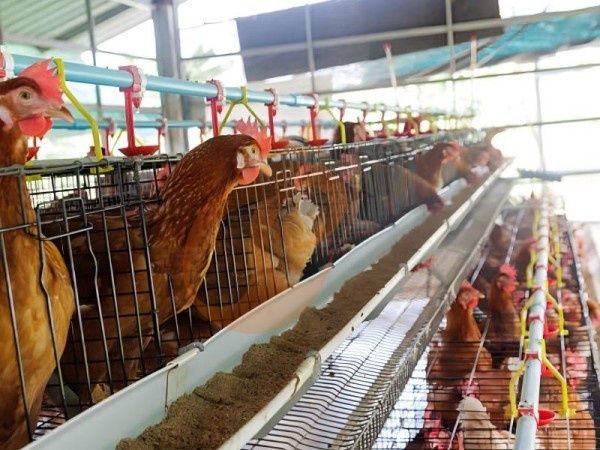
For many small-scale farms, the manual trough remains a practical option for A-type chicken cage feeding system management.
The deep-V trough structure reduces feed scattering caused by beak flicking behavior.
Manual systems are especially useful in areas where electricity supply remains inconsistent.
Durable galvanized steel troughs ensure long operational life under humid seasonal conditions.
Data is for reference only.Swipe horizontally to view full table.
Semi-Automatic Traveling Gantry Hopper System
The semi-automatic gantry feeder provides a balanced solution between automation and investment cost.
This automatic feeding system for layer chicken cages distributes feed evenly along cage rows using a moving hopper rail structure.
Uniform feed delivery ensures equal access for birds across all tiers of an A-type chicken cage installation.
Labor requirements decrease significantly while maintaining consistent feeding schedules.
Feed waste reduction also improves operational profitability.
European union standard reference only.
Data is for reference only.Swipe horizontally to view full table.
Circular Pipe Auger Distribution System
Dust contamination is a common challenge during Ethiopia's dry seasons.
Enclosed auger pipelines move feed from storage silos directly into feeding troughs.
This design protects feed nutrients and prevents airborne contamination.
The auger conveyor system is frequently used in poultry feeding system for chicken cage farms requiring continuous feed flow.
Data is for reference only.Swipe horizontally to view full table.
Flat Chain Feeding System
Flat chain feeders deliver a moving layer of feed throughout the entire trough length.
This system is adapted for modern A-type installations where feed consistency and distribution precision are important.
The moving chain mixes feed during transport, preventing birds from selectively eating larger feed particles.
Consistent nutrient intake supports shell strength and egg quality stability.
Data is for reference only.Swipe horizontally to view full table.
Solar Hybrid Automated Gantry System
Energy reliability remains a challenge for farms located far from national power infrastructure.
Solar powered systems allow feeding automation even when the electricity grid is unavailable.
Solar panels installed on poultry houses charge battery banks that operate DC motors.
This design allows feeding schedules to remain stable throughout the production cycle.
Data is for reference only.Swipe horizontally to view full table.
Managing Feed Conversion In A-Type Chicken Cage Farms
Feeding systems alone do not determine productivity.
Proper feed formulation, particle size, and moisture control also influence feed efficiency.
Mash feed remains common in Ethiopia, although ingredient variation can affect flow properties in automated equipment.
Farmers must monitor feed quality closely to maintain stable production performance.
Data is for reference only.Swipe horizontally to view full table.
Frequently Asked Questions
Q1: What feeding system works best with A-type chicken cage farms in Ethiopia?
A1: Semi-automatic gantry feeding systems are widely used because they balance investment cost, feed efficiency, and manageable power requirements.
Q2: How can poultry farms reduce feed waste in chicken cage systems?
A2: Using deep-V trough designs, controlled feed levels, and automated distribution can significantly reduce feed spillage.
Q3: Is solar powered feeding equipment suitable for Ethiopian poultry farms?
A3: Solar powered systems are effective for remote farms where electricity supply is unstable or unavailable.
Ethiopia Best Hebei Machinery Manufacturing Plc - One Of Ethiopia Largest Feeding System Supplier
Global factory direct supply ensuring competitive equipment pricing.
Professional experience in poultry farm equipment manufacturing.
Reliable poultry cage and farm infrastructure engineering support.
Turn-key poultry farming project design and installation service.
International logistics, technical guidance, and long-term service support.
Contact Us To Received Your Customized Poultry Farm Plan
Headquarters And Branchs

Hong Kong Headquarter Management Team
Hong Kong Headquarter Taiyu Industrial Group CO., LTD
China Hebei Best Machinery And Equipment CO., LTD
Nigeria Vanke Machinery And Equipment CO., LTD
Tanzania Best Machinery And Equipment CO., LTD
Ethiopia Best Hebei Machinery Manufacturing PLC




Reception /24 WhatsApp NO. : +8618830120193
PRODUCTS RECOMMENDED
 China Branch Manufacture Poultry Farm EquipmentRead More
 Ethiopia Branch Manufacture Poultry Farm EquipmentRead More
 Nigeria Branch Manufacture Poultry Farm EquipmentRead More
 Tanzania Branch Manufacture Poultry Farm EquipmentRead More
 IoT Smart Poultry FarmRead More
 >30,000 Layers Automatic H Type Battery CageRead More
 10,000 - 30,000 Layers Automatic A Type Battery CageRead More
MESSAGE
NEWS
 What Makes A Factory-Direct A Type Chicken Battery Cage More Cost-Effective? 4 ReasonsRead More
 Deep Litter System For Broilers Vs Cage | Which Is More Profitable?Read More
 Free Range Broiler System Vs Intensive Farming | Which Is More Profitable?Read More
 Broiler Floor Rearing System Cost | 6 Factors Affecting PriceRead More