

BLOG
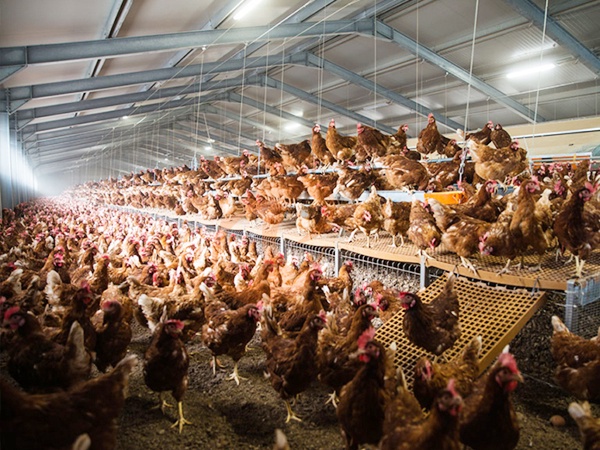
Automatic poultry equipment installation determines production efficiency, environmental control accuracy, and flock management consistency.
Poultry house dimensions influence suspension loads, equipment spacing, airflow distribution, and maintenance accessibility.
Integration of feeding, drinking, ventilation, and monitoring systems requires coordinated engineering execution and verification.
Calibration procedures affect feed delivery precision, water consumption stability, temperature regulation, and alarm responsiveness.
Structured commissioning minimizes operational interruptions, supports biological performance targets, and improves long-term asset utilization.
Get professional poultry farm construction guidance, equipment selection solutions, and the latest price lists, whatsApp to +8618830120193, click to learn more:
Measure Poultry House Before Equipment Delivery
Before equipment arrives on site, accurate building measurements must be verified against engineering drawings.
Dimensional deviations may affect feed line positioning, drinker alignment, cable routing, and maintenance pathways.
Pre-installation verification reduces rework during assembly and improves installation efficiency.
Data is for reference only. Swipe horizontally to view full table.
Survey markers should be placed before unloading equipment.
Reference points help maintain alignment accuracy throughout installation activities.
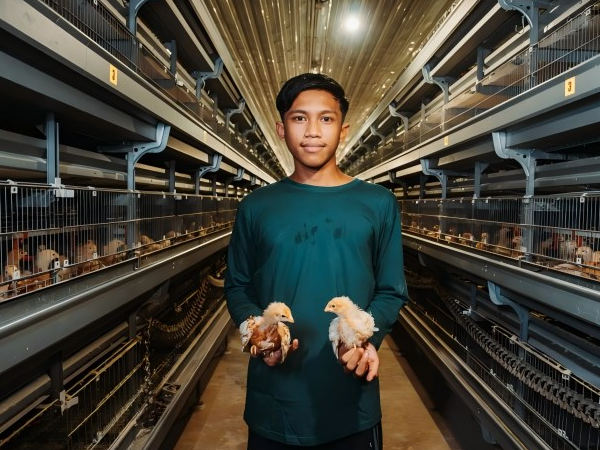
Install Automatic Poultry Feeding System
The automatic poultry feeding system should be assembled before drinker lines because feed equipment occupies the primary centerline of the poultry house.
Consistent spacing improves feed accessibility and bird distribution.
Data is for reference only. Swipe horizontally to view full table.
Center spacing of 2.8 m between feed lines is commonly applied in commercial broiler houses.
Suspension tension should remain consistent to prevent feed accumulation inside transport pipes.
How Feed Uniformity Influences Broiler Performance
Feed availability directly influences growth consistency.
Uneven feed distribution creates body-weight variation within the flock.
Birds with delayed access consume less feed during peak feeding periods, which may affect harvest uniformity and processing efficiency.
Data is for reference only. Swipe horizontally to view full table.
Commercial operations typically monitor flock uniformity because weight consistency influences production planning and processing schedules.
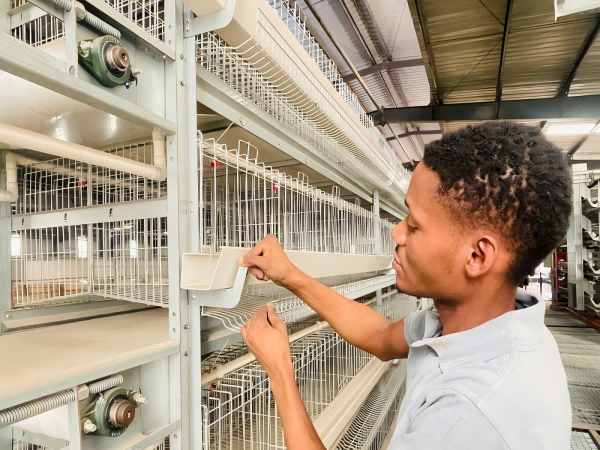
Assemble Nipple Drinking System
Water systems should be installed after feed line completion.
Proper pressure regulation ensures uniform discharge throughout the entire drinking network.
Leak prevention is critical because excessive litter moisture affects environmental conditions.
Data is for reference only. Swipe horizontally to view full table.
Water line flushing should be performed before bird placement to remove debris generated during installation.
Install Environmental Control Equipment
Environmental control equipment forms the operational core of poultry farm automation.
Sensor positioning directly influences monitoring accuracy and controller response performance.
Data is for reference only. Swipe horizontally to view full table.
Environmental monitoring devices should remain accessible for inspection and calibration throughout production cycles.
Install Ventilation And Cooling Equipment
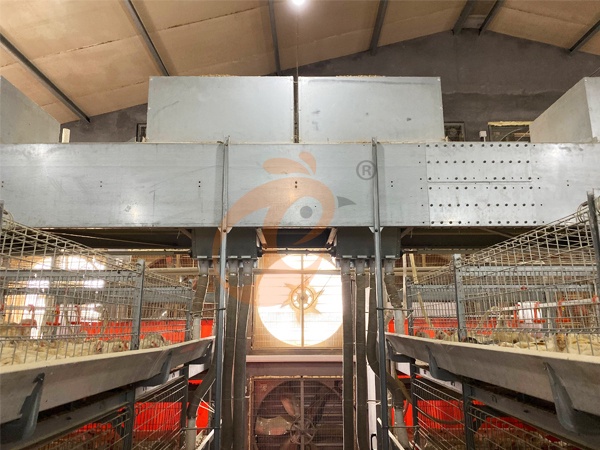
Ventilation systems should be installed according to airflow calculations rather than available wall space.
Correct equipment placement supports temperature management and air quality control.
Data is for reference only. Swipe horizontally to view full table.
Ventilation equipment should be tested after electrical connections are completed.
Airflow balancing reduces stagnant air zones within the poultry house.
How Ammonia Concentration Affects Poultry Health
Air quality management directly influences respiratory health.
Ammonia accumulation may affect feed intake and growth performance.
Automated ventilation systems continuously adjust airflow according to environmental conditions.
Data is for reference only. Swipe horizontally to view full table.
Environmental targets should be monitored continuously during the entire production cycle.
Perform Commissioning And Calibration
All equipment should undergo functional testing before bird placement.
Calibration verifies communication between controllers, motors, sensors, and emergency systems.
Data is for reference only. Swipe horizontally to view full table.
Commissioning records provide a reference baseline for future maintenance and troubleshooting activities.
Establish Preventive Maintenance Schedule
Preventive maintenance extends equipment lifespan and reduces unexpected shutdowns.
Maintenance tasks should follow a documented schedule supported by operational records.
Data is for reference only. Swipe horizontally to view full table.
Routine maintenance contributes to stable equipment performance throughout multiple production cycles.
Installation Cost Structure
Investment planning should include equipment procurement, labor, commissioning, and contingency allocation.
European union standard reference only.
Data is for reference only. Swipe horizontally to view full table.
Budget planning should be completed before procurement to avoid project delays caused by funding gaps.
Frequently Asked Questions
Q1: What building width is recommended for automatic poultry equipment installation?
A poultry house width of 12 m to 18 m is commonly used for commercial broiler and layer projects.
Equipment layout, ventilation design, and bird capacity determine the final dimension selection.
Engineering drawings should always be verified before installation begins.
Q2: How long does installation usually take?
A complete installation project for a 120 m poultry house generally requires 7 to 15 working days.
Project duration depends on labor availability, equipment complexity, electrical work, and site readiness.
Q3: Why is system calibration necessary before bird placement?
Calibration verifies feed delivery accuracy, water pressure stability, sensor performance, and controller communication.
Poultry farm automation depends on accurate operating parameters.
Verification before bird placement helps prevent performance losses during the first production cycle.
Taiyu (HK) Group - One Of China Largest Poultry Equipment Manufacturer
Automatic poultry equipment including feeding, drinking, ventilation, cooling, and environmental control systems.
Global factory-direct supply supported by stable manufacturing capacity and project scheduling.
Complete poultry equipment and poultry cage solutions for commercial poultry farms.
Turn-key engineering services covering design, production, installation, and commissioning.
Export experience across Asia, Africa, the Middle East, and Latin America.
Contact Us To Received Your Customized Poultry Farm Plan
Headquarters And Branchs

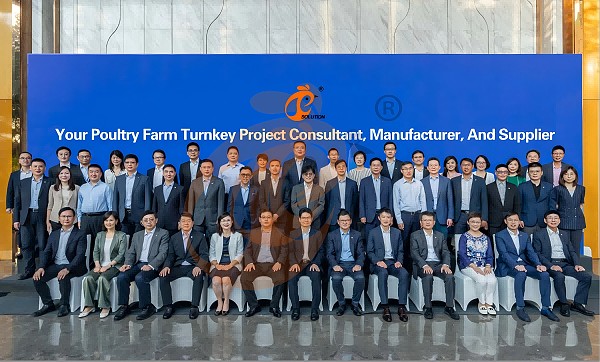
Hong Kong Headquarter Management Team
Hong Kong Headquarter Taiyu Industrial Group CO., LTD
China Hebei Best Machinery And Equipment CO., LTD
Nigeria Vanke Machinery And Equipment CO., LTD
Tanzania Best Machinery And Equipment CO., LTD
Ethiopia Best Hebei Machinery Manufacturing PLC




Reception /24 WhatsApp NO. : +8618830120193
PRODUCTS RECOMMENDED
 China Branch Manufacture Poultry Farm EquipmentRead More
 Ethiopia Branch Manufacture Poultry Farm EquipmentRead More
 Nigeria Branch Manufacture Poultry Farm EquipmentRead More
 Tanzania Branch Manufacture Poultry Farm EquipmentRead More
 IoT Smart Poultry FarmRead More
 >30,000 Layers Automatic H Type Battery CageRead More
 10,000 - 30,000 Layers Automatic A Type Battery CageRead More
MESSAGE