

NEWS
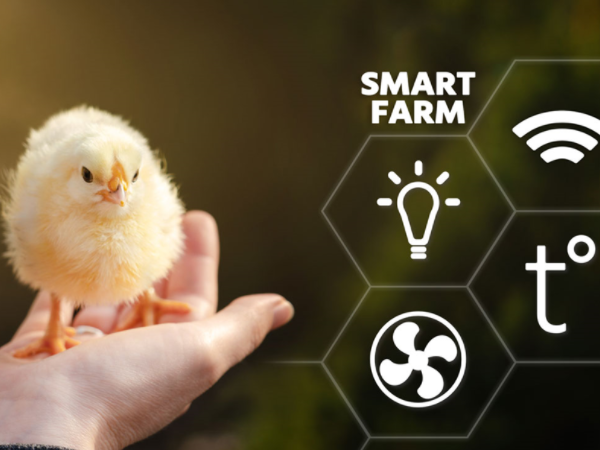
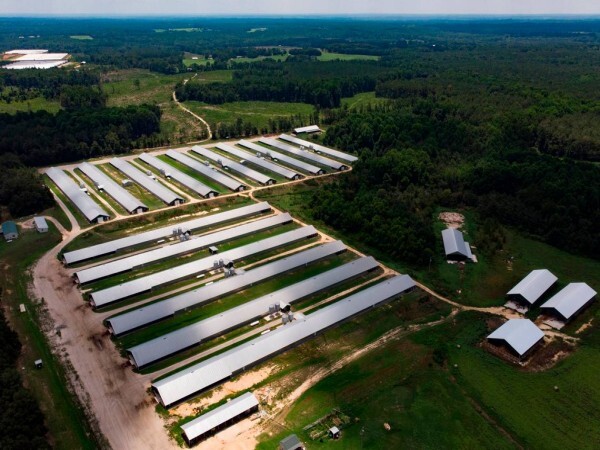
Modern poultry farming structure combines engineered buildings, automated equipment, and intelligent environmental management for efficient commercial production.
Integrated planning A 10,000-bird project combines poultry houses, feed storage, and automated production systems.
Flexible production layer, broiler, and breeder farms require different housing and equipment configurations.
Scalable investment A customized poultry farming structure supports phased expansion and production growth.
Better performance automated controllers and biosecurity systems improve operational stability.
1. Essential Components Of A Poultry Farming Structure For Commercial Buildings
Commercial poultry farms require coordinated production buildings and supporting facilities, typically organized into 6–8 functional zones.
1.1 Poultry Houses And Steel Building Systems
Poultry houses use steel frames, insulated sandwich panels, and reinforced concrete foundations.
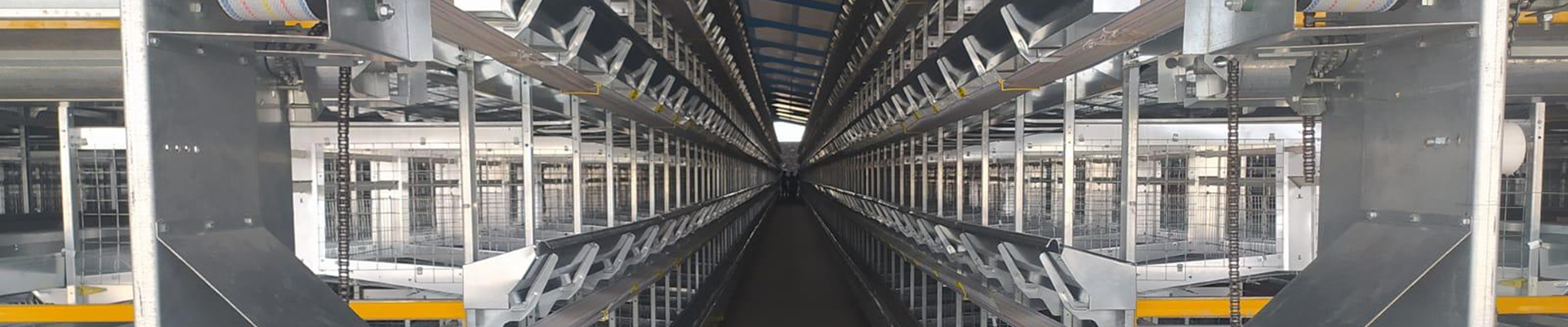
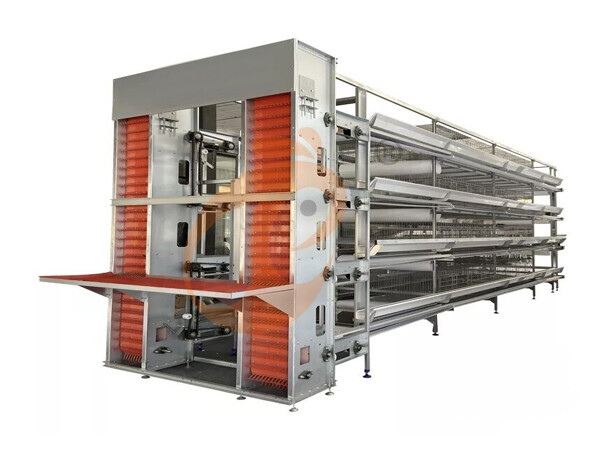
A-type layer cages 2.2 m × 2.4 m per set, available in 3–5 tiers.
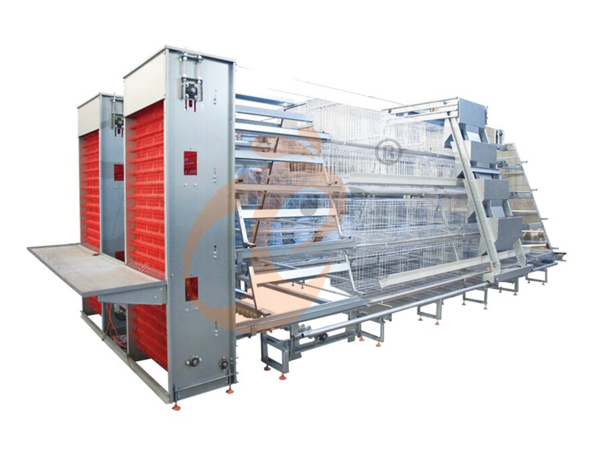
H-type layer cages 1.25 m × 1.25 m base dimensions, available in 4–16 tiers.
Roof insulation 50–100 mm panels.
Floor drainage 1–2% gradient.
Small semi-automatic layer houses generally use 8.4 m widths, while automated H-type installations can use 7.2 m or 10 m widths.
1.2 Feed Storage And Silos
Galvanized steel silos connect to automatic augers and feeding pipelines.
Commercial projects commonly use 2–4 silos, with capacities of 8–30 tons each.
1.3 Egg Collection And Storage Areas
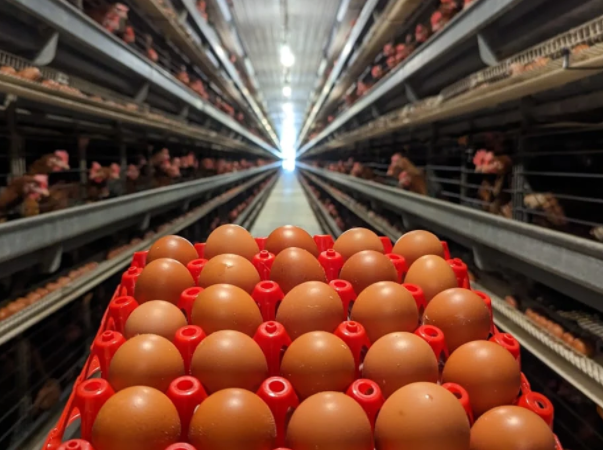
Egg conveyors connect poultry houses with grading and packaging facilities.
A commercial grading area may include 1–2 sorting lines and 4–6 packaging stations.
Integrated projects can use Automatic Egg Production Equipment to coordinate collection and packaging.
1.4 Broiler Slaughter And Packaging Facilities
Integrated broiler facilities include slaughtering, defeathering, evisceration, washing, chilling, and packaging areas.
Separate raw-product and clean-packaging zones help maintain food safety.
1.5 Manure Management And Waste Treatment
Manure systems include collection belts, scraper equipment, drying machines, and composting facilities.
Centralized treatment can serve multiple poultry houses while reducing waste-handling costs.
1.6 Water Supply And Environmental Control
Water systems include storage tanks, filtration units, pumps, pressure regulators, and drinking pipelines.
Storage capacity should cover 24–48 hours of expected consumption.
1.7 Office And Supporting Facilities
Supporting buildings include veterinary rooms, staff changing facilities, workshops, warehouses, and administration offices.
Separate access routes and sanitation stations strengthen farm biosecurity.
2. Commercial Poultry Farming Structure For 1,000 to 100,000+ Birds
Farm capacity determines building dimensions, equipment investment, and supporting infrastructure.
The following configurations provide preliminary references.
Data is for reference only.Swipe horizontally to view full table.
(1) Small-Scale Poultry Farming Structure
Small projects benefit from affordable construction and semi-automatic equipment.
A-type 3-tier cages accommodate 120 birds per set, while 4-tier cages accommodate 160 birds.
A 1,000-bird project requires 9 sets, providing 1,080 places.
A 5,000-bird project can use 32 sets of 4-tier cages, providing 5,120 places.
(2) Medium-Scale Poultry Farming Structure
Medium-sized farms benefit from centralized feed storage and automated production equipment.
A 20,000-bird project can use 125 sets of H-type 5-tier cages, providing 20,000 places.
The recommended 2-row arrangement uses a 7.2 m-wide house measuring approximately 88.75 m long.
A development plan should reserve 15–20% of available land for expansion.
Get professional poultry farm construction guidance, equipment selection solutions, and the latest price lists. WhatsApp to +8618830120193.
(3) Large-Scale Integrated Poultry Farming Structure
H-type cages support large automated operations, with configurations from 4 to 16 tiers and capacities from 128 to 512 birds per set.
A 50,000-bird project can use 224 sets of 7-tier cages, providing 50,176 places.
A 100,000-bird project can use 224 sets of 14-tier cages, providing 100,352 places.
3. Choosing The Right Poultry Farming Structure For Different Production Systems
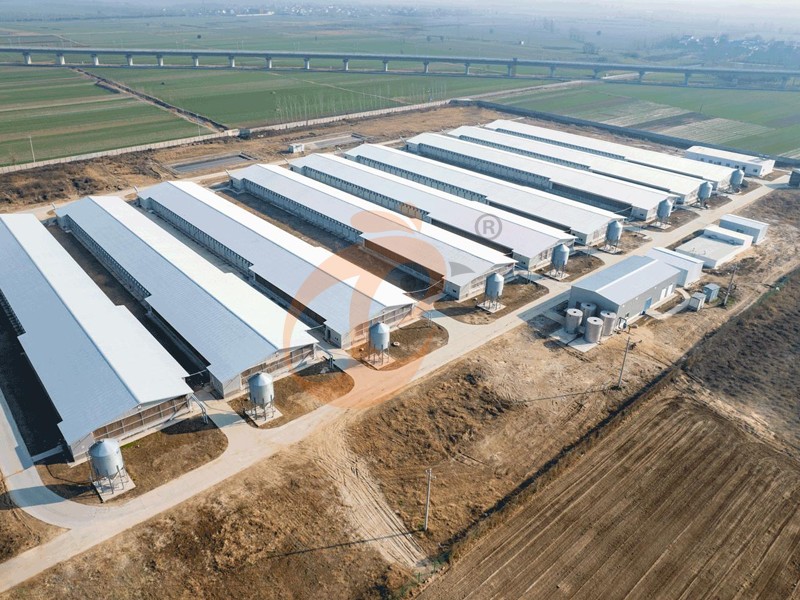
Production objectives determine housing design, equipment selection, ventilation, and daily management requirements.
3.1 Layer Poultry Farming Structure And Equipment Configuration
Layer farms use A-type or H-type cages depending on production capacity.
A-type cages measure 2.2 m × 2.4 m per set, with 3-tier and 4-tier options accommodating 120 and 160 birds respectively.
H-type cages use 1.25 m × 1.25 m base dimensions and support 4–16 tiers, accommodating 128–512 birds per set.
Data is for reference only.Swipe horizontally to view full table.
The recommended 79-set arrangement provides 10,112 calculated bird places.
Final quantities depend on building dimensions and equipment layout.
3.2 Broiler Poultry Farming Structure And Equipment Configuration
Broiler houses prioritize rapid growth, litter management, and environmental control.
Floor-rearing systems commonly use automatic pan feeders, nipple drinkers, brooders, and tunnel ventilation.
Data is for reference only.Swipe horizontally to view full table.
Equipment selection should reflect market weight, climate conditions, and ventilation requirements.
3.3 Breeder Poultry Farming Structure And Equipment Configuration
Breeder farms produce fertile eggs and require specialized feeding, nesting, and egg collection systems.
Male and female birds may need separate feeding arrangements.
Data is for reference only.Swipe horizontally to view full table.
Final configurations should follow genetic strain recommendations and reproductive management requirements.
3.4 Manual And Automatic Poultry Farming Structure
Different housing methods require different construction and management arrangements.
Data is for reference only.Swipe horizontally to view full table.
Planning a 20,000–100,000-bird layer farm? Get customized poultry house layouts, automated cage equipment recommendations, and updated quotations. WhatsApp to +8618830120193.
4. Customized Poultry Farming Structure Design And Equipment Solutions
Professional engineering connects building construction, production equipment, and operational requirements.
4.1 Customized Poultry House Design
Customized designs consider bird capacity, structural loads, insulation, and ventilation.
A-type projects accommodate 2.2 m × 2.4 m cage sets, while H-type projects use 1.25 m × 1.25 m base dimensions.
4.2 Poultry Farm Layout Planning
Layout planning integrates poultry houses, storage, processing areas, roads, drainage, and biosecurity zones.
A 20,000-bird H-type project can use a 7.2 m-wide house measuring 88.75 m long.
A 50,000-bird project can use a 10 m-wide house measuring 103.75 m long.
4.3 Automatic Equipment Configuration
Automatic configurations include feeding systems, nipple drinkers, egg conveyors, manure belts, cooling pads, and ventilation fans.
Complete Automatic Layer Cage Equipment Solutions allow buyers to compare cage tiers, bird capacities, and collection systems.
4.4 Equipment List And Project Quotation
Professional quotations should identify equipment models, quantities, specifications, accessories, and delivery arrangements.
Buyers should compare installation requirements, electricity consumption, spare parts, and warranty conditions.
4.5 Project Installation And Technical Support
Installation guidance, commissioning, operator training, remote troubleshooting, and spare parts support help maintain reliable operation.
For customized engineering drawings and equipment quotations, contact the Taiyu Group (HK) Layer Poultry Equipment Team.
Get a customized poultry farm construction plan, professional equipment selection, and the latest quotation. WhatsApp to +8618830120193.
Taiyu (HK) Group - One Of China's Largest Poultry Farm Equipment Manufacturer
1. Global Service Network
Headquartered in Hong Kong, with branches and factories in China, Vietnam, Thailand, Nigeria, Kenya, Ethiopia, and Tanzania, providing more localized project and after-sales support.
2. International Quality Standards
Strict quality control and double inspections.
Certifications and export documents include CE, SGS, ISO 9001, CCVO, PVOC, SONCAP, COC, ECTN, FORM F, and more.
3. One-To-One VIP Service
Dedicated account managers provide customized farm designs, equipment configurations, and quotations for projects ranging from 500 to 100,000+ birds per house.
4. Lifetime After-Sales Service
Installation guidance, equipment commissioning, operator training, remote technical support, spare parts supply, and ongoing maintenance.
Contact Us To Received Your Customized Poultry Farm Plan
Headquarters And Branchs

Hong Kong Headquarter Management Team
Hong Kong Headquarter Taiyu Industrial Group CO., LTD
China Hebei Best Machinery And Equipment CO., LTD
Nigeria Vanke Machinery And Equipment CO., LTD
Tanzania Best Machinery And Equipment CO., LTD
Ethiopia Best Hebei Machinery Manufacturing PLC




Reception /24 WhatsApp NO. : +8618830120193
PRODUCTS RECOMMENDED
 China Branch Manufacture Poultry Farm EquipmentRead More
 Ethiopia Branch Manufacture Poultry Farm EquipmentRead More
 Nigeria Branch Manufacture Poultry Farm EquipmentRead More
 Tanzania Branch Manufacture Poultry Farm EquipmentRead More
 IoT Smart Poultry FarmRead More
 >30,000 Layers Automatic H Type Battery CageRead More
 10,000 - 30,000 Layers Automatic A Type Battery CageRead More
MESSAGE
NEWS
 50,000 - 100,000 chickens/house: poultry farm solution, chicken cage, poultry farm equipment, AI smart managementRead More
 30,000 - 50,000 chickens/house: poultry farm solution, chicken cage, poultry farm equipment, AI smart managementRead More
 10,000 - 30,000 chickens/house: poultry farm solution, chicken cage, poultry farm equipment, AI smart managementRead More
 100 - 10,000 chickens/house: poultry farm solution, chicken cage, poultry farm equipment, AI smart managementRead More