

NEWS
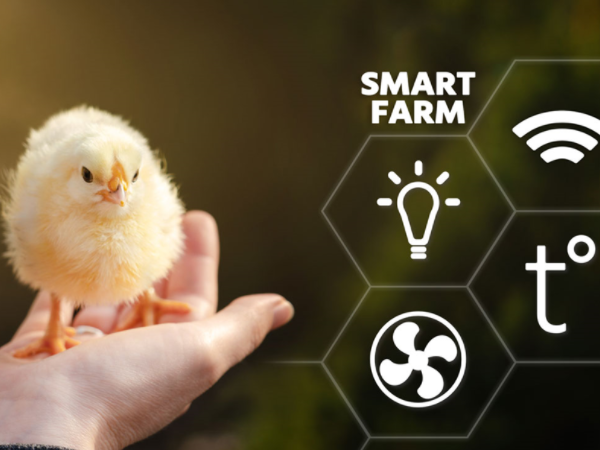
Automatic poultry farming combines precision engineering, intelligent equipment, and commercial poultry management to improve production efficiency and farm scalability.
Capacity planning projects covering 500–120,000 birds.
Environmental engineering temperature control accuracy of ±0.5°c.
Equipment performance feed distribution capacity of 1–3 tons/hour.
Digital management 24/7 monitoring with configurable alarm thresholds.
1. What Is An Automated Poultry Farm And How Does Automatic Poultry Farming Work?
An automated poultry farm uses mechanical equipment, electrical controls, and intelligent monitoring to manage commercial production.
Typical installations combine 4–7 operational systems, including feeding, drinking, ventilation, manure removal, egg collection, and environmental control.
1.1 Manual vs. Automated Poultry Farming
Traditional facilities depend on manual operations, while automated farms use motors, conveyors, sensors, and programmable controllers.
A centralized system can coordinate 5–8 equipment functions and reduce repetitive inspections.
2. How To Plan Automatic Poultry Farming from 1,000 to 100,000+ Birds?
2.1 Small-Scale Automated Poultry Farm: 1,000–5,000 Birds
Small farms should prioritize semi-automatic A-frame layer cages, feeders, nipple drinkers, and ventilation fans.
Recommended configurations include 3-tier cages holding 120 birds per set and 4-tier cages holding 160 birds per set.
For example, a 1,000-bird project can use 9 sets of 3-tier cages, providing an actual capacity of 1,080 birds.
A 5,000-bird project can use 32 sets of 4-tier cages, providing 5,120 places.
The recommended house width is approximately 8.4 meters, with 2 meters reserved at both ends, 1.2-meter internal aisles, and 1.2-meter wall clearances.
2.2 Medium-Scale Automated Poultry Farm: 10,000–30,000 Birds
Medium-sized facilities benefit from fully automatic feeding, drinking, manure removal, and egg collection.
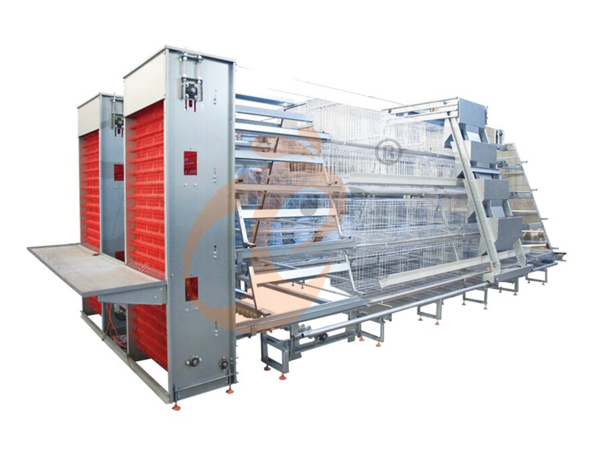
A-frame and H-frame configurations can be selected according to building dimensions and required capacity.
For a 15,000-bird project, a 4-tier, 3-row configuration can use 94 sets, providing 15,040 bird places.
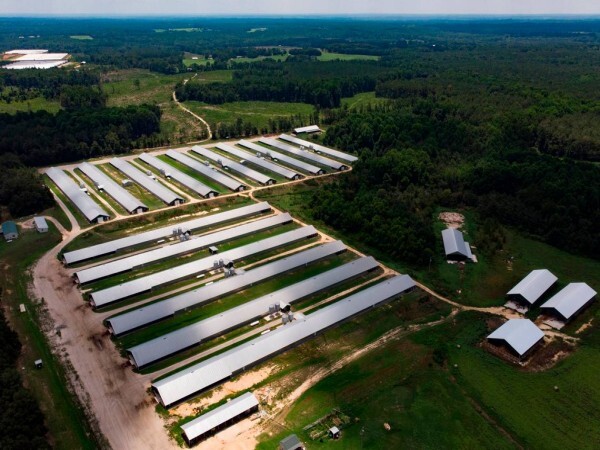
The recommended house width is 13.6 meters, with approximately 80.4 meters of total length.
An alternative 20,000-bird H-frame design can use 125 sets of 5-tier cages in 2 rows, providing 20,000 places in a house approximately 7.2 meters wide and 88.75 meters long.
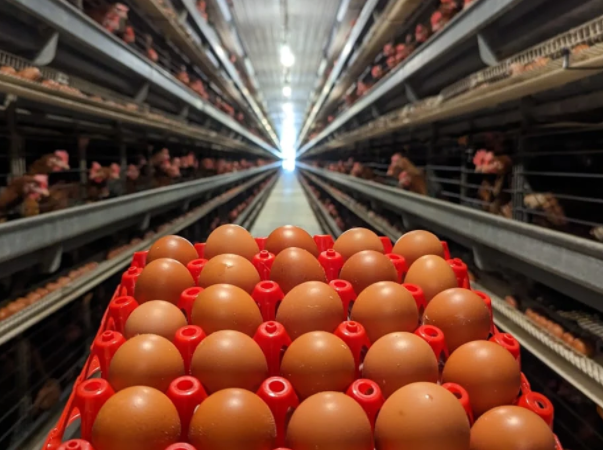
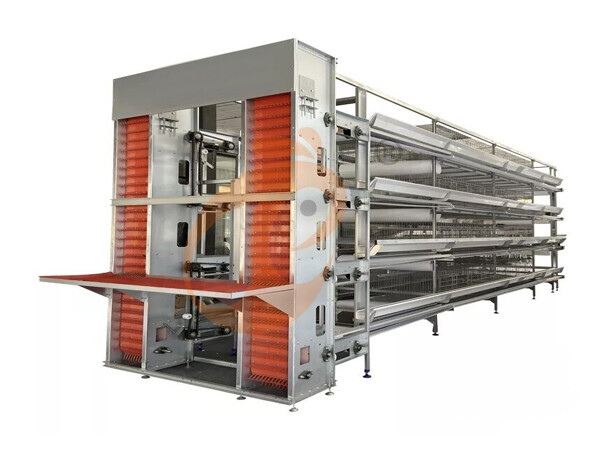
For projects that require centralized egg handling, an Automatic Egg Collection System can be integrated into the poultry house layout to transport eggs from cage rows to a central collection point.
2.3 Large-Scale Automated Poultry Farm: 50,000–100,000+ Birds
Large facilities require professional engineering, multi-tier H-frame cages, centralized control, and coordinated egg and manure transportation.
A 50,000-bird project can use 224 sets of 7-tier cages arranged in 3 rows, providing 50,176 places.
A 100,000-bird project can use 224 sets of 14-tier cages in 3 rows, providing 100,352 places.
For higher-capacity configurations, 12-tier and 16-tier cages provide 384 and 512 birds per set respectively.
House dimensions must account for cage height, equipment access, structural loading, and maintenance clearance.
2.4 Key Factors Affecting Automatic Poultry Farming Design
Poultry type broiler, layer, and breeder projects require different equipment.
Climate seasonal temperatures influence ventilation and cooling requirements.
Land building orientation, drainage, and expansion space affect layout.
Capacity cage tiers, rows, and sets determine actual bird capacity.
Regulations local stocking-density, welfare, and environmental requirements must be followed.
Data is for reference only.Swipe horizontally to view full table.
Project-specific planning examples based on the corresponding cage configurations.
House dimensions include the stated equipment and working clearances; actual construction drawings require site verification.
Get professional poultry farm construction guidance, equipment selection solutions, and the latest price lists, what’sApp to +8618830120193.
3. What Equipment Is Needed For Automatic Poultry Farming?
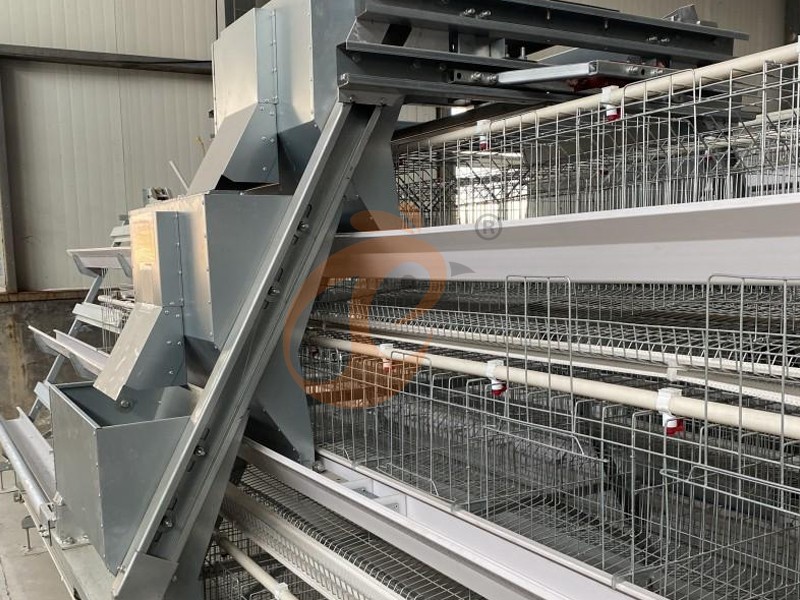
3.1 Poultry housing and cage systems
3.2 Automatic feeding systems
3.3 Automatic drinking systems
3.4 Automatic manure removal systems
3.5 Automatic egg collection systems
3.6 Ventilation and climate control systems
3.7 Intelligent poultry farm control systems
Environmental sensors and data collection
Intelligent controllers and automatic equipment control
AI-Based data analysis and production optimization
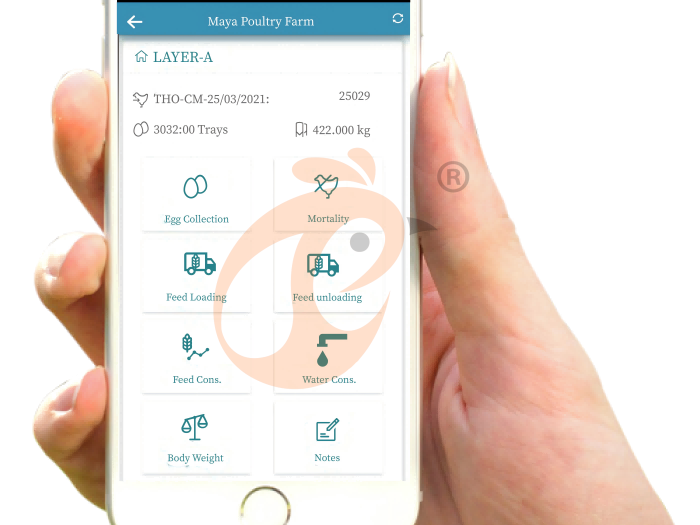
Remote monitoring and mobile management
Automatic alarms and abnormal condition alerts
4. What Are The Benefits and Limitations Of Automatic Poultry Farming?
4.1 Labor Efficiency And Daily Farm Management
Automation reduces repetitive operations and allows workers to focus on flock health and equipment supervision.
Centralized monitoring can manage 2–10 production zones, while scheduled inspections remain necessary.
4.2 Feed, Water And Production Management
Automatic feeding and drinking equipment supports consistent resource distribution.
Water meters, feed sensors, and production records help managers identify abnormal consumption and evaluate daily performance.
For egg production projects, integrated Taiyu Group (HK) Automatic Egg Collection Equipment can connect nesting areas, longitudinal conveyors, and centralized collection facilities.
4.3 Climate Control And Data-Based Decisions
Environmental control helps maintain suitable poultry-house conditions.
Temperature, humidity, airflow, and ammonia measurements provide useful information for ventilation management.
Data is for reference only.Swipe horizontally to view full table.
Operating references vary with breed, bird age, housing design, and climate.
Air-speed settings must account for temperature and bird comfort.
4.4 Initial Investment And Maintenance Requirements
Automation increases initial capital requirements but reduces repetitive manual operations.
Maintenance schedules should cover motor lubrication, belt alignment, sensor calibration, and electrical inspections at intervals determined by equipment manufacturers.
5. How Much Does Automatic Poultry Farming Cost?
5.1 Poultry House Construction Costs
Construction costs depend on foundations, steel structures, insulation, roofing, drainage, and local labor.
Building specifications should account for wind loads, roof spans, and thermal performance.
5.2 Equipment And Automation Costs
Equipment configurations differ between broiler and layer farms.
Layer installations require A-frame or H-frame cages, feeding troughs, nipple drinkers, manure belts, and egg conveyors.
Broiler houses prioritize brooding, floor feeding, and litter management.
Data is for reference only.Swipe horizontally to view full table.
Illustrative budgeting allowances, not supplier quotations.
European union standard reference only.
5.3 Intelligent Control System Costs
Basic controllers manage individual machines, while advanced plc systems connect multiple production processes.
Intelligent configurations may include 16–64 input channels, 8–32 output channels, and 2–4 communication interfaces.
5.4 Installation, Infrastructure And Operating Costs
Additional expenses include transportation, commissioning, electrical wiring, water infrastructure, generators, and training.
Project planning should reserve approximately 5–10% of the equipment budget for installation-related contingencies, subject to supplier quotations.
5.5 Factors That Affect The Total Investment
Capacity, housing type, equipment specifications, and installation location influence the final investment.
The following figures provide preliminary equipment-budget references.
Data is for reference only.Swipe horizontally to view full table.
Illustrative equipment allowances excluding land, construction, livestock, feed inventory, and financing.
European union standard reference only.
For tailored poultry house construction advice, suitable equipment configurations, and updated price lists, contact our team via WhatsApp at +8618830120193.
6. Automatic Poultry Farming vs. Fully Automated Poultry Farm
6.1 Differences In Equipment Configuration
Partially automated farms use selected mechanical systems, while fully automated facilities integrate most production processes.
Advanced installations can connect 6–10 functional subsystems through centralized controls.
6.2 Differences In Intelligent Control And Monitoring
Basic control panels operate individual machines.
Advanced systems combine plc controllers, remote monitoring, and automatic alarms, supporting 24-hour supervision and historical data analysis.
6.3 Differences In Labor And Management
Fully automated facilities reduce manual handling but require technical supervision.
Operators should understand electrical systems, emergency ventilation, and equipment troubleshooting.
6.4 How To Choose The Right Automation Level
Small farms can introduce essential automation first.
Larger projects can adopt integrated solutions based on capital availability, staffing, and production targets.
7. How To Choose An Automatic Poultry Farming Equipment Supplier?
7.1 Equipment Quality And Technical Specifications
Evaluate galvanized steel thickness, corrosion resistance, motor ratings, and electrical protection.
Request material specifications, load calculations, and product warranties before purchasing.
7.2 Intelligent Control Technology And System Compatibility
Check communication protocols, sensor compatibility, alarm functions, and remote access.
Confirm that equipment can support future expansion without replacing the entire control architecture.
7.3 Complete System Design And Project Experience
An experienced supplier should provide house layouts, equipment schedules, electrical drawings, and ventilation calculations.
Compare at least 2–3 technical proposals before making a final decision.
For integrated layer farm projects, Taiyu Group (HK) Poultry Farm Equipment Solutions can be considered when evaluating cage systems, egg collection equipment, and overall production-line configurations.
7.4 Installation, Training And After-Sales Support
International buyers should confirm commissioning arrangements, spare-parts availability, warranty periods, and technical response times.
A practical training program should cover 3 areas: equipment operation, routine maintenance, and emergency procedures.
Need help planning your poultry farm, selecting equipment, or obtaining the latest project price list? Get professional support through WhatsApp at +8618830120193.
8. What Are The Different Housing Systems For Automatic Poultry Farming?
8.1 Cage-Based Automatic Poultry Farming
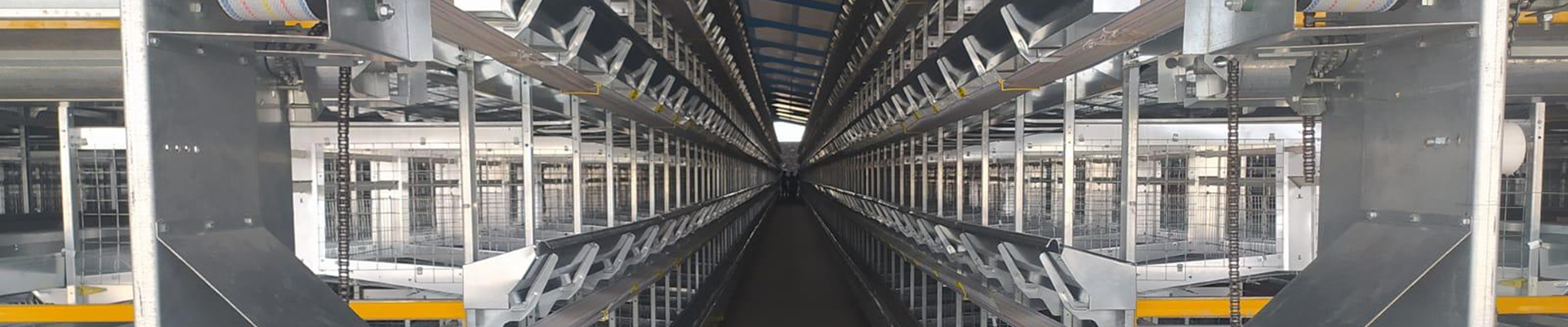
Commercial layer cages commonly use A-frame or H-frame structures, galvanized steel components, feeding troughs, nipple drinkers, and manure belts.
Data is for reference only.Swipe horizontally to view full table.
Intermediate H-frame tier configurations can be customized.
Final height, structural support, equipment arrangement, and usable capacity should be confirmed through the supplier's engineering drawings.
8.2 Comparing Different Automatic Poultry Farming Housing Systems
Data is for reference only.Swipe horizontally to view full table.
8.3 Recommended Poultry House Dimensions And Equipment Layout
Semi-automatic A-frame projects and fully automatic multi-row projects require different aisle and clearance arrangements.
The following dimensions reflect the recommended project configurations.
Data is for reference only.Swipe horizontally to view full table.
Fully automatic dimensions depend on the selected cage model and number of rows.
The 7.2-meter width applies to the specified 2-row H-frame arrangement; wider layouts accommodate additional rows and feeding equipment.
Taiyu (HK) Group - One Of China Largest Poultry Farm Equipment Supplier
1. Global Service Network
Headquartered in Hong Kong, with branches and factories in China, Vietnam, Thailand, Nigeria, Kenya, Ethiopia, and Tanzania, providing more localized project and after-sales support.
2. International Quality Standards
Strict quality control and double inspections.
Certifications and export documents include CE, SGS, ISO 9001, CCVO, PVOC, SONCAP, COC, ECTN, FORM F, and more.
3. One-To-One Vip Service
Dedicated account managers provide customized farm designs, equipment configurations, and quotations for projects ranging from 500 to 100,000+ birds per house.
4. Lifetime After-Sales Service
Installation guidance, equipment commissioning, operator training, remote technical support, spare parts supply, and ongoing maintenance.
Contact Us To Received Your Customized Poultry Farm Plan
Headquarters And Branchs

Hong Kong Headquarter Management Team
Hong Kong Headquarter Taiyu Industrial Group CO., LTD
China Hebei Best Machinery And Equipment CO., LTD
Nigeria Vanke Machinery And Equipment CO., LTD
Tanzania Best Machinery And Equipment CO., LTD
Ethiopia Best Hebei Machinery Manufacturing PLC




Reception /24 WhatsApp NO. : +8618830120193
PRODUCTS RECOMMENDED
 China Branch Manufacture Poultry Farm EquipmentRead More
 Ethiopia Branch Manufacture Poultry Farm EquipmentRead More
 Nigeria Branch Manufacture Poultry Farm EquipmentRead More
 Tanzania Branch Manufacture Poultry Farm EquipmentRead More
 IoT Smart Poultry FarmRead More
 >30,000 Layers Automatic H Type Battery CageRead More
 10,000 - 30,000 Layers Automatic A Type Battery CageRead More
MESSAGE
NEWS
 50,000 - 100,000 chickens/house: poultry farm solution, chicken cage, poultry farm equipment, AI smart managementRead More
 30,000 - 50,000 chickens/house: poultry farm solution, chicken cage, poultry farm equipment, AI smart managementRead More
 10,000 - 30,000 chickens/house: poultry farm solution, chicken cage, poultry farm equipment, AI smart managementRead More
 100 - 10,000 chickens/house: poultry farm solution, chicken cage, poultry farm equipment, AI smart managementRead More