

NEWS
Modern poultry equipment combines automation, monitoring, and production control, creating measurable operational efficiency with response accuracy reaching ±0.3°C for climate sensors.
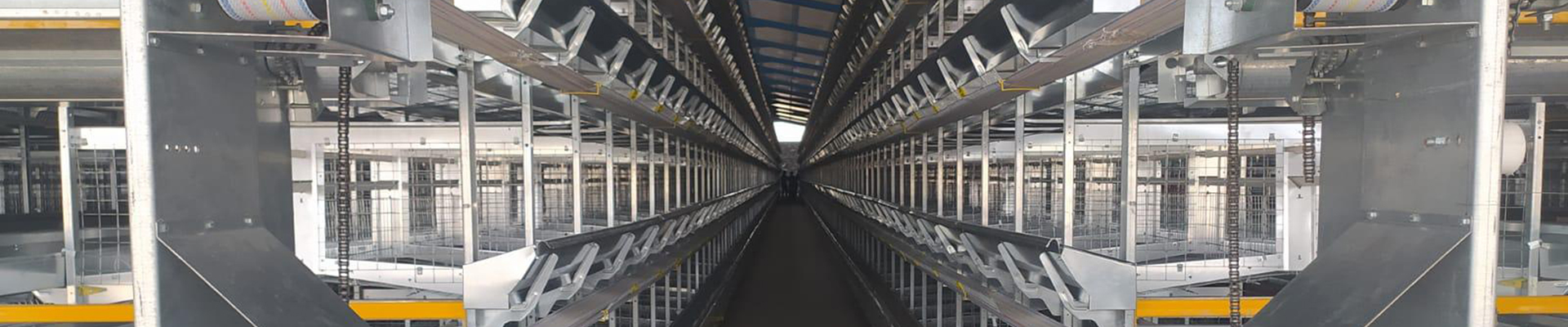
Automatic poultry feeding systems reduce repetitive labor, stabilize feed delivery, and support commercial houses handling multiple production cycles with coordinated equipment.
Poultry house ventilation systems regulate airflow, cooling, and environmental balance while supporting controlled operation across intensive poultry production structures.
Integrated equipment connects feeding, drinking, ventilation, cooling, lighting, manure handling, and monitoring into one engineered production framework with centralized control.
- Equipment selection based on labor, maintenance, capacity, and system integration provides stronger commercial value than comparing purchase prices alone.
Get professional poultry farm construction guidance, equipment selection solutions, and the latest price lists, whatsApp to +8618830120193, click to learn more:
Production Architecture: Old Vs Modern
Modern poultry equipment is not simply a replacement for older machines.
Modern poultry equipment creates a coordinated production environment in which feeding, drinking, ventilation, cooling, lighting, manure handling, and
environmental control operate as one system.
Research on poultry housing consistently identifies ventilation and environmental control as major factors affecting air quality, thermal conditions, litter
management, and energy use, with controlled airflow commonly engineered around defined operating ranges.
For commercial farms, equipment selection should therefore be evaluated by measurable operating performance rather than purchase price alone.
A properly engineered automatic poultry feeding system can integrate sensor feedback, automated adjustment, and centralized monitoring, turning the poultry
house into a controllable production platform with feed-line coverage designed for consistent distribution.
Core Equipment Performance Comparison
Data is for reference only.Swipe horizontally to view full table.
The Labor Equation — Where Efficiency Starts
Think of labor as a production variable, not an unavoidable expense.
Old workflow
Inspect → carry feed → adjust equipment → check ventilation → record readings → remove manure → repeat.
Modern workflow
Sensor detects condition → controller evaluates input → equipment responds → operator receives data.
A modern poultry equipment control system can coordinate temperature, humidity, ventilation, feeding, and alarms from one interface, while computerized
controllers can retain environmental operating records for later analysis.
For equipment buyers, the critical question is not ''How much automation do we need?'' but ''How many repetitive decisions can the system execute accuratey every day?''
A centralized interface with a 7-inch HMI and remote monitoring capability can turn routine supervision into exception-based management.
Ventilation Engineering Comparison
Data is for reference only.Swipe horizontally to view full table.
Tunnel ventilation uses controlled airflow through the house and is particularly relevant to intensive poultry production.
Modern poultry equipment increasingly combines ventilation with cooling and environmental controllers, while a poultry house ventilation system can coordinate
inlet response through defined pressure conditions.
A Better Way To Compare Investment
Do not compare equipment by purchase price ÷ equipment quantity.
Use this operational framework instead
Equipment Value = Production Capacity + Automation + Environmental Control + Maintenance Accessibility + Service Life
Then ask five questions
- How much production capacity does the system support?
- How many operations are automated?
- How precisely can the equipment respond?
- How quickly can components be serviced?
- Can additional equipment be integrated later?
For example, a poultry equipment controller that communicates with ventilation, cooling, feeding, and alarm systems creates more operational value than several independent machines requiring separate manual adjustment.
Integrated systems can coordinate recurring operations through programmable sequences with operating records retained for 365 days.
Automatic Feeding System Data
Data is for reference only.Swipe horizontally to view full table.
Automatic poultry feeding systems reduce dependence on manual distribution and can coordinate silo storage, conveying, and feeding points as a connected
process.
Commercial installations can also support programmable feeding schedules while maintaining consistent delivery through a 0.75–2.2 kW drive architecture.
The Hidden Cost Test
Imagine two 50,000-bird houses.
House A: operators manually inspect equipment, adjust curtains, distribute feed, monitor environmental conditions, and remove manure.
House B: automated feeding, motorized inlets, staged ventilation, climate control, and manure conveyors handle recurring operations.
Now calculate the real cost
Cost Exposure = Labor Hours + Feed Loss + Downtime + Maintenance + Production Variability
This approach changes the purchasing conversation.
Modern poultry equipment is valuable because the system standardizes repeatable processes.
Instead of asking workers to compensate for equipment limitations, the farm gives equipment defined operating responsibilities with alarm response intervals measured in seconds.
Climate Control Specification Matrix
Data is for reference only.Swipe horizontally to view full table.
Precision environmental control is increasingly central to modern poultry equipment because temperature, humidity, gases, airflow, and ventilation interact
continuously rather than independently.
A poultry house ventilation system can therefore use sensor feedback to coordinate multiple operating points instead of relying on isolated manual adjustments.
Why Integrated Equipment Wins
Feeding → Drinking → Ventilation → Cooling → Lighting → Manure → Monitoring
The efficiency advantage appears when these systems communicate.
A climate controller can receive sensor information and adjust fans, inlets, cooling pumps, or heaters according to programmed conditions.
A 4G communication module can enable remote status access, while a 16-channel controller architecture can accommodate multiple monitoring points across a commercial house.
Integrated poultry equipment consequently creates a production sequence in which individual machines contribute to one coordinated operating logic.
Maintenance And Service Comparison
Data is for reference only.Swipe horizontally to view full table.
Maintenance is another area where system design matters.
Modular poultry equipment allows farms to isolate individual components instead of stopping an entire production process for a single adjustment.
Accessible service points and standardized interfaces can shorten troubleshooting sequences, while component separation supports structured maintenance planning.
The Buyer's Decision Framework
Choose modern poultry equipment when the farm needs
- automated feeding and drinking;
- controlled ventilation;
- programmable climate management;
- centralized alarms and monitoring;
- mechanical manure handling;
- scalable equipment integration;
- standardized daily operations.
Consider older equipment only when production scale, labor structure, building configuration, and operating model genuinely justify manual intervention.
For a new commercial poultry house, designing equipment as a complete system is generally more rational than purchasing unrelated machines one by one.
An automatic poultry feeding system, poultry house ventilation system, and climate controller can be engineered as coordinated production modules with defined
operating sequences.
Final Equipment Selection: Efficiency In Numbers
Data is for reference only.Swipe horizontally to view full table.
The conclusion is straightforward: modern poultry equipment is more efficient when efficiency is measured across the entire production system—not merely by the machine's purchase price.
For poultry equipment manufacturers, the strongest solution is not one isolated product.
A complete engineering package combines automatic feeding, reliable drinking systems, ventilation fans, cooling equipment, climate controllers, manure handling, and intelligent monitoring around farm capacity and house structure.
Equipment investment therefore becomes production infrastructure when each module follows defined engineering logic and measurable operating requirements.
Frequently Asked Questions
Q1: Why is modern poultry equipment generally more efficient than old equipment?
Modern poultry equipment coordinates recurring operations automatically, reducing manual intervention while improving process consistency.
A centralized controller can manage multiple equipment groups with response intervals measured in seconds.
Q2: Which equipment should a commercial poultry farm prioritize first?
Automatic feeding systems and poultry house ventilation systems are strong starting points because feeding and environmental management operate continuously throughout production.
Integrated control can subsequently connect cooling, lighting, drinking, and manure systems.
Q3: Is upgrading old poultry equipment always financially justified?
Replacement becomes more compelling when manual labor, maintenance interruptions, and inconsistent environmental control create measurable operating costs.
A modular upgrade strategy can preserve usable infrastructure while introducing automated control and monitoring.
Taiyu (HK) Group - One Of China Toppest Poultry Equipment Manufacturer
Poultry equipment integrates feeding, ventilation, cooling, drinking, manure handling, and climate control into an engineered production system for commercial poultry houses.
Global factory-direct supply provides poultry equipment with standardized components, technical configuration, production inspection, and international project coordination.
Poultry equipment projects can follow Turn-key engineering logic, covering system planning, equipment matching, installation guidance, commissioning, and operational support.
Commercial projects can be configured according to bird capacity, house dimensions, climate conditions, automation requirements, and expansion plans.
Factory production supports equipment integration from individual components through complete poultry-house systems, maintaining consistent technical specifications across international projects.
Contact Us To Received Your Customized Poultry Farm Plan
Headquarters And Branchs

Hong Kong Headquarter Management Team
Hong Kong Headquarter Taiyu Industrial Group CO., LTD
China Hebei Best Machinery And Equipment CO., LTD
Nigeria Vanke Machinery And Equipment CO., LTD
Tanzania Best Machinery And Equipment CO., LTD
Ethiopia Best Hebei Machinery Manufacturing PLC




Reception /24 WhatsApp NO. : +8618830120193
PRODUCTS RECOMMENDED
 China Branch Manufacture Poultry Farm EquipmentRead More
 Ethiopia Branch Manufacture Poultry Farm EquipmentRead More
 Nigeria Branch Manufacture Poultry Farm EquipmentRead More
 Tanzania Branch Manufacture Poultry Farm EquipmentRead More
 IoT Smart Poultry FarmRead More
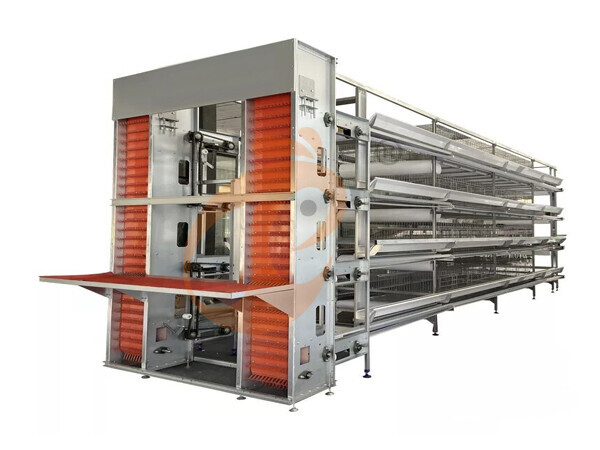
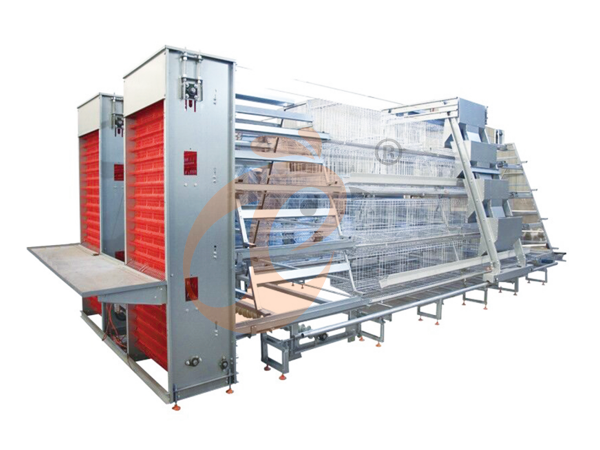
 >30,000 Layers Automatic H Type Battery CageRead More
 10,000 - 30,000 Layers Automatic A Type Battery CageRead More
MESSAGE
NEWS
 50,000 - 100,000 chickens/house: poultry farm solution, chicken cage, poultry farm equipment, AI smart managementRead More
 30,000 - 50,000 chickens/house: poultry farm solution, chicken cage, poultry farm equipment, AI smart managementRead More
 10,000 - 30,000 chickens/house: poultry farm solution, chicken cage, poultry farm equipment, AI smart managementRead More
 100 - 10,000 chickens/house: poultry farm solution, chicken cage, poultry farm equipment, AI smart managementRead More