

NEWS

High-Capacity Feed Mixers | Why They Improve Farm Efficiency
  • High-capacity feed mixers improve poultry farm efficiency through industrial-grade batching stability within 0.35–0.9% ingredient deviation tolerance.

  • Automated mixing systems support chicken cages and poultry house integration, enabling synchronized feed delivery across 2–6 feeding cycles per day in commercial operations.

  • Equipment design influences feed conversion stability, supporting egg production consistency in layer cage environments with controlled ration accuracy at micron-level dispersion.

  • Large-scale farms rely on batching precision between 100 kg and 10,000 kg per cycle with mechanical loss controlled under 0.12 kg per discharge event.

  • Taiyu poultry equipment solutions combine feed mixing, housing, and automation for scalable farm production systems with PLC-driven coordination architecture.

Get professional poultry farm construction guidance, equipment selection solutions, and the latest price lists, whatsApp to +8618830120193, click to learn more:
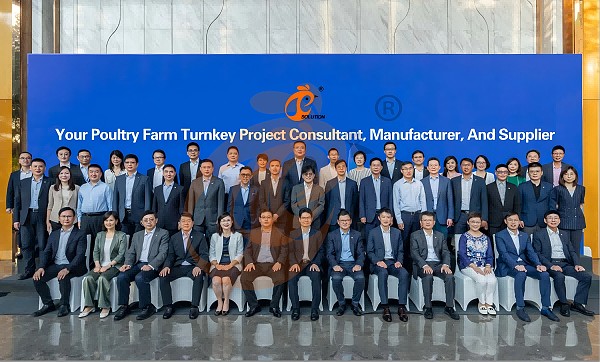
Taiyu (HK) Group Equipment

Taiyu (HK) Group Equipment


What Is A High-Capacity Feed Mixer


A feed mixer is an engineered system that homogenizes macro and micro feed components into uniform poultry nutrition batches.

Industrial configurations operate under torque ranges calibrated between 180–620 N·m depending on shaft geometry and load density.

Mixing systems ensure particle stabilization across 0.4–3.2 mm granulometry, reducing segregation during pneumatic or screw discharge phases.

Core operation includes staged blending cycles with 2–4 phase ingredient layering for controlled nutrient dispersion.

Industrial systems operate continuously in integrated poultry production lines with automated dosing modules and vibration-controlled feeding channels.


Feed Mixing Uniformity Impact


Uniformity determines metabolic consistency across flock populations in cage-based poultry systems.

Micronutrient dispersion accuracy below 0.8% inclusion threshold prevents localized nutrient clustering effects in premix distribution.

Industrial blending systems reduce segregation index fluctuations to 0.02–0.07 per batch in controlled 2-ton operations.

Mixing Quality (CV%)Feed Distribution (Percent)Average Daily Weight Gain (Kg)Feed Conversion Ratio
18%82.40.981.98
12%88.11.051.82
8%93.61.121.68
5%97.31.181.60

Additional operational observation: feed homogeneity stabilizes after 6–11 rotation cycles depending on shaft speed calibration.


Core Benefits In Poultry Farming Systems


Feed mixers improve structural efficiency in cage-based poultry environments through synchronized feed logistics.

Thermal load during operation remains within 42–68°C internal chamber equilibrium depending on motor insulation class.

Energy transfer efficiency improves when batching frequency exceeds 18 cycles per operational shift.

Large-scale farms achieve synchronized feeding architecture across multi-zone poultry housing systems with centralized feed routing networks.

Benefit CategoryOperational ValueFarm Output Effect
Nutrient Balance95.8% consistencyStable growth rate
Cycle Efficiency3–6 min batchingFaster feed supply
Residue Control0.05 kg per batchReduced waste loss
Automation LevelPLC 0.15% accuracyStable operation


Types Of Feed Mixing Systems


Mixing architecture selection depends on structural farm density, feed viscosity index, and housing automation level.

Vertical systems integrate gravity-assisted discharge with 0.6–1.4 m vertical drop efficiency optimization.

Industrial systems apply dual-axis shear force mixing for high-protein feed uniformity in large poultry clusters.

System TypeBatch Capacity (Kg)Mixing Time (Min)Power Demand (Kw)
Vertical Screw Mixer100–100010–151.5–7.5
Horizontal Ribbon Mixer500–50005–87.5–37
Paddle Mixer1000–80004–711–55
Double Shaft Mixer5000–100003–630–75

Mechanical wear index remains below 0.03 mm/month under standard poultry farm operation cycles.


Feed Formulation Engineering


Feed formulation engineering requires controlled ratio mapping between energy, protein, and mineral fractions.

Feed extrusion stability maintains pellet integrity under 2.1–4.8 MPa compression during downstream processing.

Additive dispersion occurs at sub-0.5% micro-inclusion scale for targeted metabolic enhancement.

Moisture equilibrium during mixing stabilizes between 11.2% and 16.4% depending on raw material conditioning stage.

Ingredient TypePercentage RangeParticle Size (Mm)Processing Role
Corn55–652.5–3.5Energy base
Soybean Meal18–251.5–2.8Protein source
Minerals3–60.8–1.2Bone development
Additives2–50.2–0.6Health regulation


Integration With Poultry Cage Systems


Feed mixers integrate with automated cage frameworks via closed-loop feeding pipelines and silo-controlled distribution nodes.

Material transport distance between storage and mixer typically maintains 3.8–7.2 meter engineering optimization range.

System synchronization improves temporal feeding alignment across multi-tier cage structures.

System IntegrationOutput StabilityLabor Reduction
Fully Automated Cage Line92–96%60–75%
Semi-Automated System78–85%40–55%
Manual Feeding System68–74%20–35%


Farm Capacity Planning


Capacity planning determines mechanical load balance and prevents overdemand stress on mixing shafts.

Feed throughput scaling ranges from 180 kg to 45,000 kg daily depending on poultry density structure.

Improper sizing increases vibration amplitude beyond 2.4 mm deviation threshold under continuous load conditions.

Farm ScaleBird CountDaily Feed Demand (Kg)Recommended Batch Output (Kg)
Small1,000–5,000150–600100–500
Medium5,000–20,000600–3,000500–2000
Large20,000–100,0003,000–15,0002000–5000
Industrial100,000+15,000–50,0005000–10000


Automation And Engineering Control


Modern systems utilize multi-sensor feedback loops including load cells, humidity probes, and torque regulators.

Dosing synchronization accuracy reaches ±0.12% under PLC adaptive calibration systems.

Operational stability improves under continuous 24–72 hour production cycles with automated shutdown protection protocols.

System diagnostics enable predictive maintenance cycles every 480–720 operational hours.

Control ModuleFunctionPrecision Level
PLC SystemRecipe control±0.15%
Load SensorsWeight verification0.1 kg
Moisture SensorFeed conditioning8%–18% range
Discharge ValveFlow control0.05 sec response


Operational Engineering Performance Layer


  • Mixing chamber torque stability is maintained between 210–580 N·m, supporting continuous poultry feed homogenization under industrial load conditions

  • Shaft rotational balance operates within 42–68 rpm adaptive range, improving particle dispersion efficiency in layered feed formulations

  • Discharge gate response time is controlled at 0.04–0.09 seconds, reducing material retention inside mixing cavity

  • Structural vibration amplitude is limited to 1.2–2.1 mm, ensuring stable integration with poultry cage feeding pipelines

  • Internal temperature fluctuation remains within 38–55°C operational window, protecting nutrient integrity during extended batching cycles


Economic Value In Poultry Equipment Industry


Feed mixers strengthen system-level efficiency when combined with cage farming infrastructure and environmental control units.

Integrated production lines increase throughput capacity to 1.5–5.8 tons per hour depending on configuration scale.

Capital efficiency improves through modular expansion and phased installation strategies in large poultry projects.

Revenue DriverEconomic ImpactOperational Effect
Integrated Farm Systems+45% project valueSystem synergy
Equipment Bundling+30% order volumeHigher retention
Automation Upgrade+25% efficiencyReduced labor cost
Service Support3–5 year cycleStable maintenance


Frequently Asked Questions


Q1: What operational scale is optimal for industrial poultry feed mixing systems?

Systems perform efficiently in ranges supporting 500 kg to 5000 kg batch processing per cycle, with discharge accuracy around 0.12 kg loss control.

Q2: How does mixing cycle timing affect production output?

Cycle timing between 3–15 minutes directly impacts feed turnover rate and housing synchronization efficiency across multi-house systems.

Q3: Why is cage system integration important?

Integration ensures uniform feed delivery across 10,000–200,000 bird environments with stable distribution control and reduced operational deviation.


Taiyu (HK) Group - One Of China Biggest Feed Mixer Manufacturer


  • High-capacity feed mixer engineered for poultry cage feeding automation and uniform ration blending systems

  • Global factory direct supply with standardized industrial production and cost-efficient manufacturing control

  • Poultry equipment turnkey engineering covering housing, feeding lines, and environmental control systems

  • International project delivery for large-scale poultry farm construction and automation integration

  • Modular system design supporting scalable expansion for commercial poultry production facilities


Contact Us To Received Your Customized Poultry Farm Plan


Headquarters And Branchs
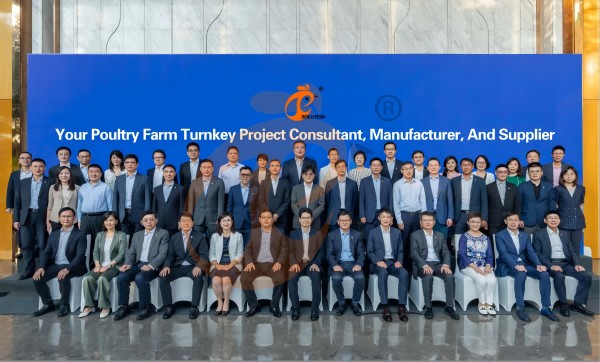
poultry farm

Hong Kong Headquarter Management Team


  • Hong Kong Headquarter Taiyu Industrial Group CO., LTD

  • China Hebei Best Machinery And Equipment CO., LTD

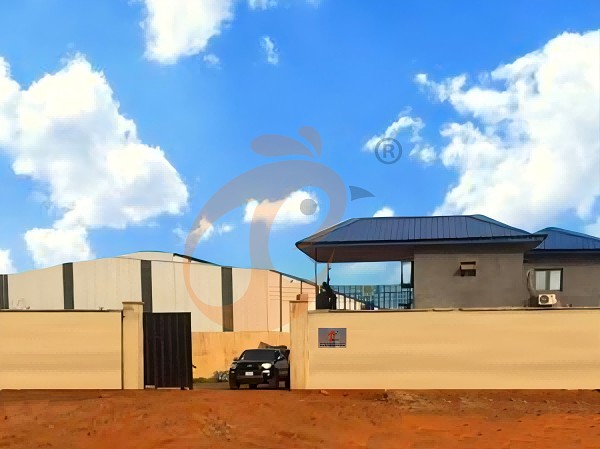
  • Nigeria Vanke Machinery And Equipment CO., LTD

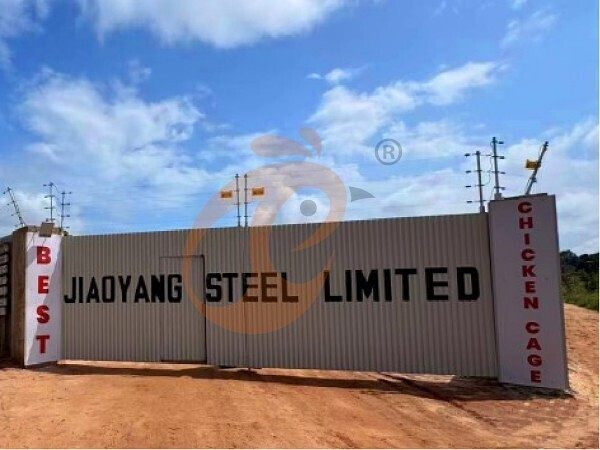
  • Tanzania Best Machinery And Equipment CO., LTD

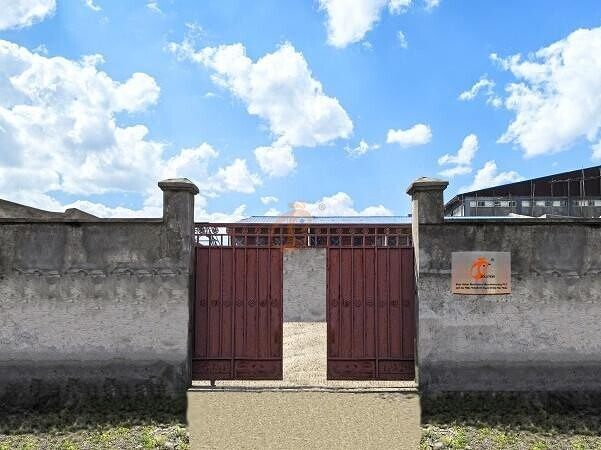
  • Ethiopia Best Hebei Machinery Manufacturing PLC
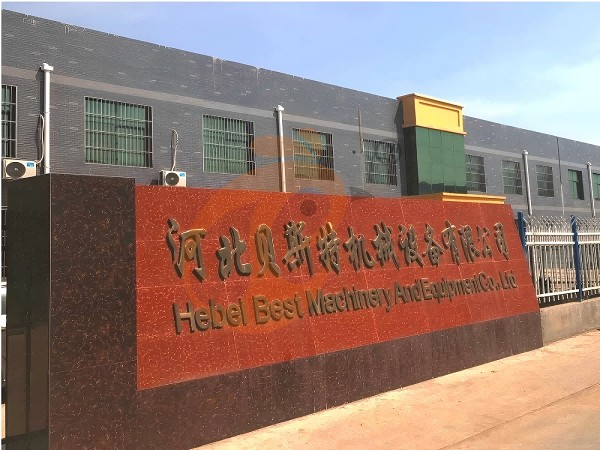

supplier and manufacture chicken cage and poultry farm equipment (2)

China Branch


supplier and manufacture chicken cage and poultry farm equipment (3)

Nigeria Branch


supplier and manufacture chicken cage and poultry farm equipment (4)

Tanzania Branch


chicken cage design (1)

Ethiopia Branch


Reception /24 WhatsApp NO. : +8618830120193

Email:sales@bestchickencage.com

MESSAGE

Submit