

NEWS
- Broiler system profitability depends on production density, labor efficiency, climate control, and market positioning, with modern poultry house equipment supporting measurable commercial returns across different farm models.
Free-range production can target premium markets, while an automated broiler system can deliver consistent output through controlled feeding, ventilation, drinking, lighting, and environmental management throughout every production cycle.
Intensive farming becomes increasingly attractive when land costs, labor availability, energy consumption, and expansion requirements make automation more valuable than outdoor production flexibility for commercial poultry operations.
Professional broiler house equipment connects automatic feeding systems, tunnel ventilation, cooling pads, controllers, sensors, alarms, and backup power into one coordinated production platform with measurable operating performance.
- Choosing the right broiler system ultimately means comparing revenue, capital expenditure, operating costs, equipment reliability, scalability, and production consistency rather than comparing construction prices alone across competing farming models.
Get professional poultry farm construction guidance, equipment selection solutions, and the latest price lists, whatsApp to +8618830120193, click to learn more.
The Profitability Question Starts With Production Control
For commercial broiler producers, profitability is determined by how efficiently a house converts feed, labor, energy, and capital into saleable live weight.
Free-range production can achieve premium pricing, but its economics depend heavily on land utilization and outdoor management.
Intensive farming instead uses engineered housing to make production more predictable.
Modern broiler house equipment can continuously monitor temperature, humidity, ammonia, co₂, and other house conditions, allowing ventilation and heating equipment to respond automatically.
A commercial poultry house should therefore be evaluated as an integrated production system rather than as a building.
For example, a controller with 10-second data transmission can provide faster operational feedback, while a 24-hour historical record helps identify recurring environmental deviations before the next flock cycle.
Free Range Vs Intensive Farming: Commercial Data Comparison
Data is for reference only.Swipe horizontally to view full table.
These figures illustrate why equipment configuration matters at commercial scale.
A 120-meter house length can be designed around multiple automated feeding circuits, while four independent feed zones can simplify adjustment and maintenance across a large broiler system.
The resulting poultry house equipment package can also be expanded through standardized modules, making procurement and maintenance easier across multiple houses.
Free Range: A Premium-Market Strategy, Not Simply A Housing Method
Free-range production can generate additional revenue when consumers recognize the production claim and accept a higher retail price.
However, producers must absorb the cost of outdoor land, fencing, weather exposure, additional supervision, and potentially greater variation between flocks.
The financial equation changes when land is expensive.
A farm using 2 hectares for outdoor access has a fundamentally different capital structure from a farm concentrating production inside a controlled building.
Installing 2.0–2.5-meter perimeter fencing around outdoor areas also creates infrastructure expenditure that does not directly increase indoor broiler system capacity.
Free range can therefore be commercially attractive for differentiated markets, but profitability remains closely connected to the selling strategy.
Intensive Farming Turns The Poultry House Into A Production Machine
Data is for reference only.Swipe horizontally to view full table.
The advantage of this architecture is integration.
A complete poultry equipment supplier can coordinate feeders, drinkers, fans, cooling pads, air inlets, controllers, sensors, and alarms instead of treating each component as an independent purchase.
For a 30,000-bird house, even a 10-minute interruption in automated feeding can affect thousands of birds simultaneously.
Equipment reliability therefore becomes a direct commercial consideration rather than a technical detail.
Why Climate Control Can Change The Financial Result
Temperature and ventilation are not secondary management issues.
They influence bird comfort, litter condition, respiratory environment, and production performance.
Modern broiler house equipment can manage temperature, humidity, air movement, ammonia, and co₂ as connected operating variables.
A properly engineered tunnel system can move air through the entire building while evaporative cooling reduces incoming heat.
Under hot-weather conditions, maintaining approximately 2.0 m/s air movement at bird level can create a meaningful wind-chill effect, while a 5–8°c temperature difference can materially influence heat-stress management.
Such conditions demonstrate an important investment principle: equipment should be selected according to production benefit relative to operating cost, not simply according to purchase price.
Cost Structure Comparison
Data is for reference only.Swipe horizontally to view full table.
Intensive farming usually requires a higher initial investment, especially when installing complete poultry house equipment.
However, capital expenditure should be evaluated against labor savings, environmental consistency, maintenance requirements, and expected operating life.
For example, a 10-year equipment planning horizon can expose lifecycle differences that are invisible in the initial quotation, while a 2% annual maintenance-cost difference can become significant across multiple commercial houses.
For serious commercial production, the question should not be which system is cheaper to build, but which broiler system produces the best return over its operating life.
Why Equipment Changes The Economics
Imagine two farms with the same number of broilers.
Farm A depends heavily on manual feeding, manual inspection, natural ventilation, and basic water distribution.
Farm B uses an integrated broiler system with automatic feeding lines, nipple drinkers, ventilation fans, cooling pads, lighting control, and an intelligent environmental controller.
Both farms may purchase similar amounts of feed.
Farm B can manage production with fewer routine interventions while maintaining more stable environmental conditions.
A 30-minute daily manual adjustment repeated across 365 operating days represents more than 180 hours of annual labor activity before additional inspection work is considered.
Automation therefore converts poultry production from a labor-intensive operation into a controlled production process.
Equipment Investment: Where Should Farmers Spend?
Data is for reference only.Swipe horizontally to view full table.
Not every farm needs the same configuration.
The most profitable poultry equipment package is the one matched to local climate, house dimensions, stocking requirements, production targets, and available labor.
A professional supplier should calculate system requirements using project data such as building width, inlet geometry, electrical load, and water-source pressure before final equipment selection.
A customized broiler system can then balance equipment capacity with actual farm operating conditions instead of applying a generic equipment package.
Productivity: The Hidden Advantage Of Intensive Housing
Data is for reference only.Swipe horizontally to view full table.
Broilers perform best when basic environmental requirements remain consistent.
An intensive broiler system allows farmers to control key variables instead of leaving them entirely to weather conditions.
A 15-minute automated lighting adjustment can follow programmed management schedules, while three or more ventilation stages can provide progressive airflow response as environmental demand changes.
Scalability: Which System Supports Expansion?
Data is for reference only.Swipe horizontally to view full table.
Scalability is one of the clearest advantages of intensive farming.
Once a standardized poultry house design has been developed, additional houses can use the same equipment configuration, management procedures, and environmental strategy.
A four-house expansion plan can replicate the same broiler system architecture, while a single centralized spare-parts inventory can simplify maintenance planning across the project.
Standardization creates a repeatable business model.
For investors planning several poultry houses or a commercial broiler complex, standardized poultry equipment can simplify expansion, training, procurement, and technical support.
Intensive Farming Does Not Mean Sacrificing Bird Management
Data is for reference only.Swipe horizontally to view full table.
Modern intensive farming is not simply about putting more birds into a building.
A properly engineered broiler system creates a controlled environment in which birds receive reliable access to feed and water while temperature, airflow, humidity, and lighting are managed systematically.
A single controller interface can centralize several operating functions, while remote alarm notification within 30 seconds can reduce the time between equipment failure and operator response.
Ventilation Equipment: Technical Comparison
Data is for reference only.Swipe horizontally to view full table.
For high-temperature regions, tunnel ventilation is particularly valuable because air velocity at bird level becomes an engineered cooling mechanism.
A correctly engineered broiler system should also account for building leakage, fan shutter resistance, cooling-pad resistance, and inlet configuration.
For example, a 50-meter house width requires substantially different airflow planning from a narrow building, while a 30-Pa operating pressure can produce different fan performance from free-air testing.
Fan selection should therefore consider performance at design static pressure rather than relying only on headline airflow capacity.
Automatic Feeding And Drinking: Where Labor Savings Become Measurable
Data is for reference only.Swipe horizontally to view full table.
Automatic feeding eliminates repeated manual distribution and allows the entire house to receive feed according to a programmed schedule.
Proper water-line engineering is equally important because pressure instability can create uneven water delivery along long lines.
A broiler system using four independent feeding circuits can divide a large building into manageable operating zones, while separate water regulators can simplify pressure adjustment during maintenance.
Automation also allows operators to schedule feeding events around flock age, production objectives, and daily management routines.
The Equipment Package Should Be Designed Around The House
A common purchasing mistake is selecting individual equipment items before calculating the requirements of the complete building.
Fan quantity, feeder length, cooling-pad area, inlet size, controller outputs, and generator capacity must work together.
Consider a house equipped with 12 exhaust fans and 8 cooling-pad modules.
If the inlet area is undersized, fans cannot operate at intended system performance.
Similarly, oversized cooling pads without sufficient airflow can increase resistance and energy consumption.
Professional poultry equipment design therefore begins with engineering calculations rather than a product list.
The supplier should calculate airflow, static pressure, electrical load, water demand, equipment placement, and emergency capacity before finalizing the quotation.
Environmental Control: Data Instead Of Guesswork
Data is for reference only.Swipe horizontally to view full table.
Maintaining suitable humidity is important because excessive moisture contributes to litter deterioration and ammonia formation.
A broiler system can coordinate ventilation response with sensor feedback, while continuous data logging provides a record for post-cycle analysis and operational improvement.
A controller sampling conditions every 10–60 seconds can provide much tighter feedback than periodic manual inspection.
Why Equipment Reliability Belongs In The Return On Investment Calculation
Data is for reference only.Swipe horizontally to view full table.
The cheapest equipment is rarely the cheapest solution over a ten-year project.
Motor efficiency, bearing quality, corrosion resistance, controller reliability, sensor accuracy, and spare-parts availability all affect total cost of ownership.
For example, reducing fan power consumption by 0.2 kw per motor across 12 fans produces a measurable annual electricity difference when ventilation operates thousands of hours.
A professional poultry equipment supplier should therefore provide technical specifications and lifecycle considerations rather than focusing only on initial purchase price.
Which System Is More Profitable?
Data is for reference only.Swipe horizontally to view full table.
Indicative engineering ranges rather than universal industry standards; actual figures depend on climate, building dimensions, equipment configuration, local regulations, labor costs, market prices, and production targets.
European union standard reference only.
The commercial conclusion is straightforward.
Free range can outperform intensive farming when the market consistently supports a sufficient premium.
Intensive farming becomes increasingly attractive when the objective is predictable output, automation, repeatable house design, and large-scale production.
The critical calculation should therefore compare incremental selling revenue against incremental land, labor, poultry equipment, and operating costs rather than comparing construction prices alone.
Build The Farm Around Profit, Not Just Capacity
The most profitable poultry house is not necessarily the one with the cheapest construction cost or the highest bird capacity.
A successful broiler system creates the best balance between production performance, labor efficiency, energy consumption, equipment reliability, and long-term return on investment.
This is where a professional poultry equipment manufacturer makes a difference.
Instead of purchasing fans, feeders, drinkers, cooling systems, and controllers separately, farmers can develop a complete integrated broiler house solution.
Equipment can be selected according to house dimensions, climate conditions, stocking requirements, and production targets.
For commercial broiler producers, intensive farming offers a powerful combination of automation, environmental control, scalability, and predictable operating costs.
Free range farming has its own valuable market opportunities, but when the primary goal is maximizing commercial production efficiency, a professionally designed intensive broiler system can provide a stronger foundation for sustainable profitability.
Frequently Asked Questions
Q1: What is more profitable, free range or intensive broiler farming?
A1: Intensive broiler farming generally offers stronger scalability when automation and controlled housing are prioritized, while free range can become more profitable when premium selling prices sufficiently offset additional land and management costs.
A commercial intensive house may complete 6–8 production cycles annually, whereas free-range operations commonly require longer cycles depending on breed, market specification, and outdoor management conditions.
Q2: What equipment is essential for an intensive broiler system?
A2: Core equipment normally includes automatic feeding, nipple drinking, mechanical ventilation, cooling, environmental control, lighting, alarms, and backup power, with final specifications determined by house dimensions and climate.
A complete poultry equipment package can integrate 4–8 ventilation stages and multiple automatic feeding circuits to coordinate daily house operation.
Q3: How can poultry equipment improve broiler farm return on investment?
A3: Integrated poultry equipment can reduce routine labor, improve environmental consistency, and support equipment coordination, while energy-efficient motors and correctly sized ventilation can reduce avoidable operating expenditure.
For example, a 0.2-kw reduction per ventilation motor becomes commercially meaningful when multiple fans operate continuously during long production periods.
Taiyu (HK) Group - One Of China Most Famous Broiler System Manufacturer
Broiler system solutions integrate automatic feeding, nipple drinking, tunnel ventilation, cooling, environmental control, and backup systems, with project designs supporting houses from 10,000 to 100,000+ birds
Global factory-direct supply provides poultry equipment with standardized components, technical documentation, production inspection, spare-parts coordination, and international shipment support for commercial farm projects
Turn-key engineering covers project layout, equipment selection, airflow calculation, electrical planning, installation guidance, commissioning procedures, and operational training according to defined project specifications
Poultry equipment projects can be configured for different climates, house dimensions, production capacities, automation levels, and local electrical standards through engineering-based system selection
Factory production supports scalable broiler system deployment across individual houses, multi-house farms, integrated poultry complexes, and phased expansion projects with coordinated technical documentation
Contact Us To Received Your Customized Poultry Farm Plan
Headquarters And Branchs

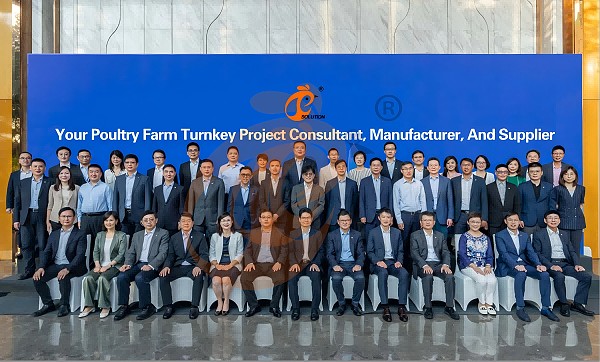
Hong Kong Headquarter Management Team
Hong Kong Headquarter Taiyu Industrial Group CO., LTD
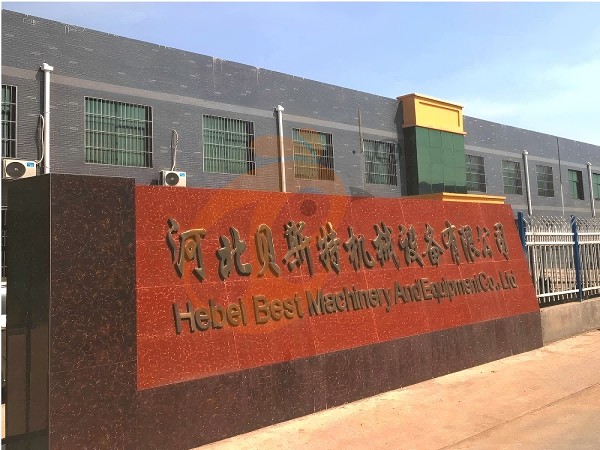
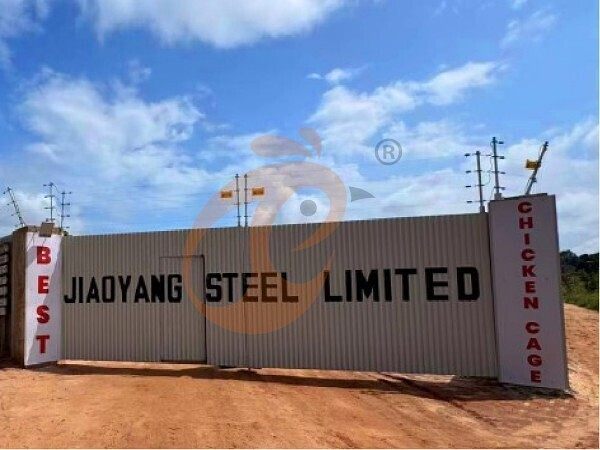
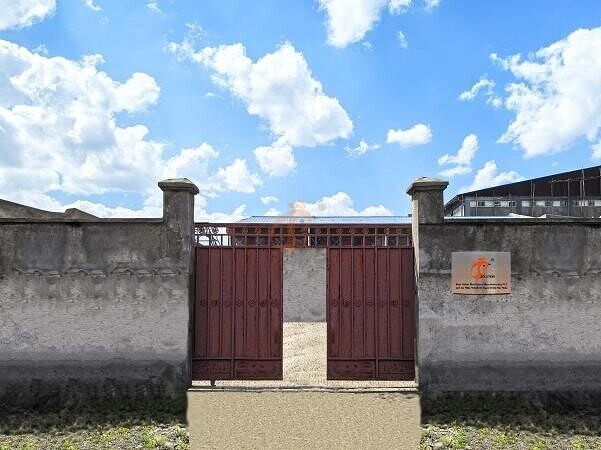
China Hebei Best Machinery And Equipment CO., LTD
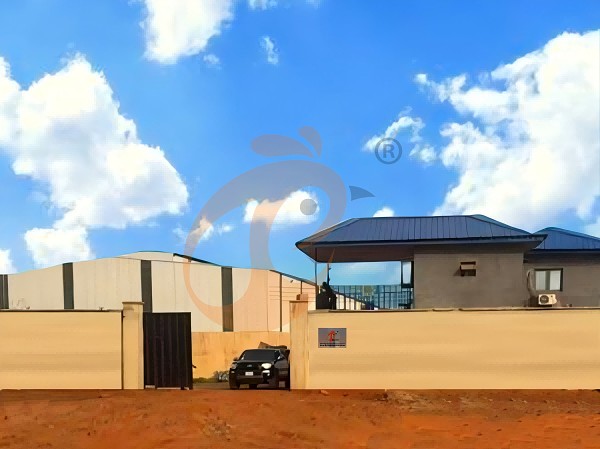
Nigeria Vanke Machinery And Equipment CO., LTD
Tanzania Best Machinery And Equipment CO., LTD
Ethiopia Best Hebei Machinery Manufacturing PLC
Reception /24 WhatsApp NO. : +8618830120193
PRODUCTS RECOMMENDED
 China Branch Manufacture Poultry Farm EquipmentRead More
 Ethiopia Branch Manufacture Poultry Farm EquipmentRead More
 Nigeria Branch Manufacture Poultry Farm EquipmentRead More
 Tanzania Branch Manufacture Poultry Farm EquipmentRead More
 IoT Smart Poultry FarmRead More
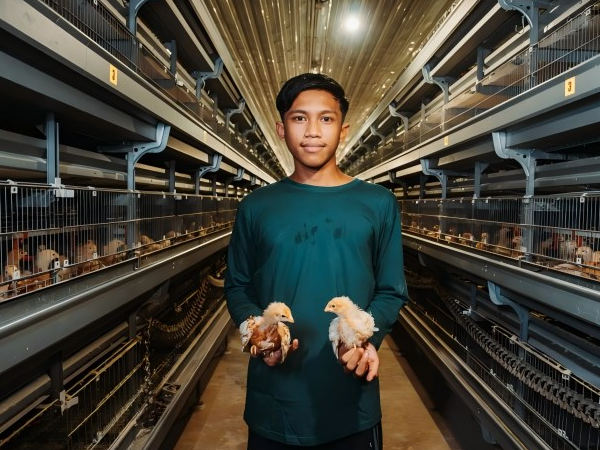
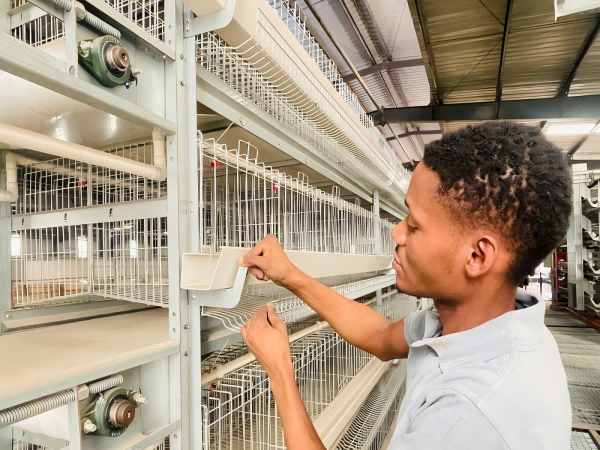
 >30,000 Layers Automatic H Type Battery CageRead More
 10,000 - 30,000 Layers Automatic A Type Battery CageRead More
MESSAGE
NEWS
 50,000 - 100,000 chickens/house: poultry farm solution, chicken cage, poultry farm equipment, AI smart managementRead More
 30,000 - 50,000 chickens/house: poultry farm solution, chicken cage, poultry farm equipment, AI smart managementRead More
 10,000 - 30,000 chickens/house: poultry farm solution, chicken cage, poultry farm equipment, AI smart managementRead More
 100 - 10,000 chickens/house: poultry farm solution, chicken cage, poultry farm equipment, AI smart managementRead More