

NEWS
- Floor rearing system combines automated feeding, clean-water delivery, ventilation, and environmental management into one broiler production workflow, with a typical 42-day production target and 1.8 kg reference market weight.
Automatic broiler feeding system supports consistent daily feed access, while programmable operation can divide feeding into 6–8 cycles according to flock age and house management requirements.
Broiler nipple drinking system maintains continuous water access, with practical management targeting a water-to-feed ratio around 1.6–2.0:1 and controlled line pressure.
Broiler house ventilation system supports heat and moisture removal, with air-speed management around 1.5–2.5 m/s helping maintain flock comfort during later growth.
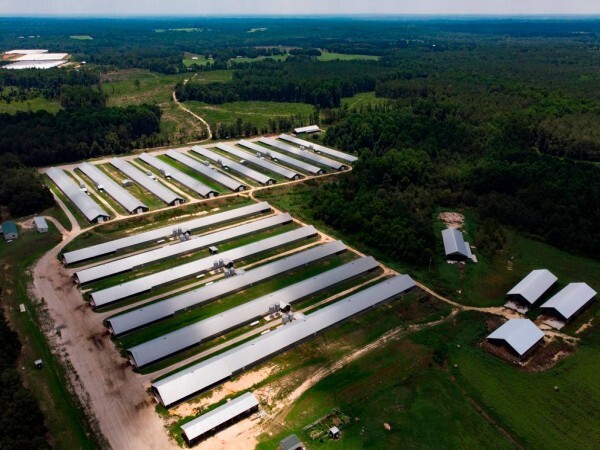
- Equipment integration matters because floor production performance depends on feed, water, air, litter, and management working together rather than one machine operating independently, with commercial houses commonly extending 50–180 m in length.
Get professional poultry farm construction guidance, equipment selection solutions, and the latest price lists, whatsApp to +8618830120193, click to learn more.
The Real Question: Growth Is An Equipment Decision
For commercial broiler farms, the choice between floor rearing and cage-based production is not simply about where birds stand.
A floor rearing system determines how efficiently feeding, drinking, ventilation, temperature control, and flock supervision operate together, while a broiler House ventilation system can regulate airflow around changing heat loads.
A controlled study reported heavier 42-day broilers under floor brooding, although cage brooding produced better feed efficiency during grow-out.
A production cycle of approximately 42 days and a brooding transition around 21 days show why equipment configuration can influence management decisions.
Floor Vs Cage: Production Data At A Glance
Data is for reference only.Swipe horizontally to view full table.
The Faster-Growth Formula: Control The House, Not Just The Bird
Feed access → water access → air exchange → temperature stability → litter condition → bird movement → final performance
A floor rearing system works as a connected production chain, while an automatic broiler feeding system helps maintain predictable feed distribution without requiring constant manual adjustment.
Stocking density can influence body-weight gain, feed consumption, feed conversion, litter moisture, and footpad outcomes.
For example, maintaining house humidity around 60–70% rh and litter moisture near 20–25% provides useful operational targets for environmental management, although exact values require climate-specific engineering.
Modern floor equipment can combine feeding, drinking, ventilation, cooling, heating, lighting, and environmental sensing within one coordinated installation.
Engineering Parameters For A Commercial Floor System
Data is for reference only.Swipe horizontally to view full table.
The Buyer's Checklist — Five Questions Before Ordering
Question 1: can the floor rearing system maintain consistent feed delivery from the first pan to the last?
Question 2: can the broiler nipple drinking system provide dependable water access while controlling leakage?
Question 3: can the broiler house ventilation system respond when indoor conditions change by 3–5°c within a production period?
Question 4: can the controller coordinate ventilation, cooling, heating, lighting, and alarms with a response interval below 60 seconds?
Question 5: can the floor rearing system be expanded when another house is added without redesigning the entire control architecture?
A professional supplier should answer these questions with engineering drawings, load calculations, and equipment schedules rather than product photographs alone.
Floor Rearing Equipment Package: What Actually Drives Performance?
Data is for reference only.Swipe horizontally to view full table.
The floor rearing system becomes commercially useful when every subsystem has a defined operating relationship.
An automatic broiler feeding system handles feed movement, while a broiler nipple drinking system supports water delivery and a broiler house ventilation system manages airflow.
Project design should account for house dimensions, climate, bird strain, insulation, power availability, and target production schedule before final equipment selection.
If Your Farm Looks Like This, Choose This Strategy
If maximum automation is the priority
Select a floor rearing system with centralized climate management and an automatic broiler feeding system, using approximately 10–15 control points for coordinated operation.
If labor reduction is the priority
Prioritize automated feed and water delivery, with daily manual inspection potentially concentrated into 2–3 scheduled rounds.
If expansion is the priority
Standardize the floor rearing system between houses, using common controller architecture and equipment interfaces across projects.
If environmental control is the priority
Give the broiler house ventilation system sufficient engineering capacity before adding unnecessary mechanical complexity.
Environmental management is closely associated with broiler welfare and productivity, particularly temperature, humidity, airflow, and litter conditions.
Housing Density And Performance: The Numbers Matter
Data is for reference only.Swipe horizontally to view full table.
Density decisions should be linked to the floor rearing system, house climate, ventilation design, and bird weight rather than floor area alone.
At a target final body weight near 1.8 kg, equipment planning should leave sufficient environmental margin for the final production stage.
Recent research using 31, 34.5, 38, and 41.5 kg/m² treatments found that stocking density affected body-weight gain, litter moisture, footpad condition, and other welfare indicators.
The Equipment Return On Investment Lens
A poultry house earns from saleable chicken output rather than the number of machines installed.
The commercial value of a floor rearing system therefore depends on feed utilization, labor demand, environmental consistency, and usable production output.
A properly engineered automatic broiler feeding system can reduce repetitive manual feed handling, while an integrated broiler house ventilation system helps maintain productive house conditions.
One floor-density study evaluated commercial production around 46.0 kg/m² output, illustrating why individual bird weight and output per unit area should be evaluated together.
Automation Specifications For Modern Broiler Houses
Data is for reference only.Swipe horizontally to view full table.
A floor rearing system gains greater operational value when sensors, controllers, and mechanical equipment exchange information continuously.
The broiler house ventilation system can respond to changing heat loads, while the broiler nipple drinking system provides an independently managed water circuit.
For larger houses, engineering should also consider generator capacity around 110–125% of calculated peak electrical demand and controller redundancy for critical functions.
Why Our Floor Rearing System Is Built As A Complete Solution
Data is for reference only.Swipe horizontally to view full table.
Our floor rearing system is configured as a complete production platform rather than a collection of unrelated machines.
An automatic broiler feeding system can be coordinated with environmental controls, while the broiler nipple drinking system operates through dedicated filtration and pressure management.
Project engineering can incorporate house layout, equipment quantity, electrical loads, water routing, installation sequence, and commissioning requirements into one technical package.
Floor Rearing Or Cage? Choose The System That Fits Your Production Model
Data is for reference only.Swipe horizontally to view full table.
The floor rearing system is not automatically faster in every production condition, because growth depends on genetics, density, nutrition, climate, water, and management.
A properly specified broiler house ventilation system becomes especially important when house heat load rises during the finishing period.
For farms seeking integrated operation, floor equipment can combine feeding, drinking, ventilation, cooling, heating, lighting, and environmental monitoring within one coordinated solution.
Frequently Asked Questions
Q1: Can a floor rearing system grow broilers faster than cages?
A1: A floor rearing system can support strong growth when feed, water, climate, and density are correctly managed.
Published research does not establish one universal housing method as fastest under every condition.
A practical 42-day production target should therefore be evaluated together with body weight, feed conversion, mortality, and usable output.
Q2: Which equipment matters most for floor broiler growth?
A2: The automatic broiler feeding system, broiler nipple drinking system, and broiler house ventilation system form three critical equipment layers.
Feed and water must remain accessible, while ventilation must remove heat and moisture as bird biomass increases.
Commercial systems can use 60–120 ml/min nipple flow references, with final settings adjusted according to bird age and equipment design.
Q3: Should a commercial farm choose floor rearing or cage housing?
A3: A floor rearing system is suitable when flexible floor management, integrated automation, and natural bird movement are central project requirements.
Cage systems can provide different space-utilization and manure-management characteristics.
Final selection should compare house dimensions, labor structure, climate, capital budget, production objectives, and equipment-service requirements.
Taiyu (HK) Group - One Of China Largest Floor Rearing System Manufacturer
Floor rearing system integrates automatic feeding, nipple drinking, ventilation, cooling, heating, and environmental control, with commercial project configurations supporting houses around 12 m wide and 50,000 birds per production building.
Global factory direct supply provides poultry equipment manufactured for export projects, with technical drawings, component schedules, installation guidance, and equipment matching handled through one engineering workflow.
Poultry equipment covers broiler feeding lines, drinking systems, ventilation equipment, cooling pads, heating units, controllers, and related farm infrastructure for commercial projects.
Turn-key engineering connects farm planning, equipment configuration, manufacturing, shipment, installation coordination, commissioning, and technical support into one project sequence.
International project service supports different house structures and climate conditions through customized equipment selection, engineering calculations, spare-parts planning, and after-sales technical coordination.
Contact Us To Received Your Customized Poultry Farm Plan
Headquarters And Branchs
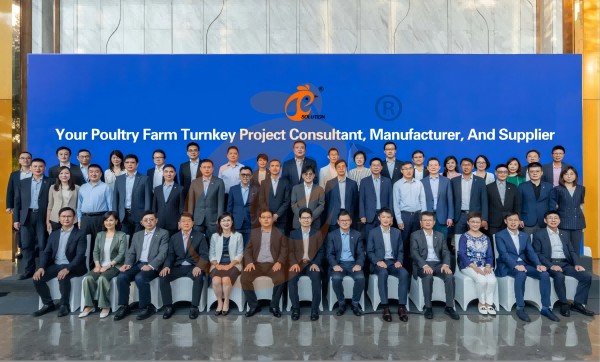
Hong Kong Headquarter Management Team
Hong Kong Headquarter Taiyu Industrial Group CO., LTD
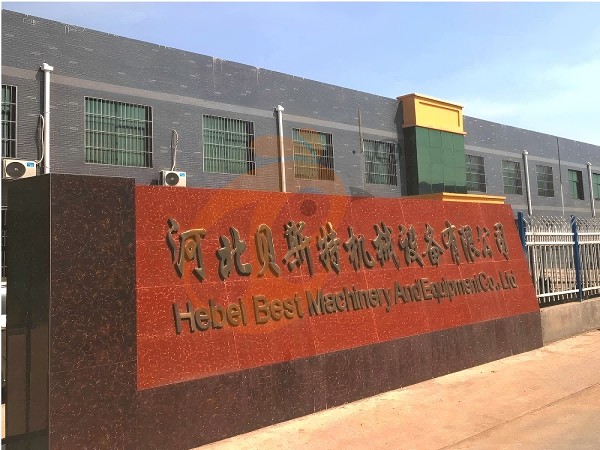
China Hebei Best Machinery And Equipment CO., LTD
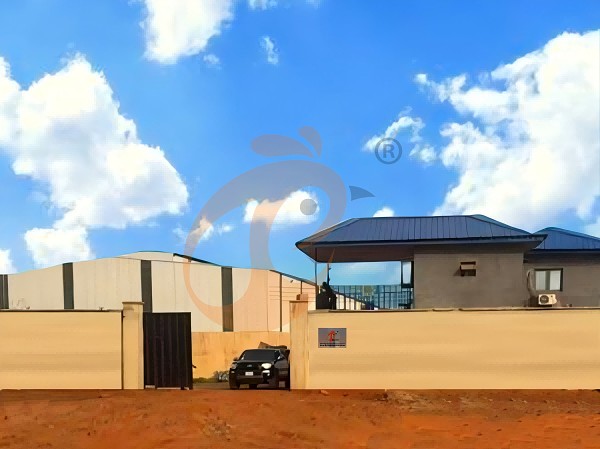
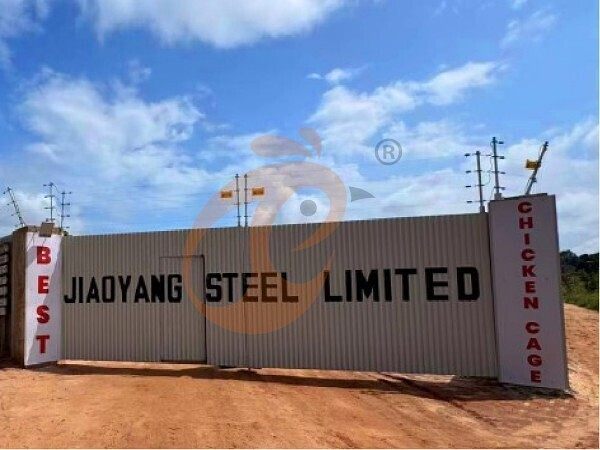
Nigeria Vanke Machinery And Equipment CO., LTD
Tanzania Best Machinery And Equipment CO., LTD
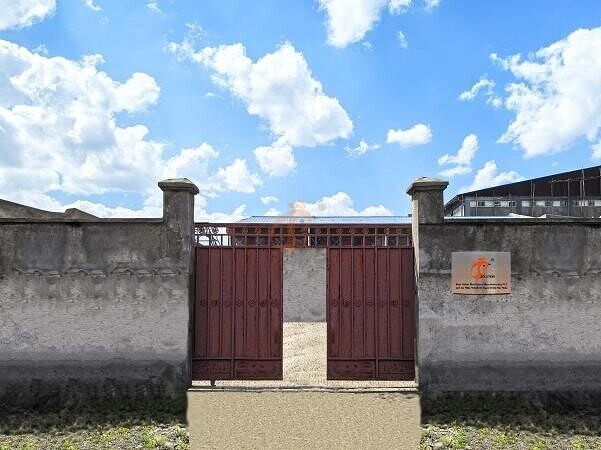
Ethiopia Best Hebei Machinery Manufacturing PLC
Reception /24 WhatsApp NO. : +8618830120193
PRODUCTS RECOMMENDED
 China Branch Manufacture Poultry Farm EquipmentRead More
 Ethiopia Branch Manufacture Poultry Farm EquipmentRead More
 Nigeria Branch Manufacture Poultry Farm EquipmentRead More
 Tanzania Branch Manufacture Poultry Farm EquipmentRead More
 IoT Smart Poultry FarmRead More
 >30,000 Layers Automatic H Type Battery CageRead More
 10,000 - 30,000 Layers Automatic A Type Battery CageRead More
MESSAGE
NEWS
 50,000 - 100,000 chickens/house: poultry farm solution, chicken cage, poultry farm equipment, AI smart managementRead More
 30,000 - 50,000 chickens/house: poultry farm solution, chicken cage, poultry farm equipment, AI smart managementRead More
 10,000 - 30,000 chickens/house: poultry farm solution, chicken cage, poultry farm equipment, AI smart managementRead More
 100 - 10,000 chickens/house: poultry farm solution, chicken cage, poultry farm equipment, AI smart managementRead More