

NEWS
- Poultry cage system selection directly influences project investment, housing capacity, and operating efficiency, with commercial configurations supporting 3–8 tiers.
Factory-direct sourcing connects cage engineering, automation, specifications, and production coordination while keeping project decisions aligned with actual farm requirements.
Automatic poultry feeding system integration can reduce repetitive handling through controlled delivery rates reaching approximately 36–90 m/min.
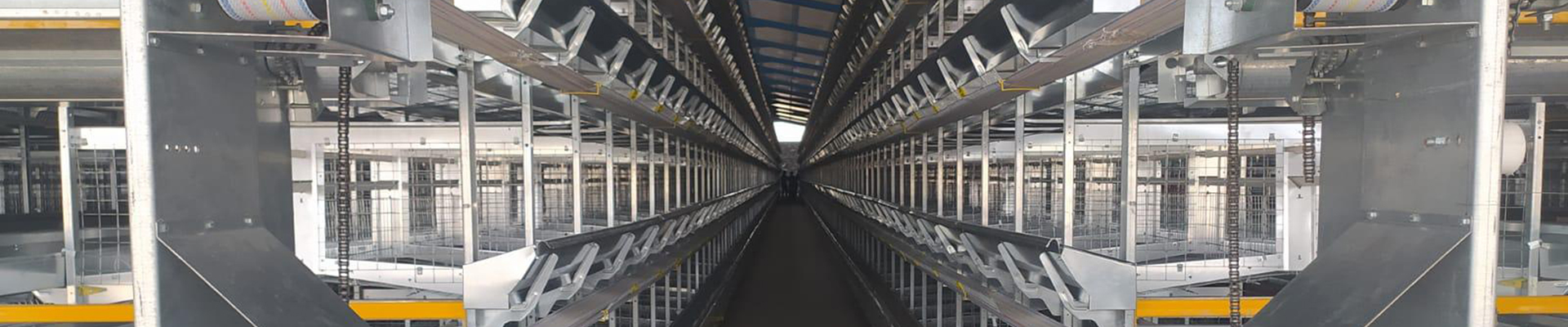
Automatic egg collection system planning connects cage layout, conveyor capacity, and workflow, with commercial systems handling approximately 20,000–40,000 eggs/hour.
- Material specifications, landed cost, technical support, and turnkey coordination together provide a stronger purchasing basis than equipment quotation alone.
Get professional poultry farm construction guidance, equipment selection solutions, and the latest price lists, whatsApp to +8618830120193, click to learn more:
Start With The Real Question: What Are You Actually Paying For?
When buying poultry cage equipment, the lowest quotation is not automatically the lowest project cost.
A local supplier may simplify delivery, while a China poultry cage factory can connect the farm directly with production, engineering, and equipment configuration.
For commercial projects, the purchasing decision should consider equipment structure, automation, installation, and operating requirements.
A typical layer system can be configured for 0.75–1.05 m row width, while commercial compartments may provide 380–520 mm internal height.
Price Comparison: Factory Direct Vs Local Supplier
Data is for reference only.Swipe horizontally to view full table.
The supply chain affects the final quotation.
A direct manufacturer can coordinate cage production with feeding, drinking, manure, and egg-handling equipment instead of adding separate margins at multiple
distribution stages.
For example, an automated project may operate on 24-hour daily scheduling, with individual control circuits supporting 6–12 equipment groups.
Comparison #1 — Manufacturing Cost
Local Supplier
The quotation may combine factory cost, distributor margin, warehousing, transportation, sales expenses, and installation.
This structure can be convenient when a farm needs one local contractor responsible for procurement and service.
China Factory
Direct communication allows buyers to define cage specifications before production.
The quotation can therefore be built around the actual farm design rather than a fixed retail package.
Commercial layer cages commonly use Q235 structural steel, with surface treatment reaching 275 g/m² zinc coating.
Comparison #2 — Equipment Configuration And Project Matching
Data is for reference only.Swipe horizontally to view full table.
A poultry cage is part of a complete production layout.
Cage arrangement must correspond with the building, service aisles, feeding routes, waterlines, egg conveyors, and manure outlets.
A typical commercial cage section may use approximately 42–58 kg steel per section, while egg collection can be designed around a 65–90 mm transfer
clearance.
Comparison #3 — Automation Changes The Cost Equation
Think of poultry equipment as a labor-management system rather than simply a steel cage.
Automatic feeding, drinking, egg collection, and manure handling can move repetitive tasks from manual operation to controlled mechanical processes.
Some commercial systems also connect environmental monitoring and centralized control.
A feed delivery system can be designed for approximately 0.8–1.5 kW motor capacity, while nipple drinking arrangements can operate around 0.2–0.4 MPa water pressure.
The Investment Logic
Equipment automation → fewer repetitive manual operations → standardized daily procedures → more predictable farm management.
For a commercial farm, this operating structure can matter more than the difference between two initial quotations.
Comparison #4 — Quality, Materials, And Service
Data is for reference only.Swipe horizontally to view full table.
Price should be checked against engineering specifications.
Buyers should request material certificates, welding standards, surface-treatment details, component drawings, and equipment lists before comparing quotations.
For manure systems, commercial installations can use 0.75–1.1 mm belt thickness, while dedicated manure motors may be specified around 1.5–2.2 kW.
Comparison #5 — Shipping And Total Landed Cost
Data is for reference only.Swipe horizontally to view full table.
The factory quotation should never be compared with a local retail invoice without calculating the complete landed cost.
Freight, customs, unloading, local transportation, installation, and commissioning all affect the final investment.
For example, an automatic egg collection system may use a 0.6–1.0 kW conveyor motor, and its motor specification must be included when calculating the complete equipment package.
The Factory Advantage: Buy The Complete Poultry Equipment System
A commercial poultry project rarely requires cages alone.
The equipment package can combine layer cages, feeding lines, nipple drinking systems, manure removal, egg collection, ventilation, lighting, and environmental control.
Working with one poultry equipment manufacturer allows these components to be designed around the same farm layout.
This reduces coordination between unrelated suppliers and makes replacement-part management more straightforward.
For automated systems, control architecture can use a 7-inch HMI interface, while lighting can be programmed through 16 daily time-control periods.
A Buyer's Quick Decision Test
Before accepting any quotation, ask five questions:
- Who manufactures the cage system?
- What exact materials and construction specifications are included?
- What equipment is included beyond the cage frame?
- What is the complete landed project cost?
- What technical support and spare-parts arrangement is provided?
A useful quotation should be measurable rather than descriptive.
For example, the buyer can request the egg-belt motor rating, feeder configuration, waterline arrangement, control-panel specification, and installation drawings.
A commercial egg conveyor may be engineered for approximately 45–70 m conveyor length per drive, depending on the system design.
When A Local Supplier Makes More Sense
Data is for reference only.Swipe horizontally to view full table.
Local purchasing can be practical when a farm requires immediate replacement components or local installation.
Direct factory sourcing becomes more attractive when the project involves multiple houses, customized layouts, or integrated automation.
A modular system can also be designed around 1.8–2.4 m service-aisle spacing for particular rearing applications.
Why China Poultry Cage Factories Are Worth Comparing
China has a substantial poultry-equipment manufacturing base, with factories producing cage systems and associated automation for commercial farms.
Buyers can compare engineering configurations directly rather than selecting only from locally stocked models.
The appropriate factory partner should be evaluated through drawings, specifications, production capability, inspection procedures, and after-sales arrangements.
A complete project may also require ventilation and cooling equipment, with tunnel systems incorporating 50,000–100,000 m³/h fan capacity and environmental controllers monitoring ±0.5°C temperature accuracy.
Final Buying Strategy: Compare Value, Not Just Price
The local supplier vs China poultry cage factory decision should ultimately be based on five factors:
1. Equipment quotation
2. Engineering specification
3. Automation configuration
4. Complete landed cost
5. Technical support and spare parts
For a small replacement order, local purchasing may be efficient.
For a new commercial poultry house or large expansion, direct cooperation with a China poultry cage factory can provide greater control over equipment configuration and procurement.
The strongest factory marketing message is not simply ''our cages are cheaper.''
It is:
''We provide a factory-direct poultry equipment solution engineered around your farm capacity, house layout, automation requirements, and production process.''
Frequently Asked Questions
Q1: What makes a China poultry cage factory price competitive?
Factory-direct purchasing removes distributor layers and allows equipment packages to be configured around project specifications.
Commercial systems can also combine cage structures with automated feeding and manure handling within one engineering package.
Q2: What should buyers compare beyond poultry cage price?
Buyers should compare material specifications, equipment configuration, freight, installation, spare parts, and technical support.
A cage specification using 8–12 horizontal support wires should not be compared only by quotation value.
Q3: Is factory-direct purchasing suitable for large poultry projects?
Factory-direct purchasing is particularly suitable for new houses, expansion projects, and integrated automation.
Project engineering can coordinate cage arrangement, feeding routes, egg collection, and manure removal before production begins.
Taiyu (HK) Group - One Of China Toppest Poultry Cage Manufacturer
Poultry cage system engineering integrates cage structure, bird capacity, tier arrangement, feeding access, drinking lines, and manure handling into one coordinated equipment specification.
Global factory-direct supply connects poultry equipment manufacturing, engineering documentation, component production, inspection, packing, and export coordination under one project workflow.
Turn-key engineering supports complete poultry-house projects by coordinating cages, automatic feeding, drinking, manure removal, egg collection, ventilation, and environmental-control interfaces.
International project execution covers equipment configuration, technical drawings, production scheduling, factory inspection, loading coordination, commissioning guidance, and spare-parts planning.
Commercial farm expansion can be structured as modular equipment packages, allowing capacity planning, automation integration, and future house additions within a consistent engineering framework.
Contact Us To Received Your Customized Poultry Farm Plan
Headquarters And Branchs

Hong Kong Headquarter Management Team
Hong Kong Headquarter Taiyu Industrial Group CO., LTD
China Hebei Best Machinery And Equipment CO., LTD
Nigeria Vanke Machinery And Equipment CO., LTD
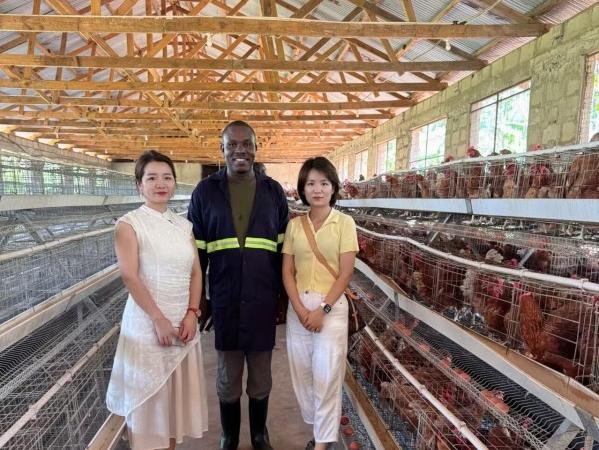
Tanzania Best Machinery And Equipment CO., LTD
Ethiopia Best Hebei Machinery Manufacturing PLC




Reception /24 WhatsApp NO. : +8618830120193
PRODUCTS RECOMMENDED
 China Branch Manufacture Poultry Farm EquipmentRead More
 Ethiopia Branch Manufacture Poultry Farm EquipmentRead More
 Nigeria Branch Manufacture Poultry Farm EquipmentRead More
 Tanzania Branch Manufacture Poultry Farm EquipmentRead More
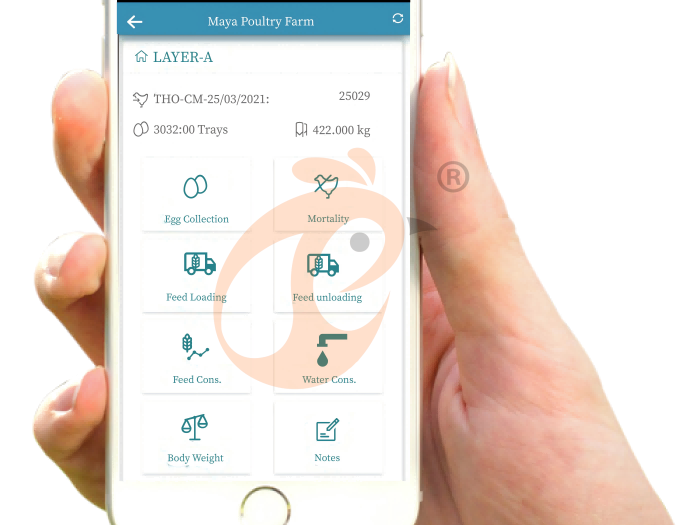
 IoT Smart Poultry FarmRead More
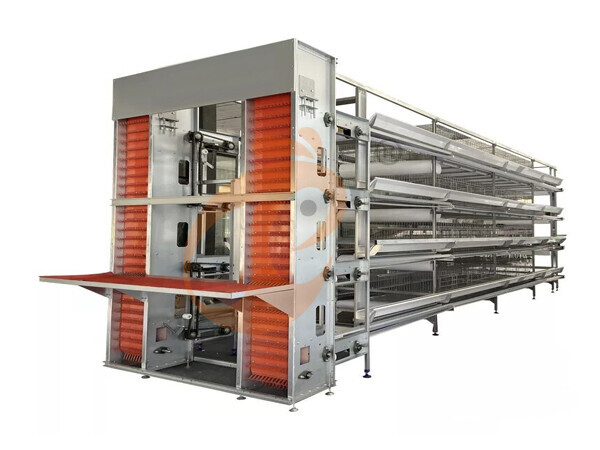
 >30,000 Layers Automatic H Type Battery CageRead More
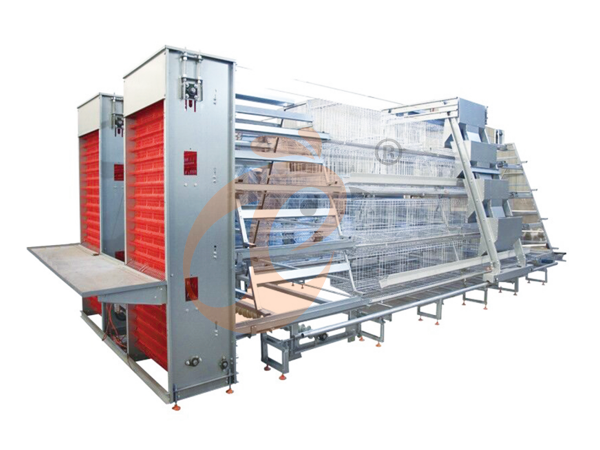
 10,000 - 30,000 Layers Automatic A Type Battery CageRead More
MESSAGE
NEWS
 50,000 - 100,000 chickens/house: poultry farm solution, chicken cage, poultry farm equipment, AI smart managementRead More
 30,000 - 50,000 chickens/house: poultry farm solution, chicken cage, poultry farm equipment, AI smart managementRead More
 10,000 - 30,000 chickens/house: poultry farm solution, chicken cage, poultry farm equipment, AI smart managementRead More
 100 - 10,000 chickens/house: poultry farm solution, chicken cage, poultry farm equipment, AI smart managementRead More