

NEWS
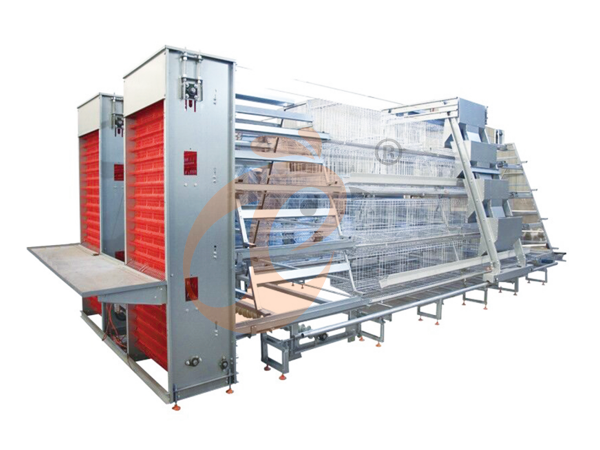
- Automatic H type chicken cages combine 450 cm² bird space with structured commercial housing for efficient layer production.
H type layer chicken cage configurations support 3–8 tiers, allowing vertical capacity planning within different poultry house dimensions.
Automatic layer cage system integration connects feeding, egg handling, manure management, drinking, and environmental control through coordinated equipment.
Semi-automatic configurations reduce initial equipment complexity while retaining practical H-frame housing, making 1,200 mm modules suitable for controlled farm development.
- Equipment selection should balance cage capacity, labor structure, operating workflow, expansion plans, and technical specifications before project procurement begins.
Get professional poultry farm construction guidance, equipment selection solutions, and the latest price lists, whatsApp to +8618830120193, click to learn more:
The Real Question: Automation Or Control?
Choosing between automatic and semi-automatic H type chicken cages is not simply a question of which system has more automation.
The better question is: Which system matches your farm size, labor availability, production goals, and investment plan? A commercial automatic H type chicken cage can use 450 cm² per bird, while tier spacing can reach 680 mm in common configurations.
H type chicken cages are designed for modern layer farming, offering high stocking density, efficient space utilization, and a structured feeding and manure-management system.
The key difference is how much daily work is handled automatically.
A representative H type layer chicken cage section can measure 1,200 × 600 × 510 mm, creating a compact structural module for intensive housing.
For farms seeking higher efficiency and lower labor dependency, a fully automatic automatic layer cage system can provide a powerful long-term solution.
For farms with moderate capacity or lower initial investment requirements, a semi-automatic system can deliver an attractive balance between productivity and cost.
Automatic configurations can integrate feeding, egg collection, manure removal, drinking, and environmental control into one coordinated installation, with
220/380 V electrical configurations available for project requirements.
At A Glance: Automatic Vs Semi-Automatic
Data is for reference only.Swipe horizontally to view full table.
The decision becomes much easier when you look beyond the cage itself and evaluate the entire poultry equipment system.
Commercial H-frame systems can be configured from 3 to 12 tiers, allowing equipment layouts to follow building height and project requirements.
Think Like A Farm Manager: What Costs You More?
Two farms can purchase similar cages yet experience completely different operating economics.
Farm A spends less on equipment but needs several workers every day for feeding, egg collection, and manure handling.
A chain feeding system, for example, can operate at 20–30 m/min, while a screw feeding configuration can deliver feed at 35–45 m/min.
Farm B invests more in automation but reduces routine labor and increases operational consistency.
Which farm has the lower cost?
The answer depends on the farm's operating period.
A lower purchase price does not necessarily mean a lower total cost of ownership.
For commercial layer farms, labor efficiency, feed management, egg breakage, manure handling, and equipment reliability can significantly influence profitability.
A typical automatic feeding line can handle approximately 600–900 kg of feed per hour, making equipment throughput an important planning factor.
Our recommendation: evaluate the cage system according to its full operating lifecycle—not just the initial quotation.
Investment Comparison
Data is for reference only.Swipe horizontally to view full table.
A professional poultry equipment supplier should not simply recommend the most expensive system.
The correct solution should be based on your capacity, labor costs, building layout, and production targets.
For a commercial installation, house length can also influence feeding design; some automated feeding configurations support house lengths of approximately 120–150 m.
That is why customized automatic H type chicken cage design is important.
Where Automatic Systems Win
The Automation Advantage
Less repetitive work → fewer labor hours → more consistent management → easier large-scale production.
An automatic layer cage system can integrate multiple functions, including:
- Automatic feeding
- Automatic egg collection
- Automatic manure removal
- Automatic drinking systems
- Environmental control
- Centralized farm management
Instead of having workers repeatedly move through every cage row, the equipment performs routine operations systematically.
A manure belt can remove approximately 8–12 tons of manure per 10,000 birds per day under stated operating conditions.
For large layer farms, this changes the role of workers from manual operators to equipment managers and production supervisors.
That is the real value of automation.
Capacity Matters
Data is for reference only.Swipe horizontally to view full table.
There is no universal capacity threshold that makes one system automatically correct.
However, as flock size increases, the value of automation generally becomes more significant.
One published H-frame configuration reaches 256 birds per set at eight tiers, demonstrating how vertical expansion can increase housing capacity without simply extending the cage footprint.
If your business plan includes continuous expansion, investing in a properly designed H type layer chicken cage system from the beginning may prevent
expensive equipment replacement later.
Feeding: More Than Just Delivering Feed
Feed represents one of the largest operating costs in layer production.
The feeding system therefore deserves special attention when comparing H type cages.
A chain configuration can maintain feed movement at approximately 20–30 m/min, providing a measurable operating specification for automatic layer cage system selection.
Automatic feeding equipment can distribute feed along cage rows with controlled and consistent operation.
This helps reduce the amount of manual feeding work and supports more standardized feeding routines.
A well-designed system may include feed hoppers, conveying equipment, feed troughs, motors, and control components matched to the farm's cage configuration.
Some automatic chain systems report feed uniformity error below 3%, giving buyers a concrete technical criterion when evaluating feeding equipment.
The goal is not simply to automate feeding.
The goal is to create a feeding process that is stable, efficient, and easy to manage.
Egg Collection: The Daily Efficiency Test
Data is for reference only.Swipe horizontally to view full table.
Egg collection happens every day, which means even small differences in labor efficiency accumulate rapidly.
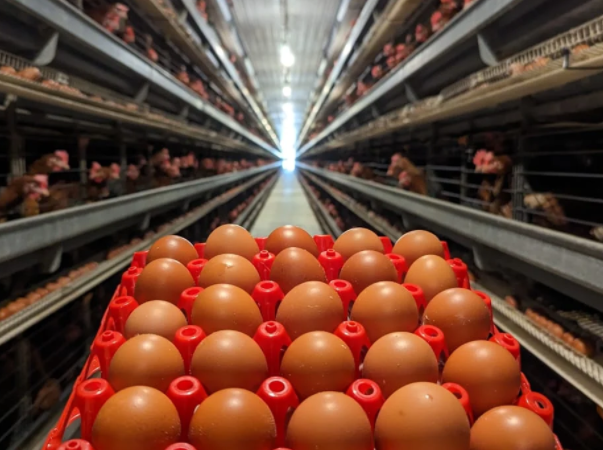
A commercial automatic H type chicken cage system can combine egg belts with main and cross collection machines so eggs move from individual cage rows toward the packing area.
Automatic egg collection systems use egg belts to transport eggs from cage rows toward a centralized collection area.
This can reduce repetitive handling and make the overall workflow more efficient.
For commercial farms handling large egg volumes, this feature can become one of the strongest arguments for full automation.
Manure Management: Don't Ignore The Hidden Work
Manure removal is one of the least attractive but most important tasks in layer farming.
With an H type layer chicken cage system, manure belts or other mechanical removal equipment can transport manure out of the cage area at scheduled intervals.
A reinforced PP belt is commonly specified at 1.0–1.2 mm thickness, providing a concrete material specification for equipment selection.
A semi-automatic system can still perform well, especially when labor is readily available.
However, as flock size increases, manual manure handling becomes increasingly time-consuming.
Automatic belt systems can achieve cleaning accuracy above 98% under specified operating conditions.
If your farm is designed for thousands or tens of thousands of birds, manure management should be considered at the planning stage—not after construction is
finished.
Technical Configuration Comparison
Data is for reference only.Swipe horizontally to view full table.
The cage structure is only the foundation.
The real performance of a poultry house comes from how the cage, feeding, drinking, egg collection, manure removal, ventilation, and environmental-control systems work together.
Hot-dip galvanized automatic layer cage system structures are commonly specified with service lives in the 15–20 year range under proper maintenance.
A supplier with complete equipment capability can design these components as one integrated project instead of treating each machine as a separate purchase.
Which One Should You Choose?
Choose automatic H type chicken cages if
- You operate a medium or large commercial layer farm.
- Labor availability is limited or expensive.
- You want higher daily working efficiency.
- You plan to expand your flock.
- You want centralized farm management.
- You prioritize long-term operating efficiency.
Choose semi-automatic H type chicken cages if
- Your farm is relatively small.
- Labor is easily available.
- Initial equipment investment must remain controlled.
- You prefer a simpler operating structure.
- You may introduce automation gradually.
The smartest choice is not necessarily maximum automation.
It is the right level of automation for your business model.
A complete automatic H type chicken cage installation can operate multiple systems from a centralized electrical control cabinet, including feeding, egg collection, manure cleaning, and ventilation.
Build The Right H Type Cage System For Your Farm
Data is for reference only.Swipe horizontally to view full table.
The choice between automatic and semi-automatic H type chicken cages ultimately comes down to investment, labor, capacity, and long-term development.
Commercial H-frame systems can be engineered for projects ranging from several thousand birds to 100,000 birds or more, depending on house dimensions and configuration.
Frequently Asked Questions
Q1: What is the main difference between automatic and semi-automatic H type chicken cages?
Automatic configurations integrate feeding, egg collection, and manure handling into mechanized workflows, while semi-automatic systems retain more manual operations.
A commercial configuration may support 600–900 kg/h feed transport, depending on equipment selection.
Q2: Are automatic H type chicken cages suitable for small farms?
Automatic systems can be engineered for smaller projects, but equipment integration should match the flock size and operating economics.
A 10,000-layer project can be designed around a complete cage and feeding configuration without requiring the same infrastructure as a 100,000-layer installation.
Q3: How should a farm choose the right H type cage system?
Start with bird quantity, house dimensions, labor availability, expansion plans, and required automation functions.
Project engineering should then determine cage tiers, feeding layout, manure handling, egg collection, ventilation, and electrical requirements.
Taiyu (HK) Group - One Of China Toppest H Type Chicken Cages Supplier
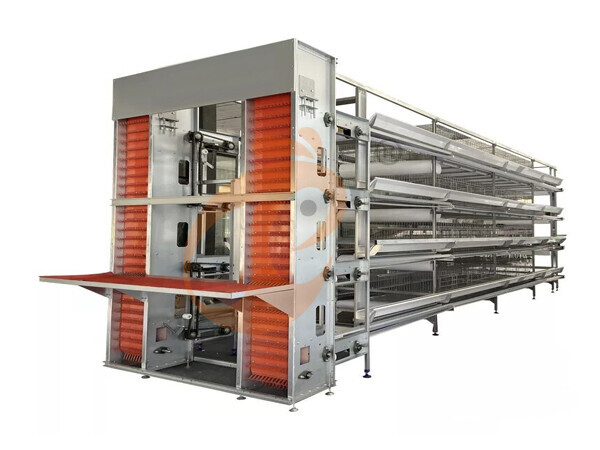
H type chicken cages provide structured multi-tier housing for commercial layer production, integrating cage modules with feeding, drinking, egg collection, manure handling, and environmental equipment.
Global factory direct sales provide standardized poultry equipment manufacturing, technical configuration, quality inspection, loading coordination, and international project support from production facilities.
Poultry equipment packages cover cage systems, automated feeding, egg collection, manure removal, ventilation, cooling, lighting, environmental control, and related farm infrastructure.
Turn-key engineering coordinates project design, equipment configuration, production, shipment, installation guidance, commissioning support, and operational handover according to site parameters.
International project supply supports farm developers with capacity-based layouts, equipment specifications, customized engineering solutions, and coordinated delivery for commercial poultry production.
Contact Us To Received Your Customized Poultry Farm Plan
Headquarters And Branchs

Hong Kong Headquarter Management Team
Hong Kong Headquarter Taiyu Industrial Group CO., LTD
China Hebei Best Machinery And Equipment CO., LTD
Nigeria Vanke Machinery And Equipment CO., LTD
Tanzania Best Machinery And Equipment CO., LTD
Ethiopia Best Hebei Machinery Manufacturing PLC




Reception /24 WhatsApp NO. : +8618830120193
PRODUCTS RECOMMENDED
 China Branch Manufacture Poultry Farm EquipmentRead More
 Ethiopia Branch Manufacture Poultry Farm EquipmentRead More
 Nigeria Branch Manufacture Poultry Farm EquipmentRead More
 Tanzania Branch Manufacture Poultry Farm EquipmentRead More
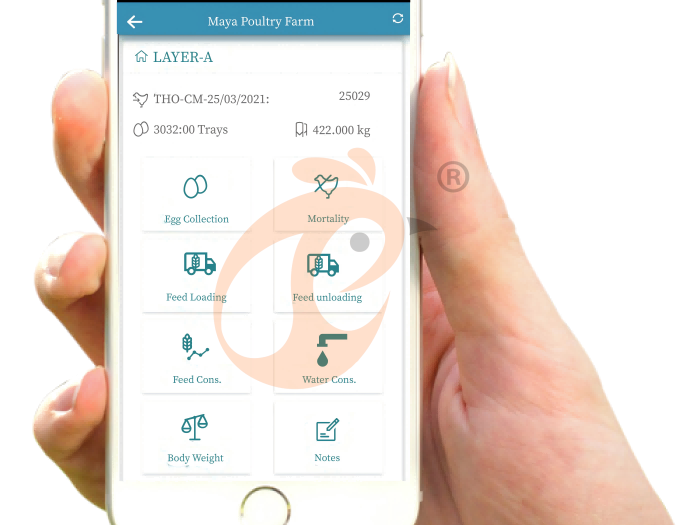
 IoT Smart Poultry FarmRead More
 >30,000 Layers Automatic H Type Battery CageRead More
 10,000 - 30,000 Layers Automatic A Type Battery CageRead More
MESSAGE
NEWS
 50,000 - 100,000 chickens/house: poultry farm solution, chicken cage, poultry farm equipment, AI smart managementRead More
 30,000 - 50,000 chickens/house: poultry farm solution, chicken cage, poultry farm equipment, AI smart managementRead More
 10,000 - 30,000 chickens/house: poultry farm solution, chicken cage, poultry farm equipment, AI smart managementRead More
 100 - 10,000 chickens/house: poultry farm solution, chicken cage, poultry farm equipment, AI smart managementRead More