

NEWS
Modern automatic poultry farm setup transforms traditional egg and meat production into high-yield automated operations.
Planning an automatic poultry farm setup requires balancing engineering metrics, welfare systems, and smart environmental controls across distinct operational dimensions
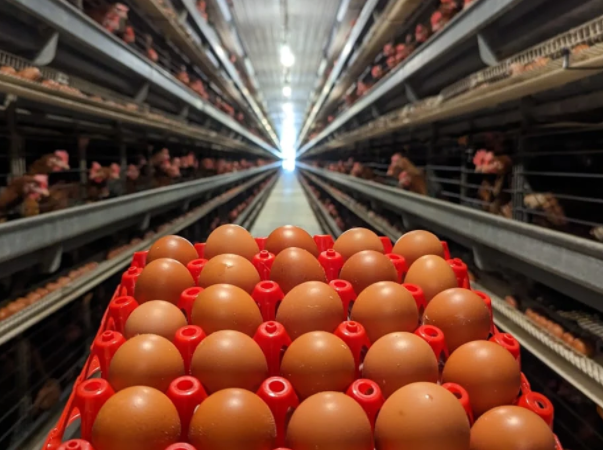
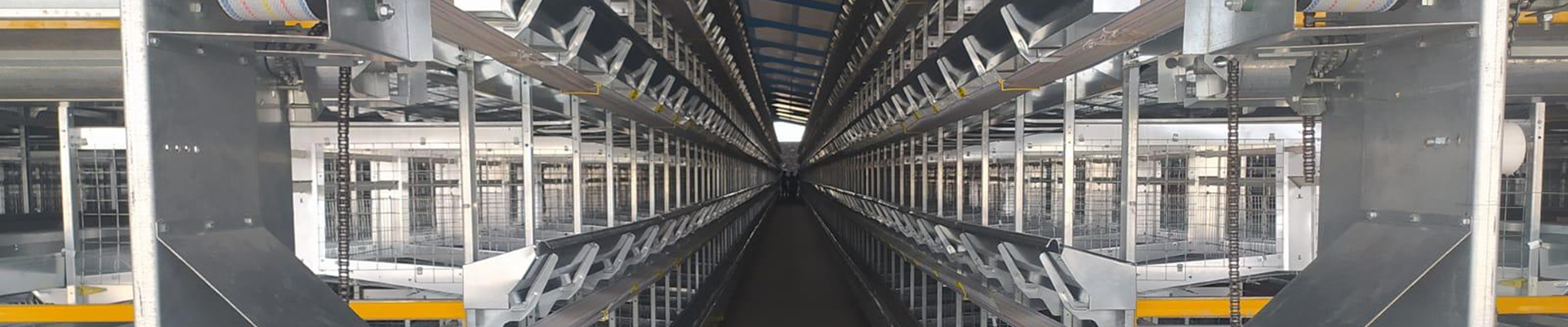
High-density cage engineering multi-tier vertical cage battery lines achieve up to 35 birds per square meter density with automated belt clearing, utilizing 4 to 16 tier H-type structures providing 488 cm² per layer or 3 to 5 tier A-type structures providing 418 cm² per layer.
Precision environmental dynamics variable-speed tunnel exhaust fans maintain static pressure at 25 pascals while holding house temperatures within ±0.5°c across a 150-meter building.
Smart robotic feeding metrics automated volumetric feed hoppers deliver custom nutritional rations with precision load cells, lowering total feed loss below 0.8%.
1. What Should You Prepare Before Starting An Automatic Poultry Farm Setup?
Proper upfront planning ensures that civil construction, financial allocations, and equipment purchasing align perfectly with long-term operational targets.
Data is for reference only. Swipe horizontally to view full table.
1.1 Define Your Capacity And Production Goals
Determine precise bird population targets based on regional market demand for eggs or meat.
Calculate total house footprint and vertical cage space needed for target capacity using exact A-type or H-type cage dimensions.
Select appropriate layer or broiler breeds matched to automated housing conditions.
1.2 Estimate Your Investment Budget
Allocate initial funds for land clearing, steel frame erection, and concrete slab pouring.
Budget for multi-tier battery cages, automatic feeding carts, and climate controllers.
Establish cash reserves for day-old chicks, feed inventories, and operational utilities (European union standard reference only).
1.3 Check Land Availability And Local Requirements
Verify agricultural land zoning permits and local environmental compliance rules.
Confirm adequate biosecurity distances from neighboring livestock operations.
Obtain waste discharge permits for manure management and composting facilities.
1.4 Choose The Required Automation Level
Compare semi-automated options against fully integrated ai-driven management platforms.
Assess labor cost savings against initial capital investments in automated machinery.
Select automated control panels capable of real-time environmental monitoring.
2. How To Select The Right Site For An Automatic Poultry Farm Setup?
Site selection dictates long-term biosecurity success, energy efficiency, and logistics costs for feed raw materials and final egg or meat products.
2.1 Land Area And Topography
Select elevated land with a 1% to 3% slope to prevent water pooling around house foundations.
Verify soil load-bearing capacity to support heavy concrete pad slabs and steel frames.
Position building orientation along an east-west longitudinal axis to reduce direct heat gain.
2.2 Water Supply And Electricity Availability
Secure continuous water access delivering at least 300 ml per bird daily during heatwaves.
Install dual filtration and inline chlorination units to maintain water ph between 6.5 and 7.5.
Connect to a stable three-phase electrical grid backed by a diesel generator.
2.3 Road Access And Transportation
Ensure direct access to paved primary roads capable of supporting 30-ton feed trucks.
Design separate internal paved loops for clean egg collection and dirty waste transport.
Keep transport distance to regional market distribution centers within a 2-hour drive.
2.4 Drainage, Waste Management And Biosecurity
Construct perimeter concrete drainage ditches to redirect storm surface runoff away from houses.
Build covered concrete manure storage sheds downwind from main production structures.
Maintain a strict 500-meter biosecurity buffer zone from external poultry facilities.
2.5 Local Climate And Environmental Requirements
Install high-pressure fogging pumps and thick cooling pads in regions exceeding 38°c ambient heat.
Integrate insulated sandwich panel walls and hot-water heating systems in freezing regions.
Deploy variable-frequency drive tunnel fans to handle high atmospheric humidity.
When planning an egg production facility, suitable Egg Production Equipment can be incorporated into the farm layout to coordinate production capacity and equipment requirements.
Get professional poultry farm construction guidance, equipment selection solutions, and the latest price lists. WhatsApp to +8618830120193.
3. How To Design And Plan An Automatic Poultry Farm Setup?
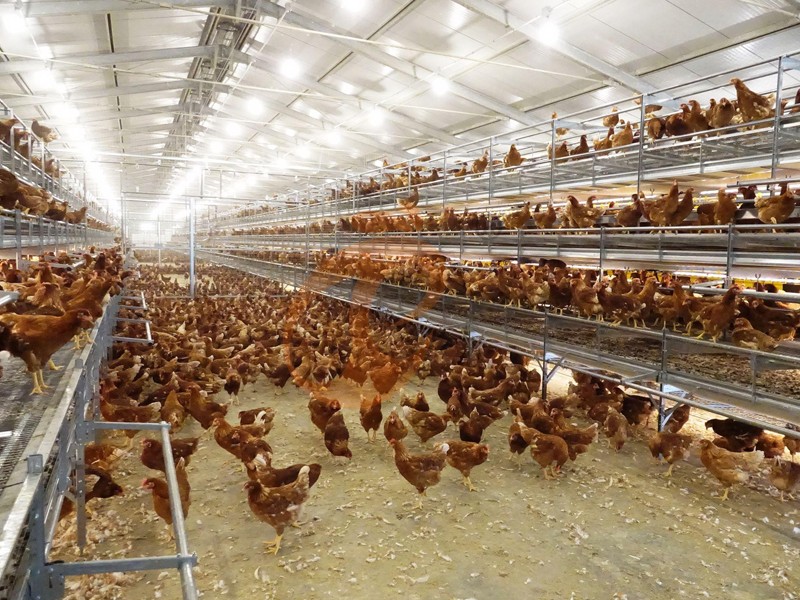
A well-structured farm design establishes physical barriers against pathogens while optimizing workflow efficiency across daily management tasks.
3.1 Farm Layout And Functional Zones
Separate administrative offices and staff quarters from live bird production houses.
Position vehicle disinfection spray bays at main farm entry gates.
Place bulk feed silos near front service access roads for efficient truck filling.
3.2 Housing Systems And Management Requirements
Different housing methods require distinct structural setups, specialized equipment, and tailored daily management practices:
(1) Multi-Tier Battery Cage Systems
Structure & Setup
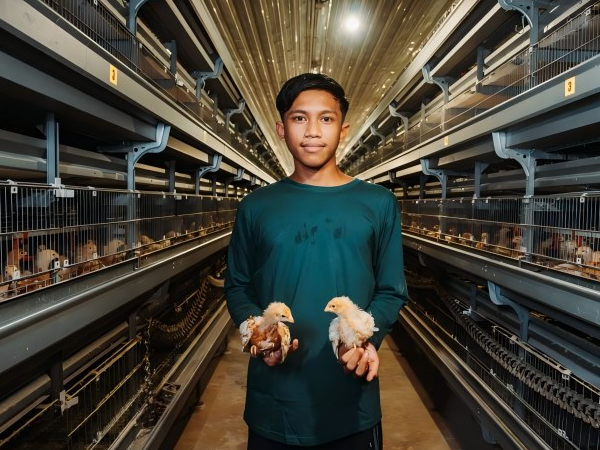
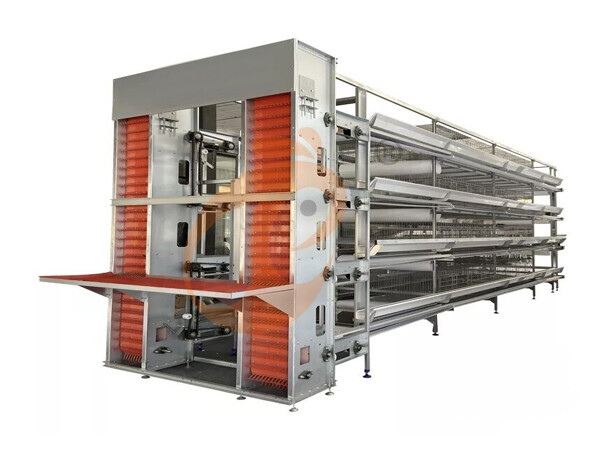
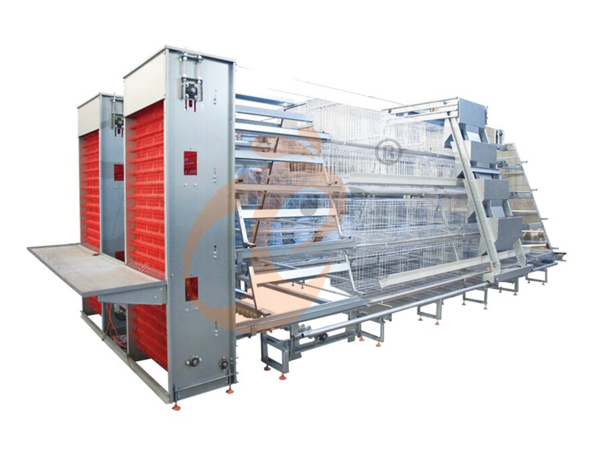
High-density H-type steel cage frames (4 to 16 tiers high, unit dimensions 1.25 m × 1.25 m, cell size 60 cm × 62.5 cm × 48 cm, housing 8 birds per cell providing 488 cm²/bird) or A-type frames (3 to 5 tiers high, unit dimensions 2.2 m × 2.4 m, cell size 43 cm × 38 cm × 38 cm, housing 4 birds per cell providing 418 cm²/bird) placed inside fully closed climate-controlled buildings.
Equipment Specifications:
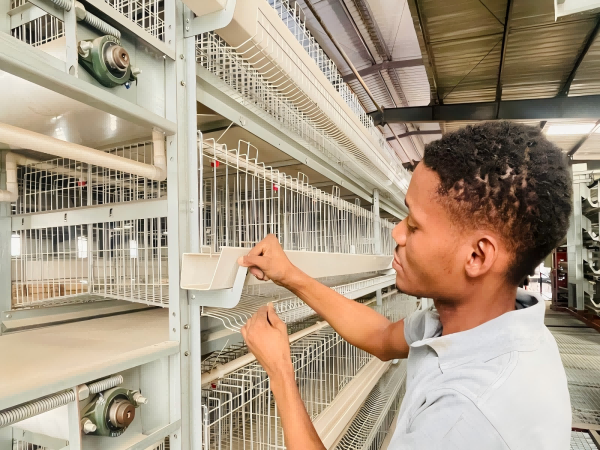
Integrated pp manure belts beneath each tier, automated trough feed carts, nipple drinking lines, and automatic soft-touch egg gathering belts.
Management Requirements:
Precise monitoring of microclimate sensors, daily automated manure belt clearing, and regular mechanical maintenance of drive chains and belts.
(2) Deep Litter Floor Raising Systems
Structure & Setup
Open or closed single-level buildings featuring concrete floors covered with wood shavings, rice hulls, or chopped straw bedding.
Equipment Specifications
Suspended automatic pan feeding lines, height-adjustable nipple drinker lines, space heaters, and automated nesting boxes for layer breeders.
Management Requirements
Continuous monitoring of litter moisture levels to prevent pododermatitis, periodic flock pan height adjustments, and manual or semi-automated egg collection.
(3) Free-Range And Pasture Farming Systems
Structure & Setup
Fixed central shelter houses or mobile coops connected to outdoor pasture paddocks with secure perimeter fencing.
Equipment Specifications
Weatherproof outdoor feeding hoppers, gravity-fed watering troughs, automated pop-hole doors, and insulated indoor roosting perches.
Management Requirements
Rotational paddock management to preserve green cover, predator control checks, outdoor welfare inspections, and manual egg collection protocols.
3.3 Ventilation And Cooling System Layout
Data is for reference only. Swipe horizontally to view full table.
3.4 Equipment Installation Space And Service Aisles
Maintain proper service aisle clearance between cage rows (1.2 meters for semi-automated A-type, 1.7 meters for fully automated setups, with 1.2 meters to 1.5 meters wall clearance).
Lay smooth reinforced concrete floors treated with anti-dust chemical sealants.
Allow 4 meters total front and rear clearance for semi-automated setups (2 meters front/rear) or 10 meters total clearance for fully automated setups (including feed cart parking, egg collectors, and operational space).
3.5 Future Expansion And Farm Access Planning
Align poultry house rows linearly to allow future building construction without re-routing utilities.
Sizing main electrical transformers and water pumps to support 100% capacity expansion.
Maintain distinct clean and dirty road loops across future farm phase developments.
4. How to Choose Automatic Poultry Farm Setup Equipment?
Equipment choice balances bird comfort, operational lifetime, maintenance costs, and automated data collection.
4.1 Housing Equipment Configurations
Choose hot-dip galvanized steel cage frames with zinc coating above 275 g/m² for corrosion protection.
Select high-density polypropylene manure belts engineered for long tensile durability.
Install stainless steel nipple drinkers featuring 360-degree activation and drip catch cups.
4.2 Automated Feeding And Drinking Infrastructure
Deploy volumetric feed hoppers equipped with load cell weigh sensors for accurate feed dosing.
Install rigid galvanized auger tubes to transfer feed seamlessly from silos to house hoppers.
Integrate inline water pressure regulators and automated flushing manifolds across drinking lines.
4.3 Manure Removal And Egg Collection Mechanics
Data is for reference only. Swipe horizontally to view full table.
4.4 Intelligent Control And Monitoring Systems
Connect central microcomputer plcs to indoor probes tracking temperature, relative humidity, CO2, and NH3.
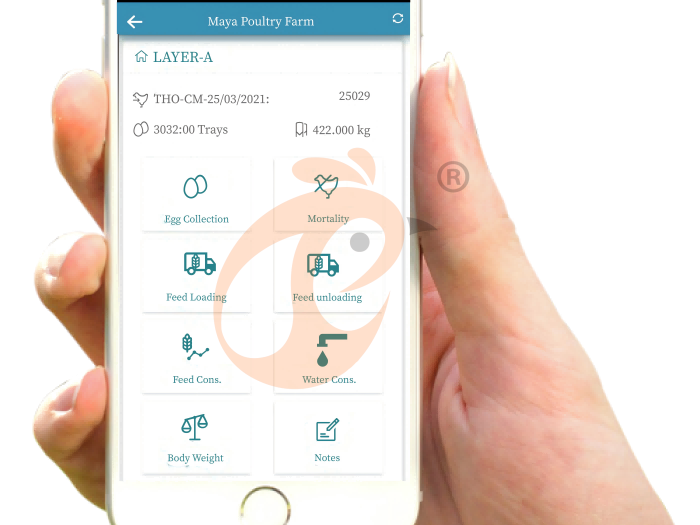
Install automated platform bird scales to monitor daily flock weight trends continuously.
Deploy sms and mobile alarm units to notify farm managers instantly during power grid disruptions.
For projects requiring coordinated egg collection and production systems, Taiyu Group (HK) Egg Production Equipment offers a product reference for evaluating equipment configurations and production requirements.
For poultry farm construction guidance, equipment selection solutions, and the latest price lists, contact us on WhatsApp at +8618830120193.
5. How To Build An Automatic Poultry Farm Setup From 1,000 To 100,000+ Birds?
Scaling an automatic poultry farm requires progressive adjustments in housing structure, automation levels, and labor deployment.
Data is for reference only. Swipe horizontally to view full table.
5.1 Small Scale Farm Setups (1,000 to 5,000 Birds)
Utilize A-type 3-tier or 4-tier semi-automated cages (120 or 160 birds per set) arranged in 2 rows.
Construct compact houses with a width of 8.4 meters and lengths ranging from 15 meters to 39.2 meters.
Reserve 1.2 meters aisle and wall clearances along with 2 meters front and rear clearance for manual and cart operations.
5.2 Medium Scale Farm Setups (15,000 to 30,000 Birds)
Deploy fully automated A-type 4-tier (e.g., 4 rows in a 17.7 m x 62.8 m house for 15,000 birds) or H-type 4 to 5-tier setups (3 rows in a 10.0 m wide house for 20,000–30,000 birds).
Maintain strict 1.7 meters aisle clearance between rows, 1.5 meters wall clearance, and 10 meters front/rear operational space for automated feeding and egg collecting machinery.
Implement integrated climate controllers managing tunnel exhaust ventilation and evaporative cooling pads.
5.3 Enterprise Scale Farm Setups (50,000 to 100,000+ Birds)
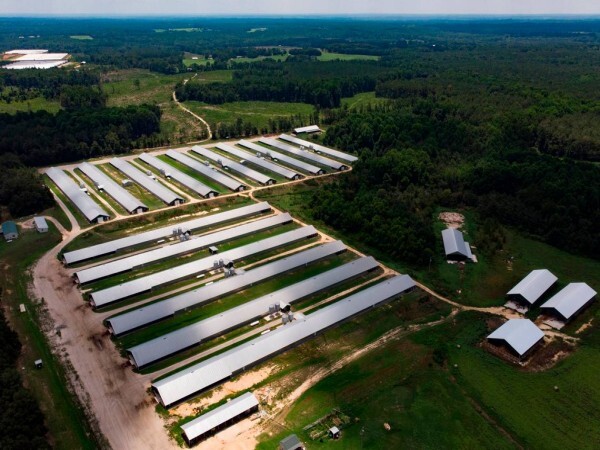
Build high-density structures using H-type cages ranging from 7-tier (50,176 birds in a 10 m x 103.75 m house) up to 14-tier (100,352 birds in a 10 m x 103.75 m house) or 16-tier (100,352 birds in a 10 m x 92.5 m house) 3-row configurations.
Install AI-driven environmental control networks linked to central egg gathering and automated manure belt disposal.
Implement automated manure drying and covered composting plants for large-scale waste processing.
Need help planning a poultry farm project? Get professional construction guidance, equipment selection solutions, and the latest price lists. WhatsApp to +8618830120193.
6. What Are The 8 Steps In The Automatic Poultry Farm Setup Construction Process?
Building a modern commercial farm follows a structured project cycle from site evaluation to final operational handover.
6.1 Step 1 – Project Assessment And Requirement Confirmation
Conduct detailed economic feasibility studies outlining return on investment and payback periods.
Finalize flock capacity goals, target feed conversion ratios, and required automation parameters.
Sign formal technical specifications detailing equipment dimensions and material standards.
6.2 Step 2 – Site Survey And Farm Layout Planning
Execute complete 3d topographical land surveys using laser-guided gps equipment.
Conduct core drill soil testing to establish foundation depth and concrete load ratings.
Draft master cad layouts incorporating biosecurity buffers, utility lines, and access roads.
6.3 Step 3 – Poultry House Design And Engineering Coordination
Generate structural blueprints for hot-dip galvanized steel frames and roofing trusses.
Calculate electrical load distribution schematics for backup generators and main distribution panels.
Design plumbing layouts specifying water pipe diameters, pump heads, and filtration nodes.
6.4 Step 4 – Equipment Selection And Technical Confirmation
Match H-type or A-type cage frame configurations strictly to house internal width and eave height.
Verify electrical motor voltage ratings (380 V, 50/60 Hz) against regional grid standards.
Finalize manufacturing shop drawings for feed augers, manure belts, and egg collectors.
6.5 Step 5 – Civil Construction And Infrastructure Preparation
Grade land, excavate foundation trenches, and pour reinforced concrete floor slabs.
Erect galvanized structural steel columns, roof trusses, and polyurethane sandwich wall panels.
Lay underground electrical conduits, water main pipelines, and concrete drainage channels.
6.6 Step 6 – Equipment Manufacturing And Delivery
Fabricate hot-dip galvanized cage mesh, frames, feed hoppers, and control panels in factory.
Perform rigorous factory quality checks on drive motors, control boards, and belt materials.
Package components into ocean shipping containers for transport to project site staging zones.
6.7 Step 7 – Equipment Installation And System Commissioning
Assemble multi-tier cage frames, align drive tracks, and tension polypropylene manure belts.
Mount exhaust fans, cooling pads, water regulation stations, and automatic feed hoppers.
Conduct dry-run testing across all mechanical drives, sensors, and microcomputer controllers.
6.8 Step 8 – Final Inspection, Training And Project Handover
Perform comprehensive technical audits verifying bolt torque standards and electrical safety grounding.
Test emergency power transfer switches by simulating main grid blackouts.
Conduct hands-on operator training for farm managers and hand over technical operating manuals.
7. How Much Does An Automatic Poultry Farm Setup Cost?
Understanding setup costs requires categorizing structural, mechanical, infrastructure, and ongoing operational expenditure items.
7.1 Land Preparation And Poultry House Construction Costs
Account for land grading, excavation, and concrete slab pouring expenses (Europpean union standard reference only).
Calculate costs for insulated sandwich wall panels, roofing materials, and structural steel trusses.
Factor in civil labor fees and heavy equipment rental rates for site preparation.
7.2 Automatic Poultry Equipment Costs
Budget for multi-tier H-type or A-type battery cage racks built with galvanized steel mesh.
Allocate funds for automated feed silos, auger transfer lines, feed hoppers, and nipple lines.
Invest in exhaust cone fans, evaporative cooling pads, and central microcomputer control panels.
7.3 Electrical, Water And Infrastructure Costs
Purchase dedicated diesel backup generator sets matching peak farm electrical wattage.
Install high-capacity electrical transformers, main distribution panels, and underground cabling.
Drill water wells, install bulk storage tanks, and deploy multi-stage water filtration systems (European union standard reference only).
7.4 Transportation And Installation Costs
Cover ocean container freight, port clearance fees, and inland trucking logistics.
Budget for specialized installation engineers to direct on-site mechanical assembly.
Allocate operational capital for local assembly crews, crane rentals, and specialized power tools.
For egg production projects, Taiyu Group (HK) Egg Production Equipment can be reviewed as part of the equipment planning and project cost evaluation process.
8. What Should You Check Before Starting Poultry Farm Operations?
Conducting a thorough pre-operational checklist prevents costly equipment downtime, chick mortality, or feed distribution failures during live stocking.
8.1 Equipment Installation And Mechanical Testing
Inspect cage frame plumbness and verify torque tightness on all structural frame bolts.
Run manure belts through complete continuous revolutions to check tracking alignment and drive rollers.
Test travelling feed carts to ensure smooth travel down service aisles without binding.
8.2 Water And Feeding System Testing
Pressurize water distribution lines to 2.0 bar to check for pipe joint leaks.
Trigger every nipple drinker individually to clear trapped air and verify smooth water flow.
Run feed augers to verify uniform feed filling across all cage trough lines.
8.3 Ventilation And Climate Control Testing
Test individual exhaust fan motor rotations and verify vfd speed adjustments.
Check water distribution pump operation across evaporative cooling pad headers.
Calibrate indoor microcomputer sensors against manual temperature and humidity gauges.
8.4 Intelligent Control And Alarm Testing
Simulate power grid failures to verify automated diesel generator switchover within 15 seconds.
Trigger high-temperature sensor alerts to confirm automatic dialer warning notifications.
Test manual emergency override switches for ventilation wall inlets and fans.
8.5 Staff Training And Daily Operation Procedures
Train staff on daily morning operational logs covering feed intake, water usage, and mortality.
Enforce strict biosecurity shower-in and boot disinfection protocols at all farm entry gates.
Establish clear scheduled maintenance routines for drive chain greasing and filter replacements.
Get professional guidance for poultry farm construction, equipment selection solutions, and the latest price lists before starting operations. WhatsApp to +8618830120193.
9. Taiyu (HK) Group - One Of China Largest poultry farm equipment Exporter
1. Global Service Network
Headquartered in Hong Kong, with branches and factories in China, Vietnam, Thailand, Nigeria, Kenya, Ethiopia, and Tanzania, providing more localized project and after-sales support.
2. International Quality Standards
Strict quality control and double inspections.
Certifications and export documents include CE, SGS, ISO 9001, CCVO, PVOC, SONCAP, COC, ECTN, FORM F, and more.
3. One-To-One Vip Service
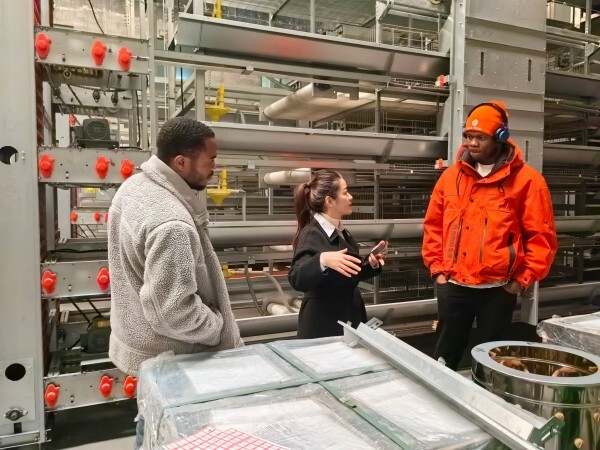
Dedicated account managers provide customized farm designs, equipment configurations, and quotations for projects ranging from 500 to 100,000+ birds per house.
4. Lifetime After-Sales Service
Installation guidance, equipment commissioning, operator training, remote technical support, spare parts supply, and ongoing maintenance.
10. Contact Us To Received Your Customized Poultry Farm Plan
Headquarters And Branchs

Hong Kong Headquarter Management Team
Hong Kong Headquarter Taiyu Industrial Group CO., LTD
China Hebei Best Machinery And Equipment CO., LTD
Nigeria Vanke Machinery And Equipment CO., LTD
Tanzania Best Machinery And Equipment CO., LTD
Ethiopia Best Hebei Machinery Manufacturing PLC




Reception /24 WhatsApp NO. : +8618830120193
PRODUCTS RECOMMENDED
 China Branch Manufacture Poultry Farm EquipmentRead More
 Ethiopia Branch Manufacture Poultry Farm EquipmentRead More
 Nigeria Branch Manufacture Poultry Farm EquipmentRead More
 Tanzania Branch Manufacture Poultry Farm EquipmentRead More
 IoT Smart Poultry FarmRead More
 >30,000 Layers Automatic H Type Battery CageRead More
 10,000 - 30,000 Layers Automatic A Type Battery CageRead More
MESSAGE
NEWS
 50,000 - 100,000 chickens/house: poultry farm solution, chicken cage, poultry farm equipment, AI smart managementRead More
 30,000 - 50,000 chickens/house: poultry farm solution, chicken cage, poultry farm equipment, AI smart managementRead More
 10,000 - 30,000 chickens/house: poultry farm solution, chicken cage, poultry farm equipment, AI smart managementRead More
 100 - 10,000 chickens/house: poultry farm solution, chicken cage, poultry farm equipment, AI smart managementRead More