

NEWS
Feed mixer automation can reduce repetitive poultry feeding labor while supporting 8–12 operating hours and 2–4 production cycles annually.
Manual feeding may suit smaller flocks, while automated poultry feeding systems gain value as daily feed volume reaches 2–5 tons.
Feed mixer machines improve workflow control through repeatable preparation, with typical batch intervals of 10–20 minutes under suitable configurations.
Poultry feed mixers support expansion by connecting preparation, storage, and distribution, while reducing worker movement across 3–6 house zones.
- Careful capacity selection, maintenance planning, and integration can improve economics, especially for farms operating 10,000–100,000 birds per cycle.
Get professional poultry farm construction guidance, equipment selection solutions, and the latest price lists, whatsApp to +8618830120193, click to learn more.
The Real Cost Question
When poultry farms compare manual feeding with feed mixer automation, the purchase price is only one part of the calculation.
Labor, feed waste, mixing consistency, feeding speed, flock performance, and long-term equipment maintenance affect final cost, while a feed mixer machine can process approximately 1–5 tons per batch.
For small operations, manual feeding may appear cheaper because initial investment remains limited, while an automated poultry feeding system can become more economical as labor requirements approach 6–10 hours daily.
The better question is not simply, "which system costs less to buy?" but rather, "which system costs less to operate per bird, per cycle, and per year?" A poultry feed mixer can support this evaluation through 15–30 minute preparation windows.
Cost Comparison At A Glance
Data is for reference only.Swipe horizontally to view full table.
For farms planning expansion, feed mixer automation often becomes more attractive as bird numbers increase beyond manageable manual workloads.
An automated poultry feeding system can coordinate daily operations around 2–4 scheduled feeding periods, while a feed mixer machine reduces repeated handling between preparation points.
Where Manual Feeding Looks Cheaper
Low entry cost
Manual feeding has an obvious advantage low entry cost.
A farm can purchase basic feeders and use workers to transport, mix, and distribute feed, while a poultry feed mixer requires planned installation space of roughly 10–30 square meters depending on configuration.
There is no major automation system to install, and operators can adjust feeding routines according to immediate farm conditions.
However, manual feeding can require repeated handling across 50–200 meters of poultry house movement, while an automated poultry feeding system centralizes more of the workflow.
For a small flock, such workload may remain manageable.
For a commercial poultry house, accumulated labor can become a major operating expense, making a feed mixer machine increasingly relevant at higher daily throughput.
Labor Cost: The Hidden Bill
Data is for reference only.Swipe horizontally to view full table.
Commercial value
A modern poultry feed mixer and feeding system is not simply a machine replacing a worker.
Feed mixer automation can reduce repetitive handling across shifts lasting 8–12 hours, while an automatic poultry feeding system allows workers to redirect attention toward flock observation and house management.
The equipment becomes particularly valuable where one operator manages multiple houses, with centralized preparation potentially supporting 3–6 poultry houses from one operational point.
Feed Mixer Automation Changes The Workflow
Manual method
Measure → carry → mix → carry again → fill feeders → repeat → check distribution.
Automated method
Load ingredients → automated mixing → controlled delivery → uniform distribution → monitor.
This workflow can substantially reduce unnecessary movement inside the poultry house, while a feed mixer machine can maintain batch preparation intervals around 10–20 minutes under suitable operating conditions.
A properly configured poultry feed mixer also helps operators maintain a consistent ration from batch to batch.
For commercial poultry producers, consistency matters because feeding is a repeated production process performed throughout a flock cycle, with equipment availability commonly planned around 16–24 operating hours per day.
Feed Consistency Has A Price
Data is for reference only.Swipe horizontally to view full table.
A feed mixer machine can provide more controlled preparation and delivery, with suitable mixing chambers commonly designed for 500–3,000 kg working loads.
A poultry feed mixer can also support repeatable ingredient incorporation when operators follow defined loading sequences and maintenance intervals of approximately 7–30 days.
Better consistency does not automatically guarantee better flock performance.
However, an automated poultry feeding system gives managers stronger control over one of the most important daily production processes.
What About Feed Waste?
Data is for reference only.Swipe horizontally to view full table.
Waste control check
Feed is a major poultry production expense, so even a small reduction in unnecessary loss can have a meaningful financial effect.
A poultry feed mixer can improve controlled handling through defined loading points, while an automated poultry feeding system can reduce repeated manual transfer over 20–100 meters.
Exact savings depend on house design, feeder configuration, bird density, management practices, and equipment settings.
The important point is that feed mixer automation gives farms more opportunities to control feed movement and reduce avoidable losses, especially across operations exceeding 10,000 birds.
Initial Investment Vs Lifetime Value
Data is for reference only.Swipe horizontally to view full table.
Automation requires capital, but equipment should be evaluated according to useful operating life rather than purchase price alone.
A feed mixer machine can serve repeated production cycles, with expected service planning commonly covering 5–10 years depending on construction, workload, and maintenance.
When labor savings, improved workflow, reduced handling, and better process control are considered together, higher initial investment can become easier to justify.
A properly selected poultry feed mixer can also support project expansion where future capacity may increase by 30–50%.
European union standard reference only.
The Break-Even Point Depends On Farm Size
Small farm
Small farm + low labor cost = manual feeding may remain economical.
Growing farm
Growing farm + increasing labor cost = automation becomes more attractive.
Large commercial farm
Large commercial farm + high daily feed volume = automation can offer a stronger economic case.
There is no universal break-even number because wages, feeding frequency, house layout, and equipment capacity differ from farm to farm.
A feed mixer machine should therefore be matched with feeding speed, hopper volume, and house dimensions, with project capacities commonly ranging from 1–10 tons per hour.
Oversized equipment can waste capital, while undersized equipment can create bottlenecks.
An automatic poultry feeding system should be engineered around actual flock demand rather than a generic capacity target.
Automation Is Also A Management Tool
Data is for reference only.Swipe horizontally to view full table.
The strongest value of feed mixer automation is not merely saving minutes.
A poultry feed mixer can standardize preparation steps across multiple batches, while automated poultry feeding systems can support scheduled operations with approximately 2–4 feeding windows daily.
When farms operate several poultry houses, relying entirely on manual feeding can make scheduling increasingly difficult.
Automated systems create a standardized process that can be repeated across houses and production cycles, with centralized control potentially covering 3–8 connected operating zones.
How To Choose The Right Poultry Equipment
Data is for reference only.Swipe horizontally to view full table.
The right equipment should be selected as a system, not as an isolated machine.
A feed mixer machine should match mixer capacity, feeding speed, storage volume, house dimensions, and flock size, with project planning commonly covering 10,000–100,000 birds per cycle.
A reliable poultry equipment supplier can help connect preparation, storage, delivery, and control components into one workflow.
The objective is to create a feeding process in which every component supports the next step, while an automated poultry feeding system can reduce coordination points across 2–5 major operating stages.
The Bottom Line: Buy Less Labor, Not Just More Machinery
Data is for reference only.Swipe horizontally to view full table.
So, which costs less?
For a very small poultry farm, manual feeding can still make financial sense because initial investment is minimal.
As flock size, feeding volume, labor costs, and operational complexity increase, feed mixer automation can deliver a lower total cost of ownership, particularly at 20,000–100,000 birds per cycle.
Frequently Asked Questions
Q1: Can feed mixer automation really cost less than manual feeding?
A1: Yes, especially when labor demand and daily feed volume increase.
A feed mixer machine becomes more economically attractive when repetitive handling occupies several worker-hours daily and batch demand reaches approximately 2–5 tons.
Q2: Is manual feeding better for small poultry farms?
A2: Manual feeding can remain practical for smaller flocks with limited daily feed requirements.
A poultry feed mixer becomes more relevant when expansion, labor availability, or feeding consistency becomes a recurring management concern.
Q3: What should be compared before buying automated feeding equipment?
A3: Compare equipment capacity, installation requirements, operating workload, maintenance planning, and future expansion needs.
An automatic poultry feeding system should match actual flock demand rather than relying only on the lowest purchase price.
Taiyu (HK) Group - One Of China Toppest Feed Mixer Manufacturer
Feed mixer machines provide controlled batch preparation from 1–5 tons, supporting automated poultry feeding systems with repeatable commercial workflows.
Global factory-direct supply covers poultry equipment packages with engineering coordination, component matching, and production inspection for export projects.
Poultry equipment solutions integrate feeding, mixing, storage, delivery, and control interfaces according to house dimensions and production capacity.
Turn-key engineering supports project planning from equipment selection through installation coordination, commissioning, and operational handover.
Export-oriented manufacturing provides scalable configurations for farms from 10,000 to 100,000 birds per production cycle.
Contact Us To Received Your Customized Poultry Farm Plan
Headquarters And Branchs

Hong Kong Headquarter Management Team
Hong Kong Headquarter Taiyu Industrial Group CO., LTD
China Hebei Best Machinery And Equipment CO., LTD
Nigeria Vanke Machinery And Equipment CO., LTD
Tanzania Best Machinery And Equipment CO., LTD
Ethiopia Best Hebei Machinery Manufacturing PLC




Reception /24 WhatsApp NO. : +8618830120193
PRODUCTS RECOMMENDED
 China Branch Manufacture Poultry Farm EquipmentRead More
 Ethiopia Branch Manufacture Poultry Farm EquipmentRead More
 Nigeria Branch Manufacture Poultry Farm EquipmentRead More
 Tanzania Branch Manufacture Poultry Farm EquipmentRead More
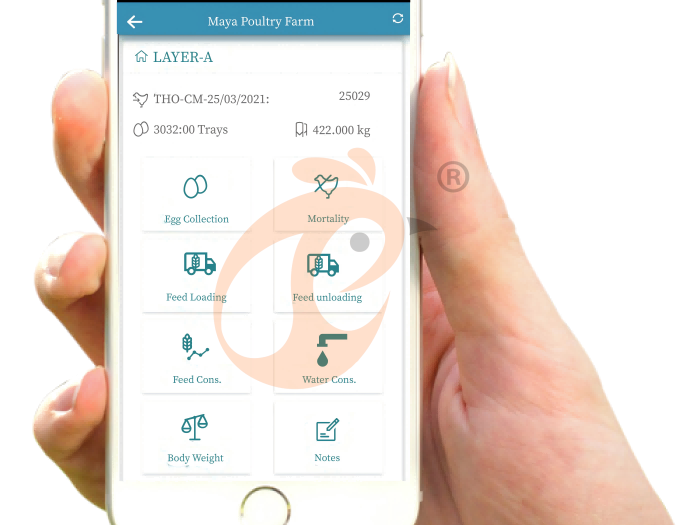
 IoT Smart Poultry FarmRead More
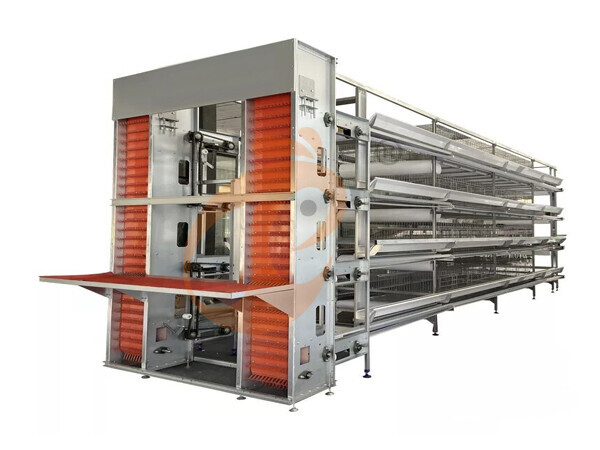
 >30,000 Layers Automatic H Type Battery CageRead More
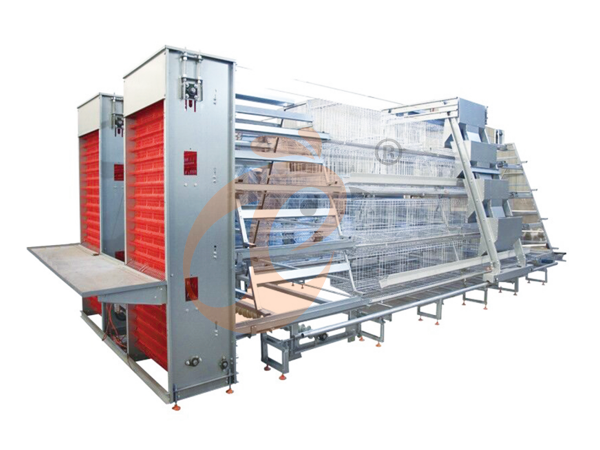
 10,000 - 30,000 Layers Automatic A Type Battery CageRead More

MESSAGE
NEWS
 50,000 - 100,000 chickens/house: poultry farm solution, chicken cage, poultry farm equipment, AI smart managementRead More
 30,000 - 50,000 chickens/house: poultry farm solution, chicken cage, poultry farm equipment, AI smart managementRead More
 10,000 - 30,000 chickens/house: poultry farm solution, chicken cage, poultry farm equipment, AI smart managementRead More
 100 - 10,000 chickens/house: poultry farm solution, chicken cage, poultry farm equipment, AI smart managementRead More