

NEWS
Feed mill profitability depends on throughput, utilization, automation, energy control, and poultry-house demand, with 3–5 year planning improving equipment investment accuracy for expanding farms.
Small feed systems protect initial capital, while modular layouts accommodate changing formulas, limited batches, and progressive poultry production without forcing premature equipment replacement.
High-capacity feed mills become commercially attractive when multiple chicken houses require continuous supply, coordinated material handling, automated batching, and stable pellet quality.
Grinding, mixing, conditioning, pelletizing, cooling, conveying, and storage must operate as one engineered process, preventing isolated equipment from creating production bottlenecks.
Equipment selection should connect present feed demand with future expansion, maintenance planning, labor structure, raw-material availability, and complete poultry equipment requirements.
Get professional poultry farm construction guidance, equipment selection solutions, and the latest price lists, whatsApp to +8618830120193, click to learn more:
The Profit Question: Capacity Or Flexibility?
For poultry producers, feed is one of the largest operating costs.
Choosing between a high-capacity feed mill and a small feed mill affects production volume, labor, energy consumption, feed quality, equipment utilization, and long-term profitability.
A small mill can suit developing farms because initial investment remains controlled, while a high-capacity feed mill can reduce production cost when demand
reaches sustained commercial levels.
The central decision is matching equipment capacity with a planned operating cycle of approximately 16–20 hours per day.
Data is for reference only.Swipe horizontally to view full table.
Follow The Numbers, Not The Price Tag
Scenario A — Developing Farm
A farm requiring several hundred kilograms daily may benefit from a compact poultry feed mill, particularly when production formulas change frequently.
Ingredient receiving can remain decentralized, with approximately 2–4 raw-material types handled per formulation.
Scenario B — Expanding Farm
A commercial operation supplying several chicken houses faces a different equation.
Continuous production, centralized material flow, and automated control can convert a feed mill machine into a larger cost-efficiency system rather than simply another production asset.
Decision Point
Profitability improves when equipment operates consistently without excessive idle time, while planned maintenance windows remain below approximately 4–6 hours monthly.
Investment Comparison: What Are You Really Paying For?
Data is for reference only.Swipe horizontally to view full table.
The purchase price represents only one part of feed production economics.
A complete feed pellet machine system may include grinding, mixing, pelletizing, elevators, conveyors, silos, cooling equipment, and centralized controls.
Compatible equipment reduces transfer losses and helps maintain a controlled process sequence from raw-material intake through finished-feed discharge.
For poultry farms, integrated equipment should support every chicken house rather than operate as an isolated workshop.
A Simple Break-Even Test
Ask Three Questions Before Ordering
1. Current Demand
How much feed does the farm consume during a normal production week?
A practical planning basis can use a 7-day consumption record and a 10–15% reserve for demand fluctuations.
2. Future Demand
How much feed will be required after chicken-house expansion?
A three-to-five-year forecast should include flock replacement cycles and seasonal stocking changes.
3. Commercial Purpose
Will feed serve internal poultry production or become an additional revenue stream?
A farm producing only for internal consumption may prioritize flexibility, while commercial feed sales can justify a more automated poultry feed mill.
Where High-Capacity Mills Gain Their Advantage
Data is for reference only.Swipe horizontally to view full table.
Capacity Creates Value Only Through Utilization
Automated batching reduces repetitive ingredient handling.
Coordinated grinding and mixing improve production continuity.
Pelletizing converts prepared formulas into manageable feed forms for poultry operations.
A centralized production sequence can also shorten operator travel distances by approximately 20–30% in properly planned layouts.
Small Mills Have A Different Kind Of Value
Choose Compact When
- Daily feed demand remains variable.
- Formula quantities require frequent adjustment.
- Available installation space is restricted.
- Initial capital needs careful allocation.
A compact feed mill machine can support developing poultry farms without creating unnecessary infrastructure.
Modular equipment also allows later additions such as storage bins, conveyors, or secondary processing units.
For example, maintaining approximately 1.2–1.8 m of service clearance around major equipment supports routine inspection and component replacement.
Data is for reference only.Swipe horizontally to view full table.
Equipment Efficiency Can Change The Calculation
Data is for reference only.Swipe horizontally to view full table.
Feed mill profitability should be evaluated as one engineered system rather than a collection of individual machines.
For poultry enterprises, reliable poultry feed mill operation also supports consistent feeding schedules across broilers, layers, and breeders.
A coordinated system can reduce unnecessary intermediate handling, while equipment alignment keeps raw materials moving according to the production sequence.
The Chicken House Factor
One House
A smaller chicken-house operation can justify compact feed processing when daily demand remains manageable.
Several Houses
Multiple houses operating simultaneously change the requirement because feed must reach separate feeding systems without production interruptions.
Expansion
When additional houses are planned, a scalable feed mill machine layout can prevent repeated reconstruction.
Engineering evaluation should include house quantity, flock size, feeding-line arrangement, raw-material flow, expansion area, and automation requirements.
A planned electrical reserve of approximately 15–20% also provides room for selected future equipment additions.
Energy And Labor: The Hidden Margin
Data is for reference only.Swipe horizontally to view full table.
A low equipment price can conceal recurring operating expenses.
Manual loading, weighing, cleaning, transfer, and bag handling increase labor requirements across every production shift.
Automated poultry feed mill systems can reduce repetitive intervention while improving process coordination.
For commercial farms, compressed-air demand around 6–8 bar and controlled pneumatic response can support dependable automated equipment operation.
Choose The System That Matches Your Growth Curve
Stage 1 — Establish
Start with equipment matched to existing poultry demand and available installation infrastructure.
Stage 2 — Expand
Add production capacity as additional chicken houses increase feed requirements.
Stage 3 — Automate
Introduce centralized batching, conveying, weighing, and process control after production becomes sufficiently regular.
Stage 4 — Commercialize
A larger feed pellet machine configuration becomes relevant when feed production extends beyond internal farm consumption.
Data is for reference only.Swipe horizontally to view full table.
A growth-based equipment plan avoids premature investment while preserving future expansion paths.
So, Which One Is More Profitable?
Small Feed Mill
Suitable economics emerge when production demand remains limited, capital allocation is controlled, and formula flexibility matters.
High-Capacity Feed Mill
Commercial economics become stronger when multiple chicken houses generate sustained feed demand and automated production can maintain regular utilization.
Engineering Decision
Compare lifetime cost per usable ton rather than purchase price alone.
For poultry production, feed particle targets around 2.5–3 mm for broilers and 3.5–4 mm for larger birds also influence grinding and pelletizing configuration.
Where pricing is compared across international projects, European union standard reference only.
Build For The Farm You Are Becoming
The most profitable system is not automatically the largest system.
A suitable poultry feed mill should match feed demand, raw materials, labor organization, chicken-house capacity, installation conditions, and expansion plans.
An experienced equipment manufacturer can coordinate feed processing with feeding systems, conveying, storage, and wider poultry equipment requirements.
Project planning should also consider maintenance access, spare-parts availability, electrical loading, operator workflow, and commissioning requirements.
The right feed mill machine should produce feed efficiently while supporting reliable operation across the entire poultry farm.
Frequently Asked Questions
Q1: What determines feed mill profitability most?
Feed demand, equipment utilization, energy consumption, labor requirements, and maintenance structure determine profitability more accurately than purchase price alone.
Q2: When should a poultry farm choose a high-capacity feed mill?
Multiple chicken houses with sustained feed demand can justify larger systems, particularly when planned operation exceeds approximately 10 t/h.
Q3: Can a small feed mill support future farm expansion?
Yes, provided the initial layout reserves space, electrical capacity, material-routing paths, and connection points for later equipment additions.
Taiyu (HK) Group - One Of China Toppest Feed Mill Manufacturer
Feed Mill: Integrated grinding, mixing, pelletizing, cooling, conveying, and storage configurations are engineered around poultry production requirements and specified output targets.
Global Factory Direct Sales: Direct manufacturing supports equipment customization, production coordination, technical documentation, installation guidance, commissioning assistance, and international project delivery.
Poultry Equipment: Chicken-house feeding, drinking, ventilation, environmental-control, manure-removal, and feed-processing equipment can be coordinated under one engineering framework.
Turn-Key Engineering: Project execution can cover process design, equipment manufacturing, layout planning, electrical integration, installation support, testing, operator training, and handover.
International Projects: Complete solutions are configured according to farm scale, climate conditions, local electrical standards, raw-material characteristics, production targets, and expansion requirements.
Contact Us To Received Your Customized Poultry Farm Plan
Headquarters And Branchs

Hong Kong Headquarter Management Team
Hong Kong Headquarter Taiyu Industrial Group CO., LTD
China Hebei Best Machinery And Equipment CO., LTD
Nigeria Vanke Machinery And Equipment CO., LTD
Tanzania Best Machinery And Equipment CO., LTD
Ethiopia Best Hebei Machinery Manufacturing PLC




Reception /24 WhatsApp NO. : +8618830120193
PRODUCTS RECOMMENDED
 China Branch Manufacture Poultry Farm EquipmentRead More
 Ethiopia Branch Manufacture Poultry Farm EquipmentRead More
 Nigeria Branch Manufacture Poultry Farm EquipmentRead More
 Tanzania Branch Manufacture Poultry Farm EquipmentRead More
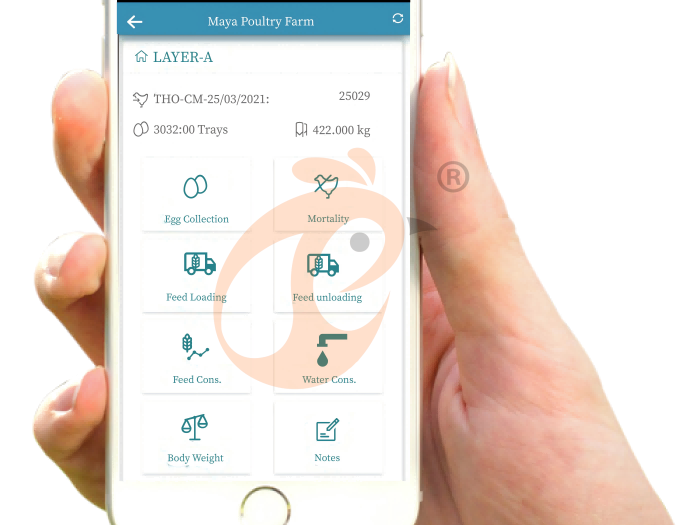
 IoT Smart Poultry FarmRead More
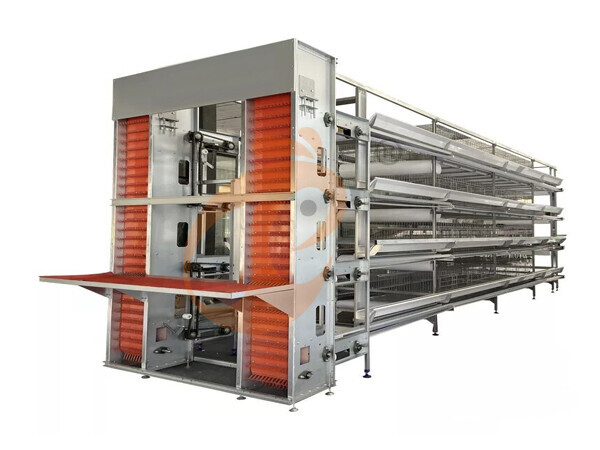
 >30,000 Layers Automatic H Type Battery CageRead More
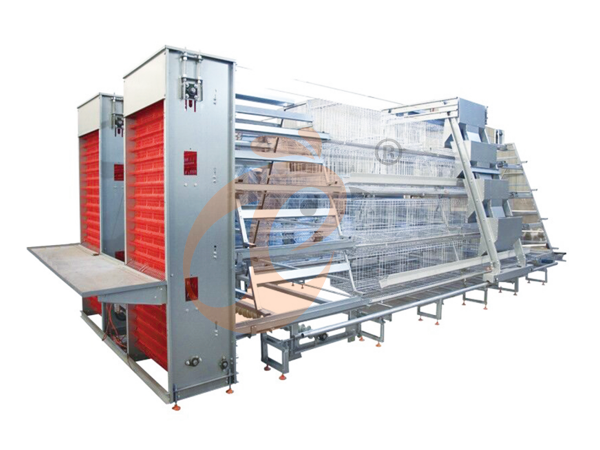
 10,000 - 30,000 Layers Automatic A Type Battery CageRead More
MESSAGE
NEWS
 50,000 - 100,000 chickens/house: poultry farm solution, chicken cage, poultry farm equipment, AI smart managementRead More
 30,000 - 50,000 chickens/house: poultry farm solution, chicken cage, poultry farm equipment, AI smart managementRead More
 10,000 - 30,000 chickens/house: poultry farm solution, chicken cage, poultry farm equipment, AI smart managementRead More
 100 - 10,000 chickens/house: poultry farm solution, chicken cage, poultry farm equipment, AI smart managementRead More