

NEWS
A type vs H type poultry cage price should be assessed through capital allocation, operating expenditure, automation return, building economics, and equipment durability rather than quotation value alone.
A type systems can support conventional layer operations, while H type designs target engineered commercial production where automation and vertical utilization influence project economics.
Feed consumption around 110–115 g per hen daily and water demand near 200–220 mL per hen daily show why equipment selection must connect directly with operating management.
Egg handling, manure removal, ventilation coordination, and workforce organization can materially change annual production expenditure when flock size reaches commercial scale.
A technically matched poultry equipment package converts cage investment into measurable production infrastructure, giving farmers a clearer basis for comparing initial expenditure against recurring operating costs.
Get professional poultry farm construction guidance, equipment selection solutions, and the latest price lists, whatsApp to +8618830120193, click to learn more:
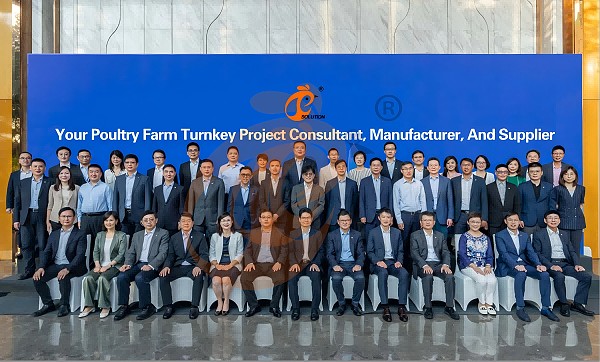
A Type Vs H Type: The Real Cost Question
When comparing A type poultry cage and H type poultry cage, the commercial question is whether additional equipment expenditure produces measurable operational value.
A commercial layer house can run continuously through 365 production days, so small daily inefficiencies accumulate into significant annual expenditure.
Feed handling is especially important because published semi-automatic systems report approximately 110–115 g feed consumption per hen per day, making
consistent distribution a recurring operating consideration.
Data is for reference only.Swipe horizontally to view full table.
Why A Type Cages Often Have A Lower Purchase Price
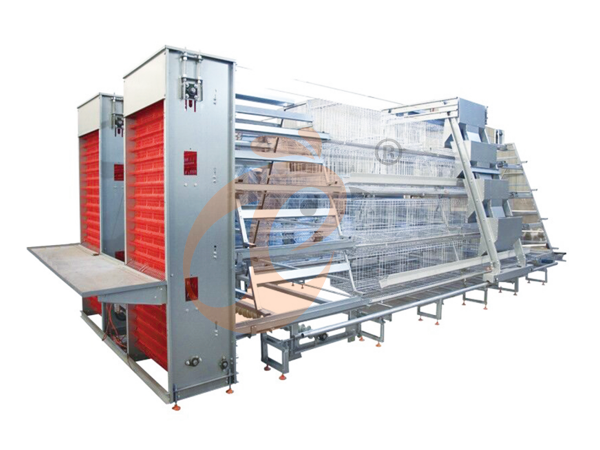
A type poultry cages use an inclined frame arrangement that naturally supports egg rolling toward the collection side, reducing the mechanical complexity required for basic egg transfer.
Published A type configurations show 455 cm² floor area per bird in one standard model, providing a concrete reference for evaluating bird-space allocation before equipment quantities are finalized.
For farms using semi-automatic management, A type equipment can also simplify operator access, because routine inspection can be organized around single-
level working passages rather than extensive vertical maintenance routes.
Data is for reference only.Swipe horizontally to view full table.
Where H Type Creates Additional Value
H type poultry cages concentrate multiple production levels around a vertical supporting frame, allowing equipment planning to focus on centralized material movement rather than independent manual stations.
Commercial H type systems can combine automated feeding, egg collection, manure removal, and environmental controls into one coordinated installation, reducing the number of separate operational interfaces.
Published H type designs also demonstrate 450 cm² bird-space specifications, showing that vertical production can retain a defined floor allowance for individual layers.
Data is for reference only.Swipe horizontally to view full table.
Price Comparison: What Are You Actually Buying?
A poultry cage quotation becomes commercially useful only when equipment scope, automation components, installation responsibility, and commissioning
requirements are separated into identifiable cost items.
Some published market references place automatic cage investment around USD 2.50–3.00 per bird for A type and approximately USD 3.00–3.50 per bird for
H type, although actual project pricing varies with configuration and automation scope.
European union standard reference only.
For a 30,000-bird project, even a USD 0.50 difference per bird represents USD 15,000 in initial equipment expenditure, so quotation comparison should focus on
what additional engineering value accompanies the price difference.
Data is for reference only.Swipe horizontally to view full table.
Land Utilization Can Change The Investment Calculation
Building economics can materially alter the preferred cage configuration because construction expenditure is normally committed before the flock enters
production.
For example, a 10,000 m² land parcel has very different economic value in a region where industrial poultry land is scarce compared with an area offering inexpensive agricultural acreage.
H type equipment becomes particularly relevant when the project prioritizes three-dimensional building utilization, because vertical production changes how
structural space is converted into productive capacity.
Data is for reference only.Swipe horizontally to view full table.
Labor Cost: The Hidden Difference
Labor economics become more significant when repetitive tasks occupy a large portion of daily farm activity.
One published comparison reports approximately 48.4 weekly labor hours for an A type system versus 17.0 hours for a fully automated H type
configuration, illustrating how automation architecture can influence workforce requirements.
Water management also has a measurable operating effect, with published layer-cage references indicating approximately 200–220 mL water consumption per
hen daily under specified production conditions.
Data is for reference only.Swipe horizontally to view full table.
Which Cage Is Better For Small Farms?
Small-farm economics should be evaluated according to labor availability, building condition, management capability, and expected production growth rather than
equipment type alone.
Published semi-automatic A type references report 1 worker per 5,000 birds, providing a useful labor benchmark when calculating whether automation investment is justified.
If farm expansion is expected within 24 months, selecting equipment that can connect with later automation may prevent duplicated investment during the second project phase.
Data is for reference only.Swipe horizontally to view full table.
When H Type Becomes More Cost-Effective
H type poultry cage equipment becomes commercially compelling when the project requires centralized material handling and consistent production procedures
across a large number of birds.
A published H type comparison reports 500–1,000 eggs processed per hour for automated systems, indicating how mechanical collection can change the
throughput of daily egg-handling operations.
Manure management can also influence house conditions, because scheduled waste removal reduces the residence time of droppings inside the production area
and supports more controlled air-quality management.
Data is for reference only.Swipe horizontally to view full table.
Durability Matters More Than The Initial Quotation
Layer cages operate in a humid atmosphere containing manure gases, dust, washing water, and cleaning chemicals, so corrosion resistance should be evaluated
as an engineering requirement rather than a marketing description.
Published galvanized cage references indicate equipment service expectations exceeding 15 years under appropriate maintenance conditions, demonstrating
why material treatment can influence annualized ownership cost.
For project procurement, manufacturers should also document welding quality, component interchangeability, maintenance access, and replacement procedures
before production begins.
Data is for reference only.Swipe horizontally to view full table.
Total Cost Of Ownership Comparison
Total cost of ownership should combine capital expenditure with feed management, labor, electricity, maintenance, production losses, and building utilization.
Feed conversion provides a useful production-side indicator, with one published comparison reporting 1.68 kg feed per dozen eggs for its H type reference case
versus 1.84 kg per dozen for its A type case.
Egg production performance can also affect the calculation, as the same reference reports 295 hen-day eggs through 72 weeks for its H Type example,
compared with 268 eggs for its A type example; actual farm results depend on genetics, nutrition, climate, and management.
Data is for reference only.Swipe horizontally to view full table.
How To Choose The Right Poultry Cage Supplier
A professional poultry equipment supplier should convert the farm's production target into a documented engineering package rather than providing only a product catalogue and unit quotation.
The project design should account for 24-hour ventilation requirements, because cage density, manure handling, heat load, and airflow distribution interact directly inside a commercial layer house.
Technical coordination should also establish equipment delivery sequencing, installation responsibilities, electrical commissioning, and operator training before the first shipment leaves the factory.
Data is for reference only.Swipe horizontally to view full table.
Final Verdict: Choose Value, Not Just A Lower Price
A type poultry cage remains practical for projects where straightforward mechanical operation, accessible maintenance, and controlled automation investment are central purchasing considerations.
H type equipment is better evaluated as a complete production infrastructure package, particularly when automated material movement and centralized farm management form part of the project specification.
The economic decision should therefore be based on annual operating cost per productive bird, rather than the equipment quotation alone.
For commercial procurement, the supplier should demonstrate how the proposed system affects labor allocation, egg handling, manure management, maintenance workload, and future equipment integration.
Data is for reference only.Swipe horizontally to view full table.
Frequently Asked Questions
Q1: Which poultry cage has a better investment return, A type or H type?
A type can be economically suitable where manual intervention remains practical, while H type becomes more compelling when automated handling produces
measurable labor and production efficiencies.
Q2: What determines the actual price of an H type poultry cage project?
Equipment price depends on automation scope, steel specification, house layout, electrical configuration, installation requirements, transport distance, and
commissioning services.
Q3: How should farmers calculate the long-term cage investment?
Farmers should combine equipment depreciation with feed efficiency, labor expenditure, maintenance, egg losses, energy consumption, and building utilization
rather than evaluating the initial quotation independently.
Taiyu (HK) Group - One Of China Most Famous H Type Poultry Cage Manufacturer
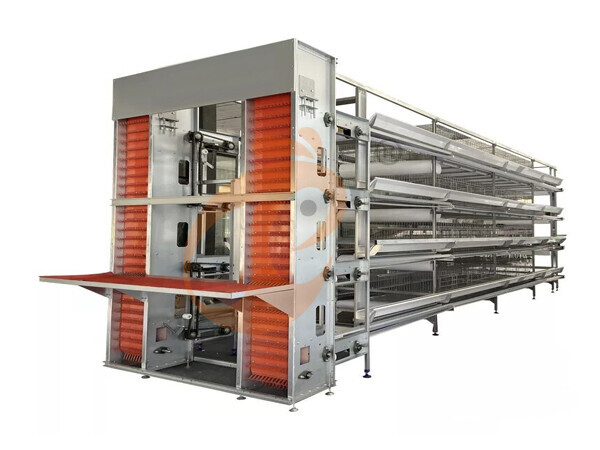
H type poultry cage equipment provides engineered vertical layer housing for commercial egg production, integrating structural support with automated production processes according to project requirements.
Global factory direct sales cover poultry equipment manufacturing, engineering documentation, component inspection, export coordination, and technical support for international farm projects.
Turn-key engineering connects cage installation with feeding, drinking, manure removal, egg collection, electrical control, environmental systems, commissioning, and operator training.
Factory-direct production allows equipment specifications to be coordinated with poultry-house drawings, flock targets, utility conditions, automation requirements, and regional project standards.
International project delivery combines manufacturing control, engineering coordination, shipment planning, installation guidance, spare-parts preparation, and after-sales technical support.
Contact Us To Received Your Customized Poultry Farm Plan
Headquarters And Branchs

Hong Kong Headquarter Management Team
Hong Kong Headquarter Taiyu Industrial Group CO., LTD
China Hebei Best Machinery And Equipment CO., LTD
Nigeria Vanke Machinery And Equipment CO., LTD
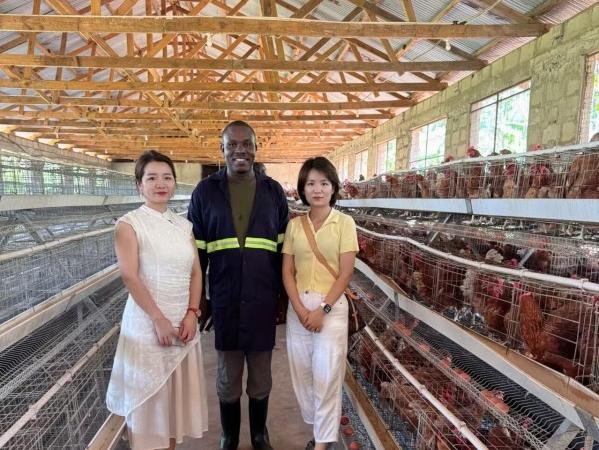
Tanzania Best Machinery And Equipment CO., LTD
Ethiopia Best Hebei Machinery Manufacturing PLC
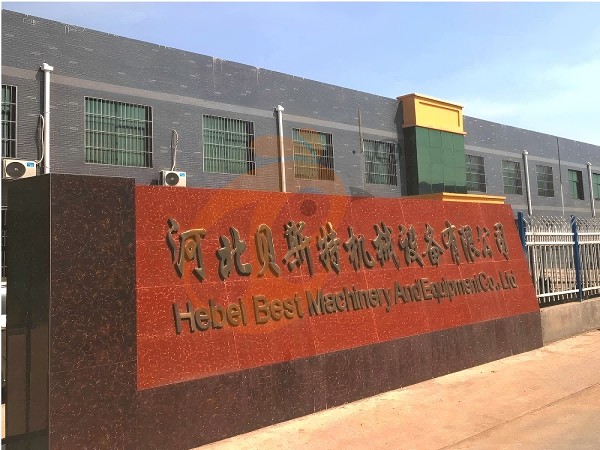
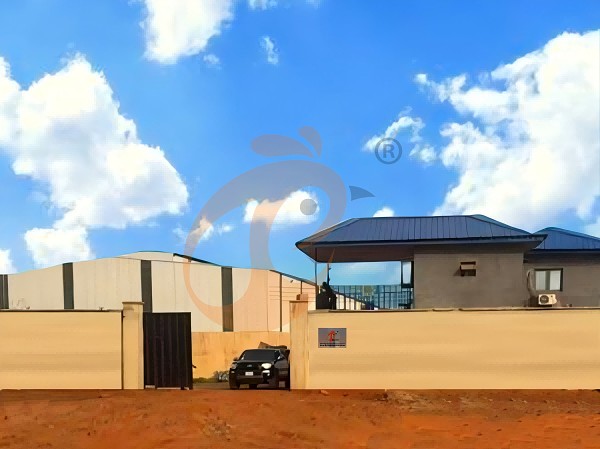
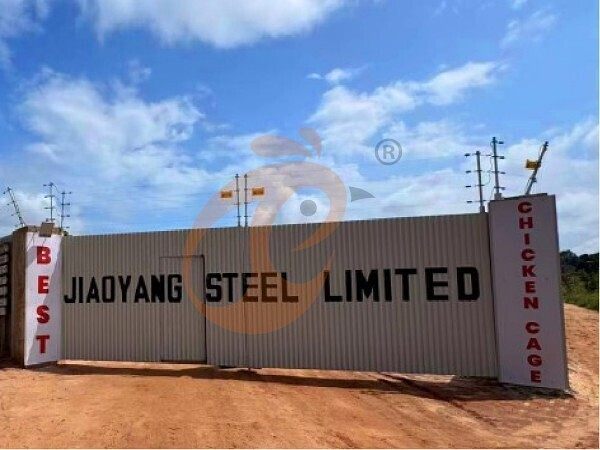
Reception /24 WhatsApp NO. : +8618830120193
PRODUCTS RECOMMENDED
 China Branch Manufacture Poultry Farm EquipmentRead More
 Ethiopia Branch Manufacture Poultry Farm EquipmentRead More
 Nigeria Branch Manufacture Poultry Farm EquipmentRead More
 Tanzania Branch Manufacture Poultry Farm EquipmentRead More
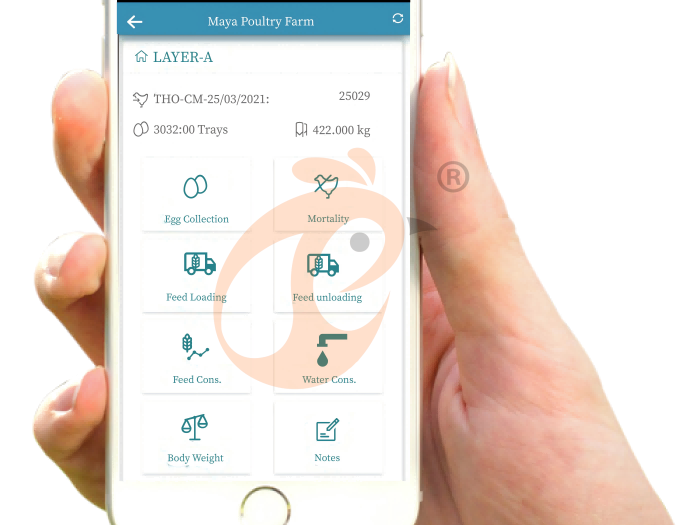
 IoT Smart Poultry FarmRead More
 >30,000 Layers Automatic H Type Battery CageRead More
 10,000 - 30,000 Layers Automatic A Type Battery CageRead More
MESSAGE
NEWS
 50,000 - 100,000 chickens/house: poultry farm solution, chicken cage, poultry farm equipment, AI smart managementRead More
 30,000 - 50,000 chickens/house: poultry farm solution, chicken cage, poultry farm equipment, AI smart managementRead More
 10,000 - 30,000 chickens/house: poultry farm solution, chicken cage, poultry farm equipment, AI smart managementRead More
 100 - 10,000 chickens/house: poultry farm solution, chicken cage, poultry farm equipment, AI smart managementRead More