

NEWS
A type Vs H type battery cage for layers determines how cage capacity, automation, labor, and building utilization interact across commercial egg-production projects at scale 30,000–300,000 birds.
A type layer cage supports practical layouts, while H type layer cage systems emphasize vertical integration, with projects commonly using 3–8 cage tiers.
Automatic feeding, nipple drinking, manure removal, and egg collection connect both layer battery cage configurations, with feeding cycles commonly set at 2–8 runs daily.
Building engineering also matters, because H type layer cage systems can use internal heights of 4.5–7.0 m while supporting centralized equipment control.
Final selection should match flock capacity, labor structure, expansion plans, and investment strategy, with commercial layer battery cage projects typically planned for 10–18 years.
Get professional poultry farm construction guidance, equipment selection solutions, and the latest price lists, whatsApp to +8618830120193, click to learn more.
Start With The Production Target, Not The Cage Shape
When selecting layer battery cages, the first question should be how the poultry house will operate at full capacity.
Cage dimensions, tier arrangement, aisle width, manure-handling method, feeding system, and egg-transfer configuration all influence the final production layout.
For example, a commercial installation can be engineered around a 2.0–2.5 m service aisle and a 2.4–3.0 m poultry-house bay width, depending on the equipment configuration.
The A type layer cage and H type layer cage solve different engineering requirements.
A Type battery cages provide a stepped arrangement that is straightforward to install and operate, while H type battery cage systems use vertical tiers to increase the number of birds accommodated within the building envelope.
The correct decision therefore depends on the relationship between flock size, building dimensions, automation, and investment, with project planning commonly allowing 5–10% layout tolerance for service access.
Data is for reference only.Swipe horizontally to view full table.
A Type Cage: An Efficient Route For Straightforward Farm Operation
The A type layer cage design places cage levels in a stepped formation, making the birds and equipment accessible from the service aisle.
The arrangement is particularly practical when the farm prioritizes uncomplicated installation and convenient daily inspection, with 1.0–1.5 m aisle clearance supporting routine equipment access.
A properly designed A type battery cage system can use 35–45 mm feed-trough access per hen, while nipple drinking lines can be positioned according to the flock's water-access requirements.
For farms upgrading from floor housing, the A type layer cage can also simplify the transition to cage-based management.
The structure provides clear access to feeding, drinking, egg inspection, and manure areas without requiring a highly complex building structure, while routine inspection can be organized around 2–4 daily management rounds.
A Type Vs H Type: Cage Engineering Comparison
Data is for reference only.Swipe horizontally to view full table.
H Type Cage: Vertical Capacity Meets Automation
The H type layer cage changes the economics of poultry-house design by placing cage tiers vertically.
Instead of expanding only across the floor, the H type battery cage uses available building height for additional housing capacity, with 3.5–6.0 m usable internal height commonly considered during project engineering.
A commercial house can therefore be engineered with multiple production levels while keeping feeding, watering, manure handling, and egg transfer organized.
More importantly, H type layer cage equipment can be integrated into a continuous production line, with centralized control architecture supporting coordinated operation across several equipment groups.
Feed delivery, water supply, manure removal, egg transportation, and environmental control can be coordinated through centralized equipment, reducing the number of manual operations required during the production cycle.
Data is for reference only.Swipe horizontally to view full table.
The Investment Equation: Calculate Cost Per Bird
The purchasing price of the layer battery cage itself does not represent the complete project cost.
A better calculation includes the cage system, feeding equipment, drinking lines, manure removal, egg collection, ventilation, electrical installation, and commissioning.
For example, project evaluation can be based on equipment depreciation over 10–15 years and an estimated annual utilization rate of 85–95%.
This approach makes it easier to compare two systems objectively.
An A type battery cage may reduce the initial equipment package, while H type layer cage equipment can increase the number of productive birds supported by the same building footprint.
The final decision should therefore be based on cost per housed hen and expected operating efficiency, with financial modeling commonly using a 3–7 year investment review period.
European union standard reference only.
Data is for reference only.Swipe horizontally to view full table.
Actual steel consumption depends on cage dimensions, tiers, and layout.
Which Cage Is Better For Egg Production?
There is no universal winner.
Choose an A type layer cage when the project prioritizes lower initial investment, straightforward operation, small or medium farm capacity, easier maintenance, and gradual modernization.
Choose an H type battery cage when the project requires high stocking capacity, limited building space, automatic production, reduced labor dependency, and large-scale commercial egg production.
If the goal is to build a highly efficient modern layer farm, an integrated H type system is often the stronger choice, particularly where daily labor availability is below 1 worker per 10,000 hens.
Data is for reference only.Swipe horizontally to view full table.
Feeding And Drinking: Precision Starts Inside The Cage
Feed distribution should be engineered around both trough geometry and the feeding line.
A properly designed A type battery cage system can use feed-line suspension intervals of approximately 2–3 m, helping maintain stable line alignment throughout the house.
The drinking system should likewise maintain consistent pressure from the first cage row to the final row, with water filtration replacement commonly scheduled every 1–3 months.
Nipple drinkers are particularly valuable because they can reduce open-water contamination and simplify routine management.
Depending on the nipple model, one nipple can deliver approximately 60–90 ml/min at the specified operating pressure, providing a measurable basis for layer battery cage equipment selection.
Data is for reference only.Swipe horizontally to view full table.
Manure Management: Engineer The Waste Route
Once flock density increases, manure handling becomes an engineering problem rather than simply a cleaning task.
The A type layer cage and H type battery cage must move manure away from the birds without interrupting feeding and egg collection, with belt tracking deviation typically controlled below 10 mm.
A properly selected belt system can operate at 4–8 m/min, allowing manure to be transferred efficiently from the cage rows.
The belt material also affects service life.
Polypropylene or equivalent poultry-manure belt materials can be selected according to humidity and loading conditions, while drive components should be sized for the actual belt length and manure load rather than using a generic motor.
Data is for reference only.Swipe horizontally to view full table.
Building Utilization: Turn Vertical Space Into Production Capacity
The main engineering advantage of an H type layer cage is its ability to exploit vertical space.
Instead of limiting production capacity to the floor area, the H type battery cage allows additional tiers to be installed above the lower rows.
A building designed for this purpose may use roof insulation thicknesses of 50–100 mm to help stabilize the internal climate around the multi-tier system.
Ventilation must be considered at the same time.
As cage tiers increase, air-distribution design becomes increasingly important because airflow must reach birds at different elevations, with air-exchange calculations commonly reviewed every 15–30 minutes under operating conditions.
Data is for reference only.Swipe horizontally to view full table.
Installation And Service: The Supplier Becomes Part Of The System
A layer battery cage project should be engineered before manufacturing begins.
The supplier needs the poultry-house length, width, height, column positions, door locations, ventilation openings, electrical supply, and desired bird population, with site measurement records commonly maintained to ±10 mm.
With these inputs, the equipment layout can be developed to millimeter-level installation requirements.
For example, anchor-bolt positioning can commonly be controlled within ±5 mm during equipment installation.
After commissioning, technical service also matters.
A professional manufacturer should provide operating instructions, maintenance schedules, spare-parts recommendations, and equipment troubleshooting support, with preventive inspections typically scheduled every 3–6 months.
Professional Buying Checklist
Data is for reference only.Swipe horizontally to view full table.
Final Verdict: Select The System That Matches Your Farm
For a farm that values uncomplicated operation and controlled investment, A type battery cages offer a practical engineering route.
The stepped structure is easy to understand, while automatic feeding, nipple drinking, manure removal, and egg collection can still be incorporated, with daily cleaning access commonly planned within 2–4 service cycles.
A properly planned A type layer cage project can therefore provide a complete commercial layer-production solution.
For large-scale operations where automation and building utilization are central to the business model, H type cages provide a more scalable platform.
With multiple tiers, centralized controls, conveyor-based egg handling, and automated manure removal, the system can connect individual production processes into one coordinated workflow, while plc communication cycles can be configured around 100–500 ms depending on system architecture.
Ultimately, the best cage is not determined by the letter "A" or "H”".
The result depends on how effectively the equipment converts building space, labor, feed, water, and management time into marketable eggs, with project engineering reviews commonly conducted at 30–50% design completion.
A professional poultry equipment manufacturer should therefore design the cage, feeding, drinking, manure, egg collection, ventilation, and environmental-control systems as one integrated project.
That approach gives layer farmers a more reliable path toward efficient production and long-term equipment value, with commissioning documentation commonly covering 10–20 core equipment inspection points.
Frequently Asked Questions
Q1: What is the main difference between A type and H type layer battery cage?
A1: A type layer battery cages use a stepped configuration, while H type layer battery cages use vertical multi-tier construction.
H type systems are generally more suitable when building utilization and automated production are major requirements, with projects commonly reaching 3–8 cage tiers.
Q2: Which layer battery cage is better for large commercial farms?
A2: H type battery cage systems are generally more suitable for large commercial projects because multiple production tiers can be integrated with automated feeding, manure removal, and egg collection.
Large projects can be engineered around 30,000–300,000+ birds, depending on house dimensions and equipment configuration.
Q3: What should be considered before buying a layer battery cage?
A3: Farmers should evaluate bird population, house dimensions, cage configuration, feeding, drinking, manure handling, egg collection, ventilation, automation, installation, and after-sales engineering support.
A complete project should also reserve approximately 5–10% planning allowance for maintenance access and future equipment adjustments.
Taiyu (HK) Group - One Of China Toppest Layer Battery Cage Manufacturer
Layer battery cage systems from taiyu integrate galvanized cage structures, automatic feeding, nipple drinking, manure handling, and egg collection, with commercial configurations supporting 90–160 hens per cage module.
Global factory-direct poultry equipment supply covers cage systems, feeding lines, drinking systems, manure equipment, ventilation equipment, egg collection, and electrical control assemblies for international projects with 220/380 v power configurations.
Turn-key engineering follows a project sequence covering layout design, equipment production, installation guidance, commissioning, operator training, and technical documentation, with installation accuracy controlled around ±5 mm for specified anchor positions.
Poultry equipment packages can be configured for small farms, commercial layer houses, and high-capacity production facilities, with integrated projects commonly structured across 1–5 expansion phases.
Factory engineering coordination combines production inspection, system matching, spare-parts planning, and after-sales support, providing a technical procurement route for international layer-farm projects with 10–18 year equipment service-life planning.
Contact Us To Received Your Customized Poultry Farm Plan
Headquarters And Branchs

Hong Kong Headquarter Management Team
Hong Kong Headquarter Taiyu Industrial Group CO., LTD
China Hebei Best Machinery And Equipment CO., LTD
Nigeria Vanke Machinery And Equipment CO., LTD
Tanzania Best Machinery And Equipment CO., LTD
Ethiopia Best Hebei Machinery Manufacturing PLC




Reception /24 WhatsApp NO. : +8618830120193
PRODUCTS RECOMMENDED
 China Branch Manufacture Poultry Farm EquipmentRead More
 Ethiopia Branch Manufacture Poultry Farm EquipmentRead More
 Nigeria Branch Manufacture Poultry Farm EquipmentRead More
 Tanzania Branch Manufacture Poultry Farm EquipmentRead More
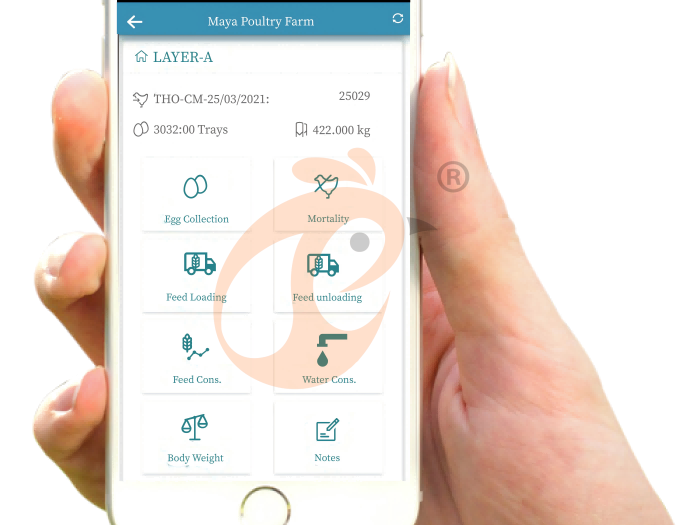
 IoT Smart Poultry FarmRead More
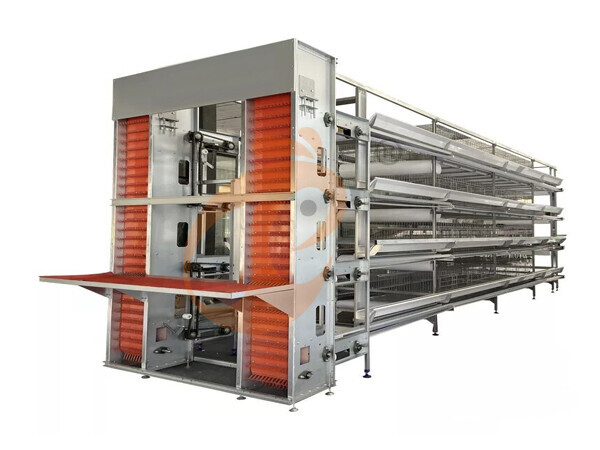
 >30,000 Layers Automatic H Type Battery CageRead More
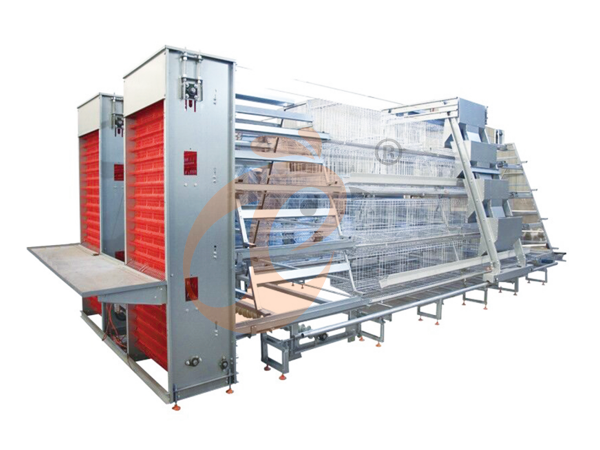
 10,000 - 30,000 Layers Automatic A Type Battery CageRead More
MESSAGE
NEWS
 50,000 - 100,000 chickens/house: poultry farm solution, chicken cage, poultry farm equipment, AI smart managementRead More
 30,000 - 50,000 chickens/house: poultry farm solution, chicken cage, poultry farm equipment, AI smart managementRead More
 10,000 - 30,000 chickens/house: poultry farm solution, chicken cage, poultry farm equipment, AI smart managementRead More
 100 - 10,000 chickens/house: poultry farm solution, chicken cage, poultry farm equipment, AI smart managementRead More