

NEWS
Fully automated poultry farm equipment integrates feeding, drinking, ventilation, manure removal and production monitoring into coordinated poultry production systems.
Poultry applications layer, broiler and pullet farms, from day-old chicks to 72-week laying cycles.
Capacity solutions customized systems for 1,000–100,000+ birds.
Engineering design house dimensions, control systems and ventilation equipment are selected according to project requirements.
Investment planning equipment selection considers bird density, climate, electrical supply and expansion requirements.
Clients: I want to build a fully automated poultry farm.
Can you provide a complete solution instead of supplying individual machines?
Taiyu Group (HK) Yes.
We provide integrated poultry equipment solutions based on bird capacity, poultry type, house dimensions and investment budget, covering equipment selection, system integration and project support.
Get professional poultry farm construction guidance, equipment selection solutions, and the latest price lists, whatsApp to +8618830120193, click to learn more.
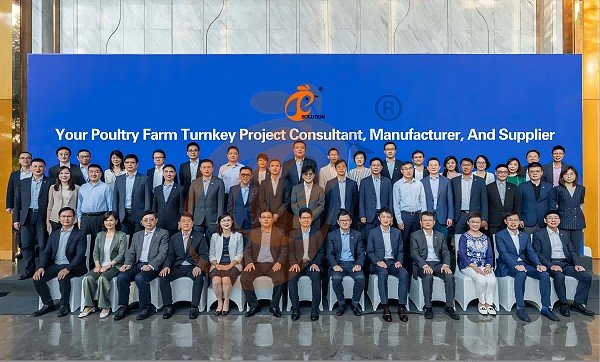
Taiyu Group (HK): Global Poultry Equipment Manufacturer & Supplier
1. What Is Fully Automated Poultry Farm Equipment?
Fully automated poultry farm equipment combines machinery, electrical controls and monitoring technologies to perform routine production operations with limited manual intervention.
1.1 Manual Vs. Semi-Automatic Vs. Fully Automatic Equipment Systems
Automation percentages represent illustrative operational coverage, not guaranteed labor reductions.
1.2 How Does A Fully Automated Poultry Farm Work?
Feed distribution uses programmed motors and conveying equipment, with adjustable feeding cycles.
Water systems maintain regulated pressure according to drinker specifications.
Climate controllers coordinate temperature, humidity and negative pressure.
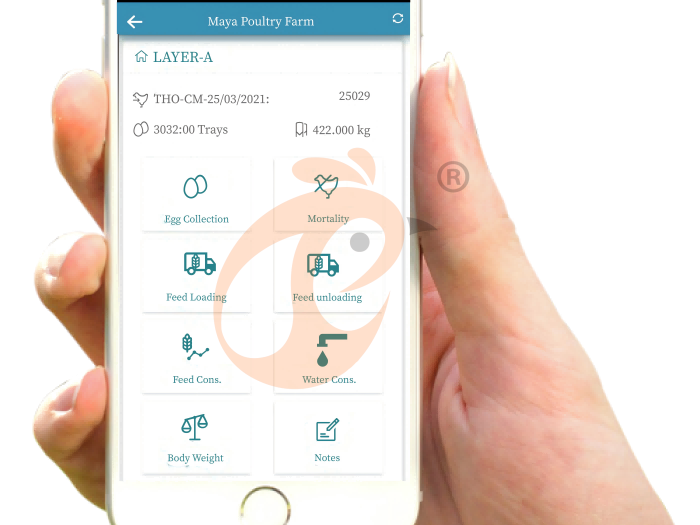
Production software records feed consumption, water consumption and mortality.
1.3 Which Poultry Farms Can Use Automated Equipment?
For integrated farm planning and international project development, explore Taiyu Group (HK) Poultry Farm Equipment to understand complete poultry farming solutions.
Planning a poultry farm project? WhatsApp to +8618830120193 for professional project consultation and customized solutions.
Clients does fully automated mean I do not need workers anymore?
Taiyu Group (HK): No.
Automation reduces repetitive work, but workers are still needed for bird inspection, equipment maintenance, biosecurity and production management.
2. Complete Fully Automated Poultry Farm Equipment List And FOB Price List Based On High Quality
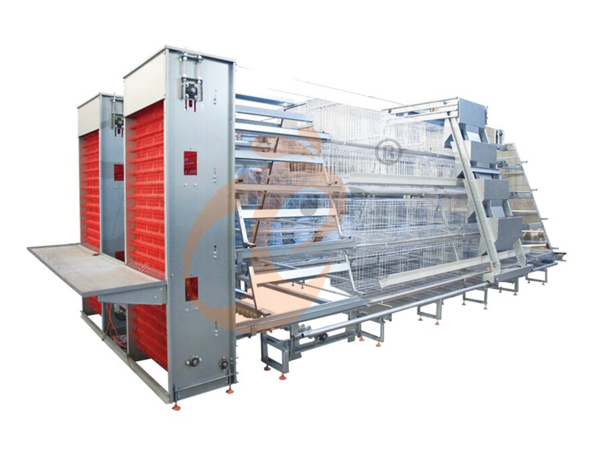
A complete equipment package combines structural systems, mechanical equipment and electrical components.
Prices below are illustrative usd budgeting estimates requiring factory confirmation.
Data is for reference only. Swipe horizontally to view full table.
European union standard reference only.
Prices are indicative, not verified supplier quotations. Individual system prices are not additive project totals.
Building construction, taxes, installation and shipping beyond the agreed fob scope require separate calculations.
3. Fully Automated Poultry Farm Equipment Solutions For 1,000–100,000+ Birds
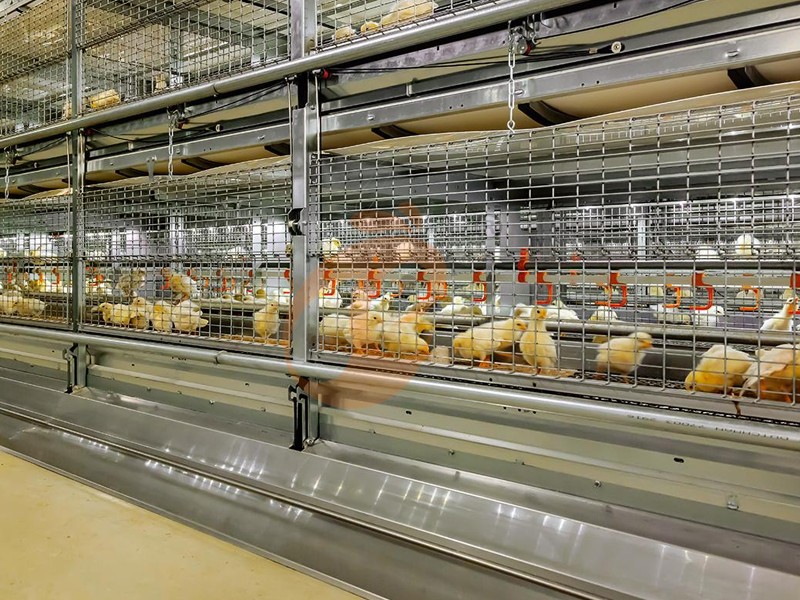
Commercial equipment configurations should match stocking density, production targets, house dimensions and expansion plans.
3.1 Automatic Poultry Equipment Configuration by Bird Capacity
Data is for reference only. Swipe horizontally to view full table.
Additional engineering considerations
A 10,000-layer project may require approximately 1,000–1,400 m² of usable cage-house floor area, subject to the housing system and local regulations.
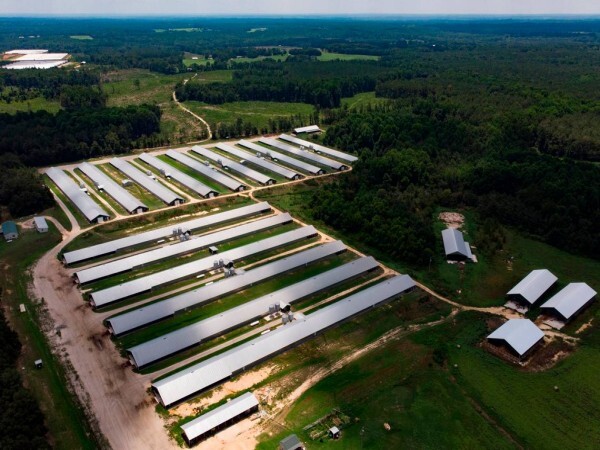
A 50,000-bird farm can use 4–6 independent production houses for ventilation zoning and disease control.
A 100,000-bird development should reserve additional site area for feed storage, service roads and expansion.
Configurations primarily reference commercial layer farms.
Broiler and pullet projects require corresponding rearing systems rather than layer egg collection equipment.
3.2 Poultry Housing And Rearing Methods
Data is for reference only. Swipe horizontally to view full table.
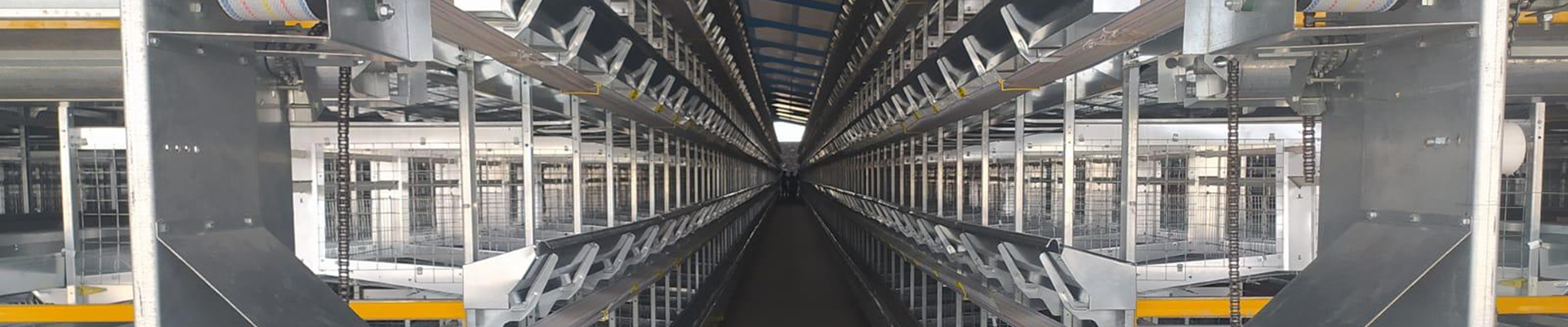
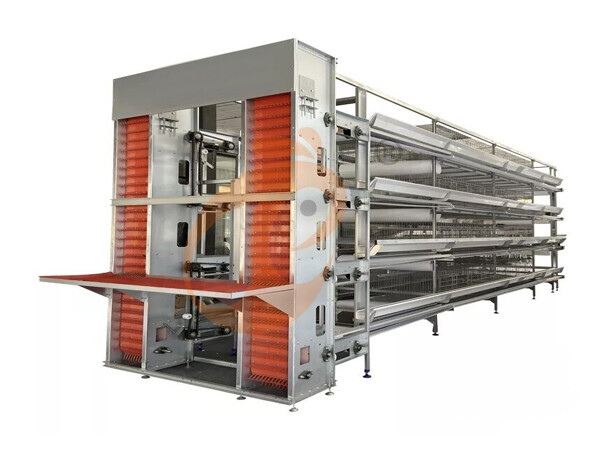
Cage systems support organized feeding, manure handling and egg collection.
Floor and free-range systems require suitable litter management, feeder access and outdoor biosecurity.
4. How Do Fully Automated Poultry Equipment Systems Work Together?
Integrated equipment connects feed storage, water delivery, waste handling and climate management through coordinated electrical controls.
4.1 Automatic Feed Storage And Distribution
Galvanized feed silos use steel plates selected according to structural design.
Augers transport feed through conveying pipes.
Feed sensors trigger replenishment when storage levels reach preset thresholds.
4.2 Automatic Water Supply
Nipple drinkers are selected according to bird type and age.
Pressure regulators maintain manufacturer-specified operating pressure.
Water meters track consumption and help identify leakage.
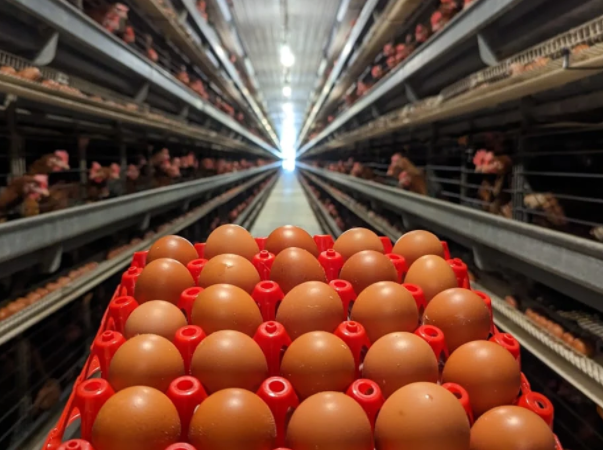
4.3 Automatic Egg And Manure Collection
Egg belts commonly use food-grade polypropylene.
Manure belts typically use approximately 0.7–1.0 mm polypropylene material.
Collection motors operate at adjustable speeds.
4.4 Ventilation And Cooling Integration
Tunnel ventilation is designed around bird age and thermal conditions.
Cooling pads commonly use 100–150 mm cellulose media.
Static pressure sensors monitor house ventilation conditions.
Successful poultry farm development requires coordinated engineering, reliable project planning and technical support.
Discover Taiyu Group (HK) Poultry Farm Equipment for integrated farming project solutions.
Looking for an experienced poultry farm project partner? WhatsApp to +8618830120193 to discuss your requirements.
Clients what happens if one system stops working during production?
Taiyu Group (HK) a properly designed system should include alarms, inspection procedures and backup arrangements for critical motors, electrical controls, water supply and ventilation.
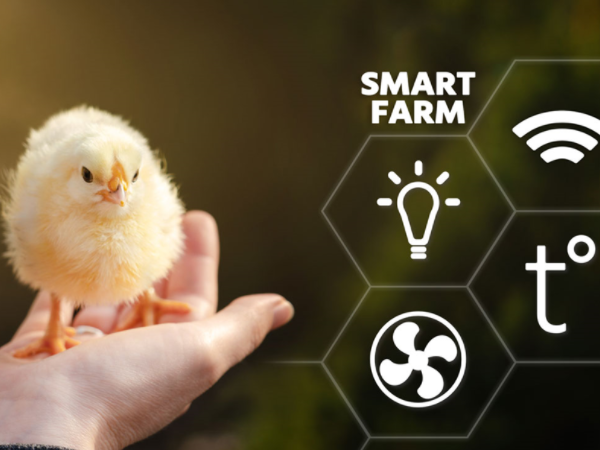
5. AI Smart Poultry Farm Equipment: From Automation To Intelligent Management
AI and IoT technologies support production management through continuous data collection, abnormality detection and remote equipment supervision.
5.1 Real-Time Environmental Monitoring
Temperature sensors approximately ±0.5°c accuracy.
Humidity sensors approximately ±3% rh accuracy.
Gas monitoring configurable ammonia and carbon dioxide detection.
Pressure monitoring suitable ranges for poultry-house ventilation.
5.2 AI Data Analysis And Early Warning
AI platforms analyze operating data, identify abnormal consumption patterns and generate equipment alarms.
Sampling intervals of 1–5 minutes can support responsive monitoring.
5.3 Intelligent Feeding And Drinking Management
Digital meters record feed and water consumption, while motor-current monitoring helps identify abnormal electrical loads.
5.4 Centralized Farm Management
A centralized platform can connect multiple poultry houses through network gateways, depending on system architecture.
Remote dashboards support mobile access and equipment-status monitoring.
5.5 Production Data And Management Reports
Production dashboards can analyze
Daily egg production and laying rate.
Mortality and flock uniformity.
Feed and water consumption.
Feed conversion ratio.
Equipment operating hours and maintenance records.
Clients can I monitor 100,000 chickens across multiple houses from one location?
Taiyu Group (HK) with an appropriately configured IoT platform, you can monitor multiple poultry houses through a centralized dashboard, receive equipment alarms and review production data.
6. Keys Of Fully Automated Poultry Farm Equipment Price And Investment Cost
Total investment includes equipment procurement, transportation, construction, electrical infrastructure and operating expenses.
6.1 Factory Direct Equipment Prices
Factory quotations depend on steel specifications, motor power, production capacity and customization.
Equipment quantities and technical configurations determine the final price.
6.2 FOB vs. Factory Price
Factory price equipment cost at the manufacturer's premises.
FOB price equipment cost plus applicable export packing, inland transportation and export handling to the agreed loading port.
Shipping insurance quoted separately according to the transport arrangement.
6.3 What Affects Automation Equipment Prices?
6.4 Initial Investment Vs. Operating Costs
Data is for reference only. Swipe horizontally to view full table.
European union standard reference only.
Actual costs depend on local energy tariffs, feed prices, labor rates and project conditions.
6.5 How To Calculate Return On Investment (ROI)?
ROI = (Annual Net Profit ÷ Total Investment) × 100%.
Payback calculations should compare equipment investment against annual labor savings, production improvements and operating expenses.
Actual financial assumptions require local validation.
Clients how much does a fully automated poultry farm cost for 50,000 birds?
Taiyu Group (HK) the investment depends on poultry type, house dimensions, cage configuration and automation level.
We can prepare factory-price and fob quotations with separate equipment costs.
7. Open House vs. Closed House In Automated Poultry Farm
House construction determines ventilation capacity, cooling requirements and environmental-control investment.
Data is for reference only. Swipe horizontally to view full table.
Additional engineering considerations
Closed-house designs commonly use controlled negative pressure.
Roof insulation can use approximately 50–100 mm insulated sandwich panels.
Emergency ventilation should include standby power and automatic failure alarms.
Choosing suitable poultry housing requires careful evaluation of climate, infrastructure and long-term investment.
Learn more about Taiyu Group (HK) Poultry Farm Equipment and integrated farm development support.
Ready to develop your poultry farming project? WhatsApp to +8618830120193 for customized engineering advice and project support.
Clients which poultry house is suitable for a hot African climate?
Taiyu Group (HK) we evaluate local temperature, humidity, electricity availability and water resources before selecting open-house or closed-house systems. Ventilation and cooling are designed according to local conditions and customer requirements.
8. How To Choose A Fully Automated Poultry Equipment Manufacturer?
Manufacturer evaluation should cover technical documentation, production capacity, quality assurance and long-term service arrangements.
8.1 Manufacturing Capability
Evaluate production facilities, workshop capacity, quality-control procedures and manufacturing lead times.
8.2 Equipment Quality And Certifications
Check steel thickness, coating weight, motor efficiency and electrical protection.
Review applicable quality-management documents and destination-country requirements.
8.3 Engineering And Farm Design Experience
Request dimensioned drawings, ventilation calculations, equipment layouts and electrical-load schedules.
8.4 Installation And Technical Training
Confirm commissioning responsibilities, installation supervision and operator training.
8.5 Spare Parts And After-Sales Service
Review warranty conditions, spare-parts availability and technical response arrangements.
8.6 International Project Experience
Evaluate export documentation, shipping arrangements and experience with different climatic conditions.
Verify project references and equipment specifications.
Clients how can I make sure the supplier can deliver a complete project instead of just selling equipment?
Taiyu Group (HK) request equipment specifications, manufacturing evidence, project references, installation arrangements and after-sales commitments.
9. How To Get A Customized Fully Automated Poultry Farm Equipment Quotation And Price?
A customized quotation requires accurate production targets, engineering drawings and purchasing requirements.
9.1 Information Required For A Complete Quotation
Poultry type layers / broilers / pullets.
Bird capacity 1,000–100,000+.
House dimensions length, width and height in meters.
Cage type a-type / h-type / floor system.
Number of tiers required equipment levels.
Automation level: basic / semi-automatic / fully automatic.
Destination country project location and port.
Investment budget available project funds in usd.
9.2 Quotation And Engineering Evaluation
The supplier evaluates equipment quantities, structural loading, electrical demand and shipping volume.
A complete quotation should distinguish equipment costs, installation expenses and optional automation upgrades.
Clients what information do you need to prepare a complete equipment quotation?
Taiyu group (HK) send us your bird capacity, house dimensions, poultry type and automation requirements.
Our team will prepare a customized equipment list, technical configuration and factory or fob quotation.
10. Taiyu (HK) Group - One Of China's Biggest Poultry Farm Equipment Manufacturer
1. Global Service Network
Headquartered in Hong Kong, with branches and factories in China, Vietnam, Thailand, Nigeria, Kenya, Ethiopia, and Tanzania, providing more localized project and after-sales support.
2. International Quality Standards
Strict quality control and double inspections.
Certifications and export documents include CE, SGS, ISO 9001, CCVO, PVOC, SONCAP, COC, ECTN, FORM F, and more.
3. One-To-One Vip Service
Dedicated account managers provide customized farm designs, equipment configurations, and quotations for projects ranging from 500 to 100,000+ birds per house.
4. Lifetime After-Sales Service
Installation guidance, equipment commissioning, operator training, remote technical support, spare parts supply, and ongoing maintenance.
11. Contact Us To Received Your Customized Poultry Farm Plan
Headquarters And Branchs

Hong Kong Headquarter Management Team
Hong Kong Headquarter Taiyu Industrial Group CO., LTD
China Hebei Best Machinery And Equipment CO., LTD
Nigeria Vanke Machinery And Equipment CO., LTD
Tanzania Best Machinery And Equipment CO., LTD
Ethiopia Best Hebei Machinery Manufacturing PLC




Reception /24 WhatsApp NO. : +8618830120193
PRODUCTS RECOMMENDED
 China Branch Manufacture Poultry Farm EquipmentRead More
 Ethiopia Branch Manufacture Poultry Farm EquipmentRead More
 Nigeria Branch Manufacture Poultry Farm EquipmentRead More
 Tanzania Branch Manufacture Poultry Farm EquipmentRead More
 IoT Smart Poultry FarmRead More
 >30,000 Layers Automatic H Type Battery CageRead More
 10,000 - 30,000 Layers Automatic A Type Battery CageRead More
MESSAGE
NEWS
 50,000 - 100,000 chickens/house: poultry farm solution, chicken cage, poultry farm equipment, AI smart managementRead More
 30,000 - 50,000 chickens/house: poultry farm solution, chicken cage, poultry farm equipment, AI smart managementRead More
 10,000 - 30,000 chickens/house: poultry farm solution, chicken cage, poultry farm equipment, AI smart managementRead More
 100 - 10,000 chickens/house: poultry farm solution, chicken cage, poultry farm equipment, AI smart managementRead More